ON BEAUTY

I just finished reading The Mockingbird: The Beauty Issue. (The Mockingbird is non-profit print magazine that Erik subscribes to that I have come to really appreciate.) As I flipped through the pages, a multitude of questions popped into my mind.

What is beauty, really?
What do I believe about it?
Who or what have I allowed to define it?
 
Growing up in the 80s and 90s, I fell into the trap of believing that what I looked like mattered as much as (or more than) anything else.
 
I thought that if I looked “right,” I would be admired. Respected. Loved.
 
The scary thing is that I simply accepted the standard of beauty set by magazines, advertisers, the fashion industry, and Hollywood.
 
I didn’t question it.
I didn’t consider they could be wrong.
I assumed that to be beautiful, I had to conform.
 
So for years I tried, which left me depressed, struggling with my body image, and never feeling good or beautiful enough. But as I read through The Beauty Issue, I began to question my old thoughts.
 
Who is it that says a flat stomach is more beautiful than a round one?
Who says that thin and tall is more beautiful than short and stout?
Who says that long, highlighted hair is prettier than a bald head?
Who says that grey is the best color for my living room walls?
 
More important than “Who says it?” is “Why the heck have I believed them?”
 
Like a flash of lighting, I realized I don’t have to believe it anymore! And then, Romans 12:2 popped into my mind.
 
“Do not conform to the pattern of this world but be transformed by the renewing of your mind.”
 
I’ve spent a whole lot of my years trying to conform to the world’s standard of beauty, and by doing that I’ve actually been a part of the problem.
 
By complimenting people when they lose weight, I’m saying that skinny is beautiful.
By admiring someone’s smooth skin, I’m saying that wrinkles should be erased.
By telling someone how great they look after having Lasik, I’m saying that people who need glasses aren’t as attractive.
 
All this really hit home for me the other day. I was in the car, listening to the radio and a catchy song came on. I started to automatically sing along.
 
I knew all the words.
Verses.
Bridge.
Chorus.
 
But I hadn’t ever stopped to think about what the song was saying on a deeper level. As I listened, I realized the song was all about women dancing for the admiration of men.
 
WHAT?
 
I’m ashamed to admit that I’ve sung along with it for years without ever questioning the lyrics meaning. I’ve bobbed my head to it and tapped my feet. It’s got a good beat. But now I’m realizing that’s not enough.
 
Disgusted with what the singer was saying, I changed the station. But as I scrolled, I discovered most of the hit songs were about lust, sex, and physical beauty. Sometimes it was veiled, but it was always there.
 
So I turned off the radio. I decided that by listening to it and singing along, I was celebrating the lie that what we look like (and who we attract) matters more than anything else.
 
Ok, back to Romans 12:2.
 
I’ve spent too long conforming to this world.
I’ve spent too long letting society tell me who I should be and what I should look like.
I’ve spent too long believing that beauty is finite, when really, it’s infinite.
 
Even though I’ve spent years hearing about the impossible beauty standards our world sets, it’s taken me until middle age to realize that I’ve been part of the problem. By trying to match the world’s standard of beauty, or following trends, or whatever you want to call it, I have actually fostered it.
 
By trying to conform to it, I’ve said that it’s ok. That it’s right.
 
I don’t want to live that way anymore.
I don’t want to let the world tell me who I should be or how I should look.
I don’t want to keep nurturing a false ideal of beauty.
 
Instead, I want to celebrate the things that God says are beautiful. That type of beauty is nothing like what you’ll see on Instagram or TikTok. It won’t be on the cover of People magazine.
 
It’s too vast.
Too infinite.
Too  varied.
Too real.
 
True beauty includes bruises and blood.
Tears and sweat.
Broad smiles and chipped teeth.
 
Most importantly, it goes beyond what you see.
 
Rewriting my definition of beauty isn’t easy. I can already see that I have a long way to go. But I’m grateful that it’s starting and I’m grateful that The Mockingbird spent the time and money to put out a magazine that’s helping rebellion bloom in my heart.
 
I have a choice.
I get to choose to turn off the radio.
I get to choose to put down the magazines.
I get to choose to stop scrutinizing myself in the mirror.
 
You have a choice, too.
 
I know I’m not the first to recognize this problem. Just last month, I went to see the musical Hairspray  with some friends. It’s based on a 1988 film, and the storyline proves that people have been talking about (and wrestling with) false beauty standards for decades.  My prayer is that those conversations not only continue, but that someday the voices proclaiming real beauty — and all its many definitions — will be the loudest.
 
Following a standard of beauty is just another way of trying to people please, which dims your true beauty.
 
The beauty that God gave you.
The beauty that reflects His creativity and love.
The beauty that He delights in.
 
People will try to take that beauty away from you. They’ll tell you that you should change. Don’t listen. Even if the voice you’re hearing is your own.

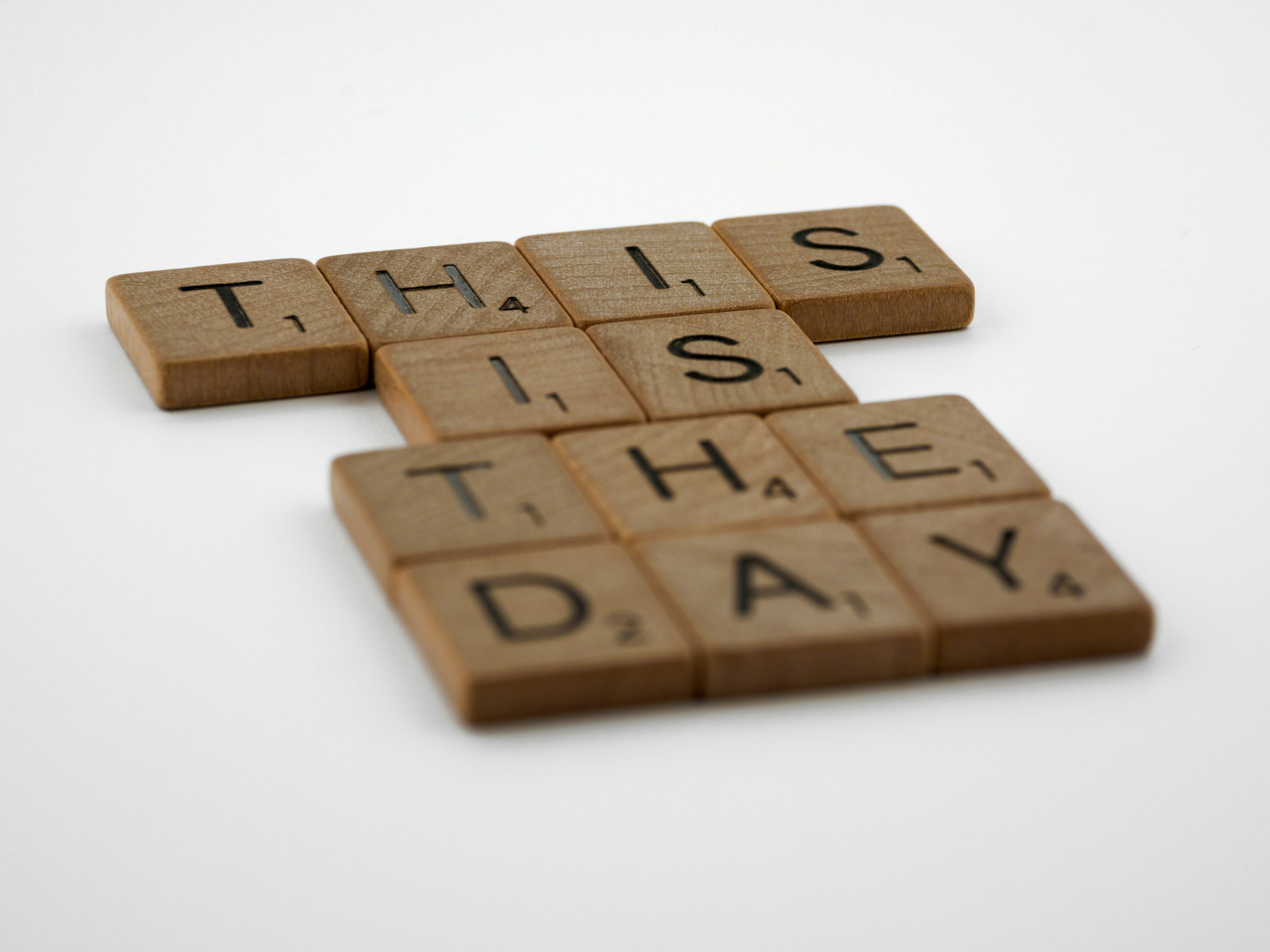
“SOMEDAY” IS TODAY 

Everyone has a corner of their fridge where things seem to disappear. You look and look and don’t see them until they are growing something white and fuzzy or emitting a putrid smell. I’ve been there, too. No judgment here. But, I also have some things hidden in the back of my fridge that I know are there. In fact, I have carefully placed them where they aren’t easily seen because I’m saving them. 

Now, there is a time and place for saving things. But I’m learning that most of the time, it’s better to enjoy them than try to tuck them away for “someday.”

Case in point: a half-full jar of macadamia nut butter that’s in our fridge. We bought the giant jar when we knew we would be leaving Hawaii and moving back to the mainland. We tucked it, unopened, into a box that would be shipped with the furniture, dishes, and books we couldn’t carry on the plane. 

Seems wise, right? Well, we thought so. But if you’re doing the math, you may have realized that that “special” jar of macadamia nut butter is over four years old.

I was so determined to save it for when I really needed it (which is code for when I thought the occasion was special enough) that it has gone rancid and become inedible. 

By attempting to save it for “someday” I have wasted it. And that’s got me thinking about the scarcity mindset that I far too often live in. The scarcity mindset tells us that there’s not enough to go around so we have to hold tight to what we have. It tells us that God’s love and provision isn’t enough so we have to grab whatever we can and horde it away so we don’t have to trust Him, or anyone else. 

The scarcity mindset tells us it’s protecting us, but really it’s robbing us. Grace Leuenberger, on her Substack, wrote about it this way: “I have had a scarcity mindset that has, at times, led to deep skepticism and distrust, and robbed me of gratitude and honestly, joy.”

She goes even deeper, tying that scarcity mindset to her faith, and how at times she hasn’t believed that God’s grace is enough. 

Ouch. That stings.

How long have I treated God’s grace like my jar of macadamia nut butter? How often have I tucked it away, trying to save it for when I really need it, rather than enjoying it — and sharing it — here and now? 

As I throw away my rancid jar, I’m realizing that this isn’t how God wants me to live. Instead, He wants me to live by faith. He wants me to trust Him enough to enjoy the goodness He has given me today, without fear that it will run out. And I’m realizing I want to live that way, too. 

I’ve been so busy living for “someday” that I missed the fact that “someday” is actually today. 

Erik and I are going to visit Hawaii in a couple of months and we’re planning to bring back another jar of macadamia nut butter. But this time, I’m going to enjoy it. 

I’m going to lick if off the spoon.

Drizzle it on pancakes. 

Smear it on homemade bread. 

And I will thank God for every bite, knowing that if I run out tomorrow, it doesn’t matter, because today it was more than enough. After all, today is the day that the Lord has made. Let us rejoice and be glad in it. Psalm 118:24

BLACKBERRY SEASON

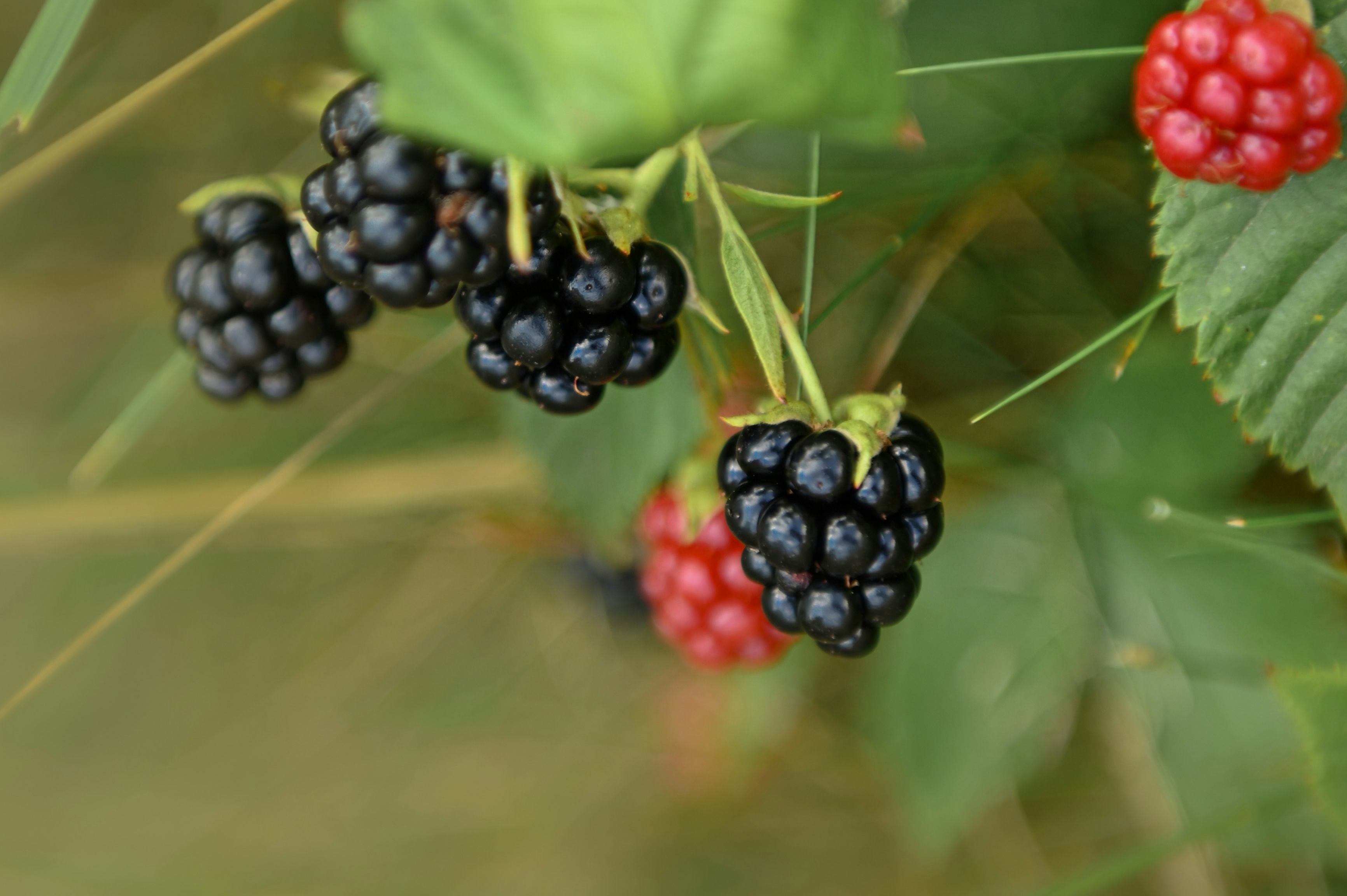
Yesterday, I did what I’ve done since I was a little girl. I opened the cupboard, pulled out a Tupperware container, slipped on my shoes and went to pick blackberries. And for the briefest moment, I was child again.
 
It was a sunny afternoon, and I might as well have had braided pigtails and jelly sandals on, for how my body remembered to squat low and look under leaves for the juiciest berries. I’ve picked blackberries from random roadsides since I could walk. They are one of the joys of summer in the Northwest, and something that I deeply missed when we lived in Hawaii.
 
Sure, we could get blackberries, but they were usually at least $8 a container and would mold practically overnight. Plus, they just never tasted as good as the roadside berries I was used to. The ones that were warm from the sun and practically melted on my tongue.  
 
Our first summer back, I delighted in picking multiple containers of them, not sure what I’d use them for, but amazed at the bounty. Since then, I haven’t been able to stop thinking about the magic of blackberry season, which starts well before the first berry can be plucked.
 
In fall and winter, the vines die back, then in the early spring the begin to climb and stretch. Early summer brings white blossoms, which gradually transform into green berries. Those green berries slowly redden and then turn to a purple so deep that it appears black.
 
Our daily walking route passes multiple berry patches, so Erik and I have been watching and waiting for them to be ready for weeks. The first few we tasted in late July made us pucker. But now, now they are perfect. And that brings me back to yesterday.
 
As I dropped berry after berry into my container and watched it fill, I was struck by two things.
 
First, the resilience of these berry plants. They are cut back, stomped on, sprayed with chemicals, and still find a way to thrive. (I do know that most of them are Himalayans, an invasive variety, but I’m not going to get into that today.)
 
What might I learn from watching these berries persist year after year, producing fruit because it’s what they were created to do? They don’t care that they are sometimes unwanted. They don’t care that they are scorned. They just go on doing what they were created to do – producing the fruit they were meant to produce.
 
The second thing these berries are teaching me is to be awed by the beauty — and bounty — of God’s provision.
 
No person works to produce these fruits, and we don’t do anything to deserve them. Yet, they are there, vines heavy with berries. The abundance is so astonishing that even after my container is full, I struggle to turn away. There are still so many good ones. So much deliciousness just waiting to be enjoyed.
 
As I slip a warm sun-warmed berry between my lips, I think back to my childhood and the countless number of buckets, jars, and containers my family and I have collected over the years. Back then, the picking was unhurried, but as soon as we got home, the action would start. Immediately, my mom would start washing the berries and then begin to transform them into  jam, fruit leather, and cobbler. Entire gallons would be tucked into the chest freezer in the garage to be made into pie, more jam, or muffins throughout the year ahead so that we would get to taste summer’s sweetness on the coldest of winter days.
 
Where I live now, there are blackberries everywhere, just like there were in the neighborhood I grew up in.
 
They are abundant and endless.
Resilient and determined.
Just like God’s love.

IT STILL HURTS

Erik and I have a very sweet 12-year-old in our lives who we love. This year she got braces. Now I never had braces, by my older sister did, so I know a little about them — and living with people who have them.
 
There are restrictions on what you can eat.
You have to floss your teeth with a special tool.
And every few weeks the braces are tightened or a thicker wire is put in.
 
There’s pain in the process. How could there not be? The braces are designed to reform your entire mouth. It’s done slowly, I assume in part of minimize pain, but still, the pain is there, and after the last appointment, the sweet 12-year-old was not happy.
 
Ice cream wouldn’t help.
Shopping couldn’t take the ache away.
She had to just sit with it.
 
In the midst of her pain, her dad texted Erik and I and told us she wasn’t feeling well and was quite uncomfortable. So we did the only thing we could think to do. We prayed.
 
Afterward, we texted her dad back to tell him we’d prayed for her, and he passed the message on to her. About two minutes later, both Erik’s and my phones buzzed.
 
“I told her you prayed for her,” her dad wrote. “She said, ‘Well, I don’t feel any better!”
 
We burst out laughing. The text message emojis flying back and forth on the group chat.
 
But as I laughed, I also felt a little jealous. Not of her pain, but of her ability to say how she truly felt, without pretense, and presumably without fear of what we thought of her response.
 
I think God wants the same kind of relationship with us. He wants us to feel loved enough and safe enough to tell him how we feel. How we really feel. Without lofty words, without unnecessary fluff. After all, in Matthew 6:7-8, Jesus tells us as much.
 
“And when you pray, do not keep on babbling like pagans, for they think they will be heard because of their many words. Do not be like them, for your Father knows what you need before you ask him.” (NIV)
 
God knows what I need.
He knows what you need.
He knows what that sweet little 12-year-old needs.
 
He doesn’t need us to come to Him with eloquent essays or a list of arguments as to why He should answer our prayer. Instead, He wants us to just come to Him and tell him how we feel. And that means at times, “But Lord, it still hurts!” is the truest and most beautiful prayer I — or you — could ever pray.

BAD APPLES AND BUILDING COMMUNITY

I fully admit I’m a bit of a wanna-be hippie. I like doing things the “natural” way, I eat vegetarian, I think plants are amazing, and I love the idea of growing all the food Erik and I eat. (It’s never going to happen, but I still think it would be pretty awesome.) So, when we moved into our current rental house, I was thrilled that there were two raised garden boxes just waiting to be filled.
 
It was April, and I had seeds and vegetable starts in the ground before I even had a photo hanging on the wall. That’s how excited I was.
 
Spring turned to early summer and one day, while I was wandering around the side of the house, I looked up and caught my breath.
 
What?
Could it be?
 
I rushed to the front door, threw it open and yelled, “Erik!”
 
Hurrying out of his office he looked at me and said, “What’s wrong?”
 
“We have an apple tree!” I exclaimed. “On the side of the house! Come see!”
 
I admit if I lived up to my hippie ideals and was better at plant identification, I would have recognized the tree for what it was months before. But I didn’t. Neither did Erik. But, seeing how excited I was, he dutifully slipped on his shoes and followed me outside.
 
“Look!” I said, pointing up at the small, light-green balls that had formed.
 
“Yep. That’s an apple tree,” Erik said and then went back inside.
 
The tree was loaded and I started dreaming about all the amazing things I’d make when they were ripe.
 
Pie.
Crisp.
Apple sauce.
Breads.
Muffins.
I could dehydrate them like my mom had when I was a little girl.
 
I watched and waited for them to grow to full size and be ready to be picked.
 
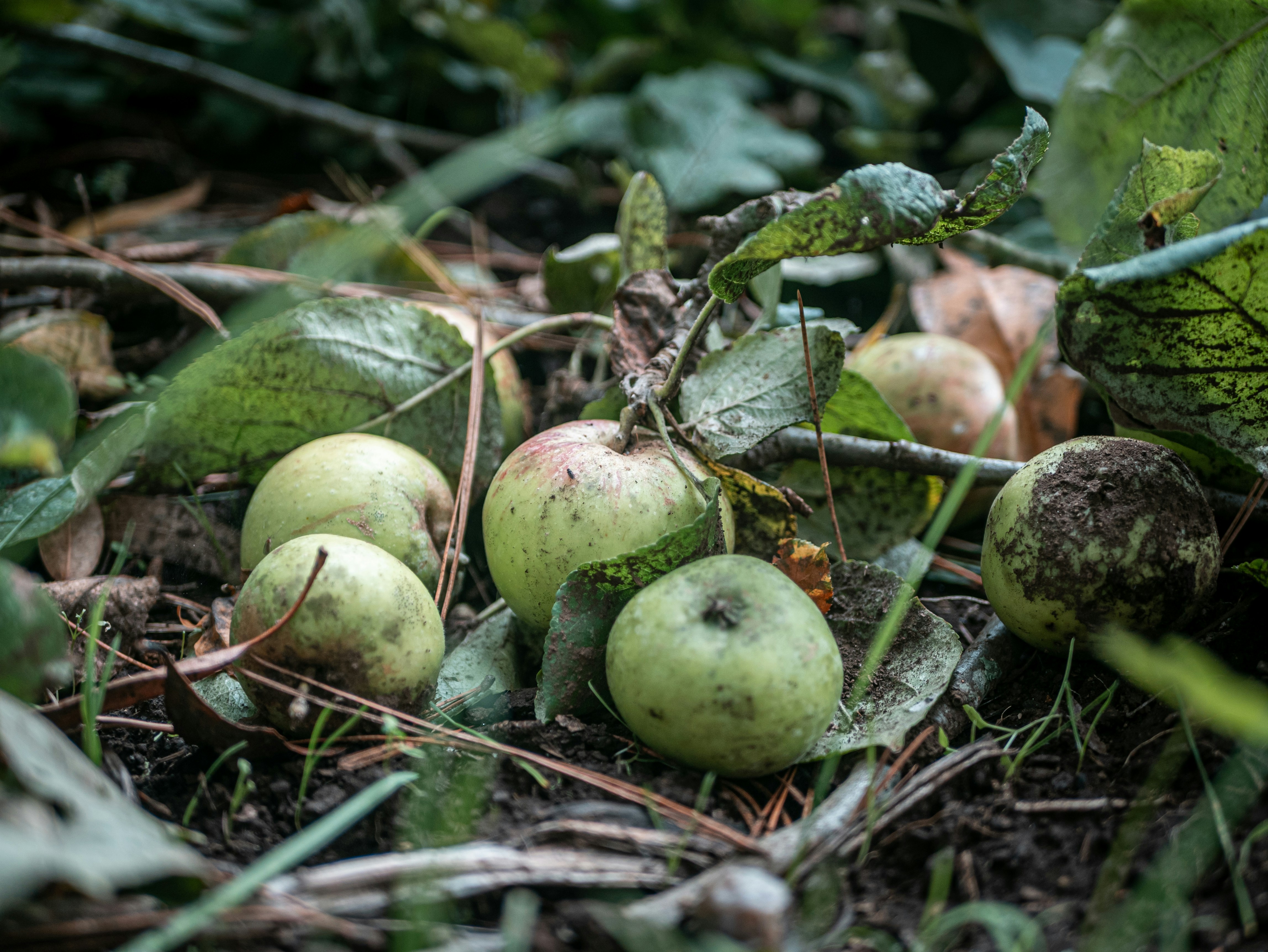
A few months later, I went outside one day and saw that apples were strewn across the grass under the tree.
 
I walked over to pick one up and saw that it had bruised from the fall.
 
All of them had. Well, bummer, but they did take a good tumble. I picked up the best ones and took them inside to try to salvage the unbruised halves.
 
I cut one open and saw streaks of rotting inside.
 
I tossed it into the yard-waste and grabbed another one. It was the same. There were also holes formed by some worm or bug already having had a feast. I kept cutting until I find one section that looked edible and took a bite.
 
Mealy. Mushy. Miserable.
 
These apples were terrible.
 
“Of course they are bad,” I told myself. “They fell. The ones I pick will be better.”
 
Determined, I went out to pick some a few days later and repeated the same process of discovery.
 
My dreams, along with thousands of bad apples, ended up in our yard waste bin that year.

Even picking them all up was tedious. Every day, it seemed like hundreds more fell, littering the ground and rolling onto our street where they were inevitably smushed to oblivion by  passing cars.
 
I tried to keep up with them, but it was no use.
 
Eventually, they all fell and we were able to properly dispose of them, occasionally taking a slice just to make sure they were all bad.
 
They were.
 
Not to be deterred, when the next summer rolled around, I told myself I was going to find a use for these apples. There had to be something I could make with them. (On a sidenote: apple season is usually in the fall, but these are an early variety and start falling in July.)  
 
Then it hit me, applesauce! They can be mushy if you’re making applesauce. I just needed to peel them, and cut out any critter-eaten bits.
 
That year I toted a bowl of the best-looking ones into the kitchen and got out my peeler.

The minuscule amounts that were salvageable weren’t worth the effort.
 
Defeated again, I admitted to myself I’d spend the next two months carrying buckets of apples to the bin.
 
Thankfully, I did have a friend who has alpacas who love apples. She often buys them boxes at a time, and I figured it wouldn’t hurt to ask if she wanted any. She did! We loaded up a box and took them to church to hand them off.
 
The moment we opened our trunk you could smell slightly rotting apples. Apparently, this particularly variety doesn’t store at all. If you’re going to dare to eat them, they are a day-of kind of thing. But the alpacas didn’t seem to mind, so they got some apples and my friend didn’t have to buy apples that week.  
 
But still, there was no way two alpacas could eat all of our apples. The rest ended up filling our yard-waste bin to the brim. Erik could barely roll it out it was so heavy.
 
The next summer, I didn’t even try to eat them. I just let them fall and picked them up as I could, once again giving Erik an arm and back workout with the overflowing yard waste bin.
 
But then, one day when I was out in the garden, a large, gray pick-up truck pulled up.

The introvert in me got nervous.
 
Did I know them? What did they want? Did I have to talk to them?
 
I tried smiling as they rolled down the passenger window.
 
“Are you guys using those apples?” The driver asked from under a camouflage hat.
 
“No, because they are terrible,” I said, suddenly feeling ashamed that I had neglected my apple clearing duties to the extent that passing neighbors had taken notice.
 
“We have chickens. They’ll tear them up. Can we have some?”
 
“You can have them all!” I said back. “But they really aren’t good.”
 
“I’ll send my sons over later to pick up some of the ones that have fallen. They’ll bring you some fresh eggs, too.”
 
“They can come as many times as they want. They can even pick them off the tree,” I said thrilled that these apples would at least feed some more of God’s creatures.
 
“Nah. They’ll just get the fallen ones,” the driver said. “Thanks.”
 
“Thank you!” I replied as he rolled up his window and pulled away.
 
And that brings us to this year. The apples started falling a few weeks ago. Hoping to at least share some, we went over to the neighbors and asked if they wanted them. Turns out they are moving and had already sold their chickens.
 
Not to be deterred, I texted another friend who has chickens and offered her apples.
 
She replied within minutes.
 
“We already get plenty of apples for the chickens from our neighbors. But thank you.”
 
Ok. Yard-waste bin, I hope you’re ready for this year’s bountiful harvest.
 
A few days later, after already tossing at least three buckets of apples, we ran into another neighbor while on a walk.
 
“Do you guys want eggs?” she asked. “I was just giving out eggs.”
 
“Jess doesn’t really eat them, and I can’t go through them fast enough on my own,” Erik said. “But thank you for offering.”
 
“Wait. Do you have chickens?” I asked. We’d never heard a peep in the dozens of times we’d walked by their house.
 
“Yep,” she said.
 
“Do you want apples for them?”
 
“They’d love them.”
 
“Great, I’ll drop a bag off later.”
 
Redemption! I have found a purpose for at least some more of the apples.
 
Later that day, I walked a grocery sack of apples over, a note with my phone number tucked inside.
 
She texted me a few hours later saying thank you, the chickens would love them and that they’d eat that many in about a day.
 
I had tried to be conservative, not wanting to give her too many, but she explained she had 10 birds and they ate a lot.
 
“You can drop some off every other day, if that works for you,” she messaged.
 
So this year, not only two alpacas, but 10 neighborhood chickens are enjoying the fallen fruit from our apple tree. And my neighbor and I have been talking more and building a deeper relationship.
 
At one time, I thought all that fruit was a waste. But it turns out it’s helping me build community, right here in my little neighborhood. And that’s sweeter than any apple could ever be.
 
By the way, we still have more apples than friends with livestock, so if you want some bad apples, grab a bucket and come on over. I’ll even help you pick them.

GRANDMA’S HOMEGOING

Fourteen years ago, last Sunday, my grandma died.
 
I have the date on my calendar – along with the dates of several other loved ones who have passed away – so that I take some time to remember them each year, on that day.
 
Usually my remembrance feels solemn, and part of me always thought that was a good thing. After all, death is serious business. It’s sorrowful and grief-worthy because it’s not how things were created to be.
 
Every time someone or something we love dies we feel it from our toes to our souls because every part of us knows it’s wrong. Death is a part of this broken world. It’s a reminder that all things haven’t been made right, yet.
 
So, on Sunday, when my phone popped up, “Anniversary of Grandma Millie’s passing,” I took a deep breath, bracing for the wave of sadness to hit. But this time, it didn’t. Instead, I smiled.
 
This year, my heart didn’t see the anniversary as the day my grandma left the earth, but as the day she finally went home to Jesus.  In my mind I started calling it her “Going home birthday,” even rushing to my office before church to scribble the words down on a piece of scrap paper. I didn’t want to forget how I felt in the moment. How this tickle of joy in the back of my eyes made my lips curve into a smile.
 
Those of us still on earth mourn, and rightfully so, when someone we love passes away. But as I think about my grandma on that day 14 years ago, I know she wasn’t sad to leave. In fact, she spent the better part of the last 10 years of her life telling God to hurry up and come get her already.
 
“I don’t know what’s taking Him so long,” she’d say at family gatherings. “I don’t know why I’m still here.”
 
Occasionally, she’d also add, “I just want to be with Ralphie.”
 
Ralph, or Ralphie, as my grandma called him, was her husband. He passed away decades earlier, when I was just 10 years old.
 
Grandma missed him every day after, but instead of his death making her faith shaky, it seemed to make it stronger, at least in my childhood eyes. She went to church weekly, and her Bible, nestled into it blue embroidered cover, was never too far away. When she moved from California up to Washington, it was always on the coffee table in front of the blue and white striped couch in her combination sewing/guest room. The couch was a pull-out, and I slept on it several times, always careful to move the table (and Bible) aside before attempting to unearth the iron legs from underneath the cushions.
 
I don’t remember if she told me, or if I just assumed, that she sat on the couch every morning, doing her quiet time, talking to God. We found several journals of her prayers after she passed away.
 
So grandma, she wasn’t scared of death. On the contrary, she was ready for it long before she tasted it.
 
Several years before she passed, she unknowingly had an infection which had weakened her body. She fell getting out of bed early in the morning, and my mom found her a few hours later, when she had stopped in for a visit. Grandma was unconscious and my mom did the only thing she could think of. She called 9-1-1. The ambulance came and the paramedics revived grandma before loading her in the back and taking her to the hospital.
 
My mom was relieved. It looked like grandma was going to be ok!
 
Grandma, on the other hand, was furious.
 
“Why didn’t you let me go?” she grumbled to my mother. “I was almost there.”
 
According to my mom, she stayed mad about it for months, maybe longer.
 
Grandma knew where she was going and nothing was going to stop her from getting there as soon as she could. Except God’s timing, and He had several more years before He finally took her home.
 
When I got the call, 14 years ago, that she was gone, I wept. She was 90, but it was still not what I expected that July day. And it’s taken me this long to turn the corner from honoring the day she died to wanting to celebrate.
 
My grandma is where she always wanted to be.
 
She’s home.
She’s with Jesus.
She’s not in pain.
She’s not lonely.
She isn’t wondering what her purpose is.
 
She knows.
 
As I think about her homegoing now, I’m confident she wasn’t the only one rejoicing. She had something like 9 or 10 brothers and sisters, all of whom passed on before her. Her parents, her own grandparents, and of course, my grandpa, had all left this earth decades earlier. It’s fun to imagine them welcoming her home with hugs, kisses, and embraces that never have to end. But I think their celebration was nothing compared to the celebration of the angels and God, knowing that their beloved Millie was finally home with them and would be for all eternity.
 
Psalm 116:15 says, “Precious in the sight of the LORD is the death of his faithful servants,” and from what I saw, my grandmother was a faithful servant.

PLAY TO WIN

Erik has been watching the World Cup. We aren’t typically sports people so having the TV turned to a match several days in a row feels weird. Almost like someone else has taken over our living room. But no, it’s Erik, the man who has been by my side for almost 19 years now. I’m just seeing a different side of him. A side that has been hidden from me. 

“I don’t remember you being this into the World Cup before,” I cautiously said to him last week. I was worried that I had somehow blanked out on large swaths of our life – that I hadn’t been fully paying attention. 

“This is the first time that the timing lines up for me to watch it,” he said. “I’ve always liked it.”

He then went through the years the World Cup has been held since we met and explained that every other time it has been held, he’d been crazy busy with work and school and life demands, or it had been held in cities where the time zones just didn’t match up to where we were living. 

Ok, that explains it. 

As much as he’s into it, I still don’t have a lot of interest, so on Monday, I took my book outside while Erik turned on the US vs. Belgium match.

I was happily reading in the evening sun, when I got a text from him about the how Team USA was playing. 

“They’re not hungry to win, they’re afraid to lose,” he’s messaged. 

As I stared down at my phone, the words stopped being about a soccer team and got personal. Maybe a little too personal. 

“I think I probably fall into the afraid to lose camp most of the time,” I texted him back.

“That might be worth exploring,” he wrote back. 

Well, when God gives you a glimpse of your heart like that, you can either ignore it or follow it. I decided to follow it, and at the end of the road was a truth that’s as ugly to face as Team USA’s inevitable loss. 

Here it is: I let fear dictate more of my life than faith. 

Ouch. 

It’s not that I never take risks. I do, but I tend to take “safe” risks. Ones that are calculated. I usually have a backup plan…or three. 

But that’s not living in faith, is it? That’s not living in the fullness of believing that God really has me, no matter what. 

Maybe you haven’t, either. 

If you have a relationship with Jesus, your salvation isn’t at stake here. That’s secure. But I think your enjoyment of life is. 

At least that’s what I see in my own life. I’ve tended to hold back on some of the things I really want to do because I’m afraid I’ll fall flat on my face. I’m afraid I’ll lose. 

The Bible tells us the game has already been decided. God wins, and when we’re on His side, we win, too. Nothing can change that. So why am I living not to lose, if I’m guaranteed to win? 

Can I be brave enough to change? 

Can I be brave enough to step out in faith? 

Can you? 

EXPECTATIONS

I don’t know about you, but I’ve been told several times in my life to lower my expectations. 

I didn’t have a boyfriend until I was out of college, so everyone told me my expectations were too high. 

When I said I hoped my literature major would allow me to write for a living, people shook their heads and said, “You’ll end up a teacher.” 

The message was clear: don’t expect too much — or too many good things — otherwise you’ll be disappointed. I totally get it. People close to me have seen my tender heart and wanted to protect it. They’ve wanted to spare me from pain. 

In response, I’ve tried to tamper my expectations for years. But if I’m honest, it hasn’t served me very well. Instead of fully embracing the delight of a long-planned gathering with friends, I tell myself not to expect it to be too good or I’ll be disappointed. When I go to a new doctor, I tell myself if I plan for the worst — another “Well that is weird” statement when I list my symptoms — then I won’t be disappointed when someone fails to give me a solid diagnosis yet again. 

But the self-talk and emotional preparations rarely do what I hope they will. Because we can’t really protect ourselves from disappointment. 

It just happens. 

It’s part of life. 

But today, as I was reading a section of God’s Joyful Surprise, by Sue Monk Kidd, I realized that I’ve been thinking of expectations all wrong. Maybe you have, too.

In the book, Kidd talks about expecting to hear God’s voice. Expecting to see His love. Expecting to see Him work in our lives. Every single day. 

If God is who He says He is — and the Bible offers a myriad of evidence that He indeed is  — I don’t think we need to lower our expectations. I think we need to expand them. 

We need to expect God to show us His love. 

We need to expect Him to work good out of even the hardest situation. 

We need to expect miracles. 

We need to expect Him to direct our paths through the nudging of the Spirit. 

We need to expect to see Him, and then, I think we will…more than we could ever expect. 

THE SUDS OF GRACE

Our kitchen sink has a built-in soap dispenser. While I’m sure you could fill it with hand soap, we use dish soap. That way we have easy access for all the things we handwash, like sharp knives, pots, pans, and our favorite mugs. 

The dispenser works great, except when it comes time to refill it, which I did today. I often ask Erik to do this little task — having studied biology and chemistry in college, he knows how to pour slowly, with steady hands. But he was busy and I figured if I was careful, I’d be fine. 

Within seconds of starting to squeeze the soap out of the bottle and into the dispenser I decided it was taking too long. So, to speed things along I unscrewed the flip-top cap and set it aside. Now we were talking! Soap steadily streamed from the bottle into the neck of the dispenser. Not one drip escaped. Feeling smug, I tipped the bottle a little more, ignoring the fact that because the sink was solid chrome, I couldn’t see how full the reservoir was getting. 

Convincing myself that there would be some sort of miraculous sign from heaven when it was time for me to stop pouring, I gently squeezed the side of the bottle and kept watching. 

But there was no sign. 
Not even a tiny bubble telling me the dispenser was almost full.
Then it was too late. 

The blue soap started oozing over the neck of the dispenser and within seconds had puddled on the top of the sink and started running down the sides. 

Dang it. And here I thought I was doing such a great job. Oh well, it’s just dish soap. It should be easy to clean up, right? 

Do you see where this is going? 

Water + liquid soap = suds. And because we buy the concentrated soap, a little goes a long way. Within a few seconds of turning on the faucet, my soap volcano erupted into a mass of suds. The more I rinsed, the more it grew. 

Looking down at the mountain of tiny bubbles, I was transported back to middle school on a night when it was my turn to do the dishes. I was alone in the kitchen. My parents had gone out for a few hours. My older sister was probably watching TV or hiding in her room. 

As I slid the last plate the dishwasher, I thought of a commercial I’d seen recently. It was for a brand-new (at the time) product: gel dishwasher detergent. The commercial made this new innovation seem cleaner and simpler to use than the powdered stuff in the green box my family always bought. So, thinking I was being clever, I reached under the kitchen sink, grabbed the liquid dish soap, filled the triangle dispenser, closed the door, hit start, and left the kitchen. 

About five minutes later I wanted something to drink, so went back in and found a river of tiny bubbles pouring out of the dishwasher. I hollered for my sister, who came in and said something equivalent to, “You’re gonna be in big trouble.” 
I grabbed the nearest dish towel and started to frantically wipe at the explosion of bubbles escaping through the sides of the dishwasher door. It was no use. A waterfall of suds kept pouring out. 

My pulse pounded in my ears. 
What had I done? 
Could I get it cleaned up in time?

Nope. Mid-clean up, my parents came back home. 

“I’m so sorry,” I said and explained that I thought I could use liquid soap in the dishwasher because of the commercials.
My mom grabbed some rags and larger towels, got onto her knees, and started mopping up the mess. She was silent as she cleaned. My heart pounded as I braced for my punishment.

Then my mom spoke. 

“This is a lesson everyone has to learn once. Now you know and you won’t make the same mistake again.” 

Today, as I looked at the mound of suds in my sink, I smiled remembering the sweet relief I felt in that moment. Even though it was totally my fault, even though I had deviated from what I’d been taught, and even though I had made a huge mess, my mom didn’t scold me, yell at me, or punish me.

Instead, she got on her knees and cleaned up my mess. 

I haven’t thought about that day for years. But today, the suds lining the bottom of my sink led me right back to that moment. I think this is the first time I’m seeing my mom’s response for what it really was. 

A lesson in the grace of God.

When we’ve made a mistake, He doesn’t yell at us and storm away. 
He doesn’t dole out a list of punishments — even if we deserve them. 
He doesn’t abandon us to our consequences. 

Instead, He gets on His knees and cleans up our mess. 

That is grace. 
That is love. 
That is Jesus. 

MY LIFE IN ORCHIDS

There are three orchids sitting on the windowsill in my office. Each one was a gift. 

One given as a housewarming welcome. 

One given as an encouragement for surgery. 

One given by a friend moving away who wanted her plant to continue to live. 

Right now, all three are blooming. Bursting forth in various shades of dark violet, magenta, and white. Their flowers a splash of hope against the rain that’s falling from a grey sky outside. 

But as I look at those orchids I see more than flowers, or even hope. I see my life. 

I went to Hawaii for the first time when I was in middle school. The warm air, balmy breezes, swaying palm trees and turquoise waters captured my soul. Orchid leis were everywhere; their monkey-face flowers strung through to make necklaces. I don’t remember if I got one on that trip or if it was years later when one was lifted over my head, given with a kiss on the cheek. 

For years we returned and the orchids were always there to greet us, no matter what island we landed on. 

The ocean called to me more than the vibrant blossoms, but they were always a part of the experience. A part of all the trips I took to the place I loved. 

The day of my college graduation, my dad surprised me with an orchid lei. Its flowers were the same bright magenta that now adorns my windowsill. Leis are a big deal in Hawaii. They mark special occasions. Moments of note. Celebrations to remember. And even though we weren’t Hawaiian, or anywhere near Hawaii, my dad wanted me to have a touch of the place we all loved, a reminder of all the beauty and color that exists in the world. 

Fast forward a few years and I’m in my mid-twenties, walking home from the bus stop on a drizzly Seattle day. Just as I get to the hill, I look up and see Erik walking towards me. In his hands he held two things. A bottle of 7-up and a bouquet of orchids. 

“You always feel queasy when it’s a rainy day and you can’t see out the bus window,” he said, handing me the soda. 

How did he know that? I hadn’t even realized it. We hadn’t even been dating that long! 

Next, he handed me the orchids. 

“These are for you,” he said. 

As I remember it, there was no reason. No anniversary or birthday to celebrate. Those “just because” orchids were the first flowers he ever gave me. Even though we hadn’t said  “I love you,” yet, they made me feel special and, well, loved. 

A little less than a year later, “I love yous” already said countless times, I got on a plane to Maui with my parents and sister, but without him. We scheduled a phone date for the same time every day, and each day I pestered him with the same question, “Are you coming?” 

His response was always Socratic: “Did you buy me a plane ticket?” “Did you want me to come?” “Did you talk to my boss and get the time off for me?”

Little did I know that he and my parents had planned to surprise me so he could propose on the beach. A few days later, he arrived, fresh off the plane. Shocked and delighted to see him, it took me a while to understand his mission for being there. Finally, he talked me into going for a walk on the beach, where he proposed. 

I didn’t say yes once. I said yes three, maybe four times. 

Overjoyed, we celebrated at a nearby restaurant – the Sea House – each plate and cocktail glass garnished with, you guessed it, orchids. 

When I designed our wedding invitations, I made sure there were orchids on them. After all, they were part of our story, even if only a small part. The bouquet I carried down the isle also had orchids. Orchids that Erik scoured the Seattle-area for after our original order was lost. 

At the time, neither of us knew that years later, we’d move to Oahu and be greeted by people who would become some of our best friends with more orchid leis. 

Birthdays. Anniversaries. Special occasions, the orchids would show up. We’d find wild ones on hikes and nearly every grocery store sold different versions of the potted flowers. I tried growing them several of the places we lived. Orchids are supposed to thrive in Hawaii, right? Mine always died. But even though I wasn’t growing them myself, orchids were a part of our life in Hawaii. 

Then we moved back to Washington and in with my parents. Somehow my mom has mastered the art of growing orchids and almost always seemed to have some in bloom. Yellow. White. Purple. We had left Hawaii, but the orchids still surrounded me, surrounded us. 

The day we moved into the house we live in now, some friends brought over the first orchid I mentioned. The housewarming one. How fitting, I thought, but was leery that I wouldn’t be able to keep it alive. Over three year later, it’s still happily growing alongside the other two. 

All three have been blooming for months. And that’s the thing about orchids. When still connected to the stem, each flower can last for weeks, if not months. Their blooms on display far longer than any other flower I know of. 

I don’t know how these three plants are thriving in my office in Washington, far from their native lands, but I’m glad they are. I’m thankful for their blessing that reminds me that you never know what will be around the corner. But God-willing, there will always be beauty … and maybe an orchid…to remind you that life is good, beauty is worth celebrating, and things can thrive in unexpected places.