JUST WAIT

All my gardening books said it was fine to plant spring peas in February. In fact, most of them said you need to. Seeing as I am beyond ready for summer and all the fresh vegetables it will bring, the chance to get something in the ground so early excited me. 

Peas are frost tolerant. The back of most pea seed packets say that you can plant them as soon as the soil is workable. By early February we hadn’t seen a lick of snow, so I went for it. 

Not inside, in the safety of starter pots, nestled under a grow light but out in the raised garden beds. 

The stuff I had started inside had all sprouted rather quickly. I ridiculously thought the peas would be the same. 

Every few days, after coming home from the store, I’d walk across the damp grass and peer down into the dirt, sure I’d see the signs of a pea shoot. 

After all, I had planted 50 seeds. Three different varieties. 

Surely, at least one would be vigorous and reach for the  grey northwest sky. 

A week went by.

Two. 

Three.

I started to get worried. 

Four.

I decided it was probably a loss and I’d have to replant them all.

Erik told me to wait. I thought he was a little crazy. The seed producers said germination should be in 7-21 days or thereabouts. We were well past that. 

I went over all the things I could have done wrong.

I’d planted before a big rain thinking that would help the seeds settle in. Maybe it had been too wet and they had rotted. I’d added some poultry manure to the beds. Maybe, somehow, I’d overfertilized and it had hampered germination. What would that mean for the rest of my season, I wondered. Or the compost I’d added. It had looked different this year. Maybe the peas didn’t like it. 

Surely there was a reason they hadn’t come up by the time they should have. And likley it was my fault. 

Right? 

RIGHT!

So of course, I made plans to re-seed the peas. 

Erik told me to wait. 

“Just give it some time,” he said. 

At almost 5 or more weeks past sowing, I figured these suckers were never coming up. A lost cause. What good would waiting do?  

I thought about getting my trowel and digging around to see if there were any signs of life. 

Anything to keep things on track! 

But we were heading out a town for a few days, so Erik encouraged me to leave them be until we got back. If they hadn’t sprouted by then, I could reseed. 

I wish I could say that I saw the wisdom in his encouragement to wait, but patience is one of the fruits of the spirit in my life that could use a gallon of fertilizer. 

I hate waiting.

I want to get things done. 

Move on.

Check it off the list. 

But I’m learning yet again (because apparently the lesson didn’t stick the first million and a half times it was presented to me), that there are a lot of things in life you just have to wait for.

You can’t force them, and if you do, you’ll either fall flat on your face, fail miserably, or push yourself so hard you’ll end up exhausted (and maybe in a hospital bed). 

So, reluctantly (and honestly because I ran out of time before our flight), I left the old peas in the ground, without digging them up to check. 

I was sure they had all rotted and died. Dissolved and disappeared like a mirage. 

You see where this is going, don’t you? 

When we got home from our trip, it was late. It had been dark for a few hours. Plus, I was tired and not in the mood to try to find a flashlight and go out to the garden. 

The next morning, I decided to peek. I figured I could replant later that day and hopefully be ok. Maybe I’d even buy a few pea starter plants to help me catch up. 

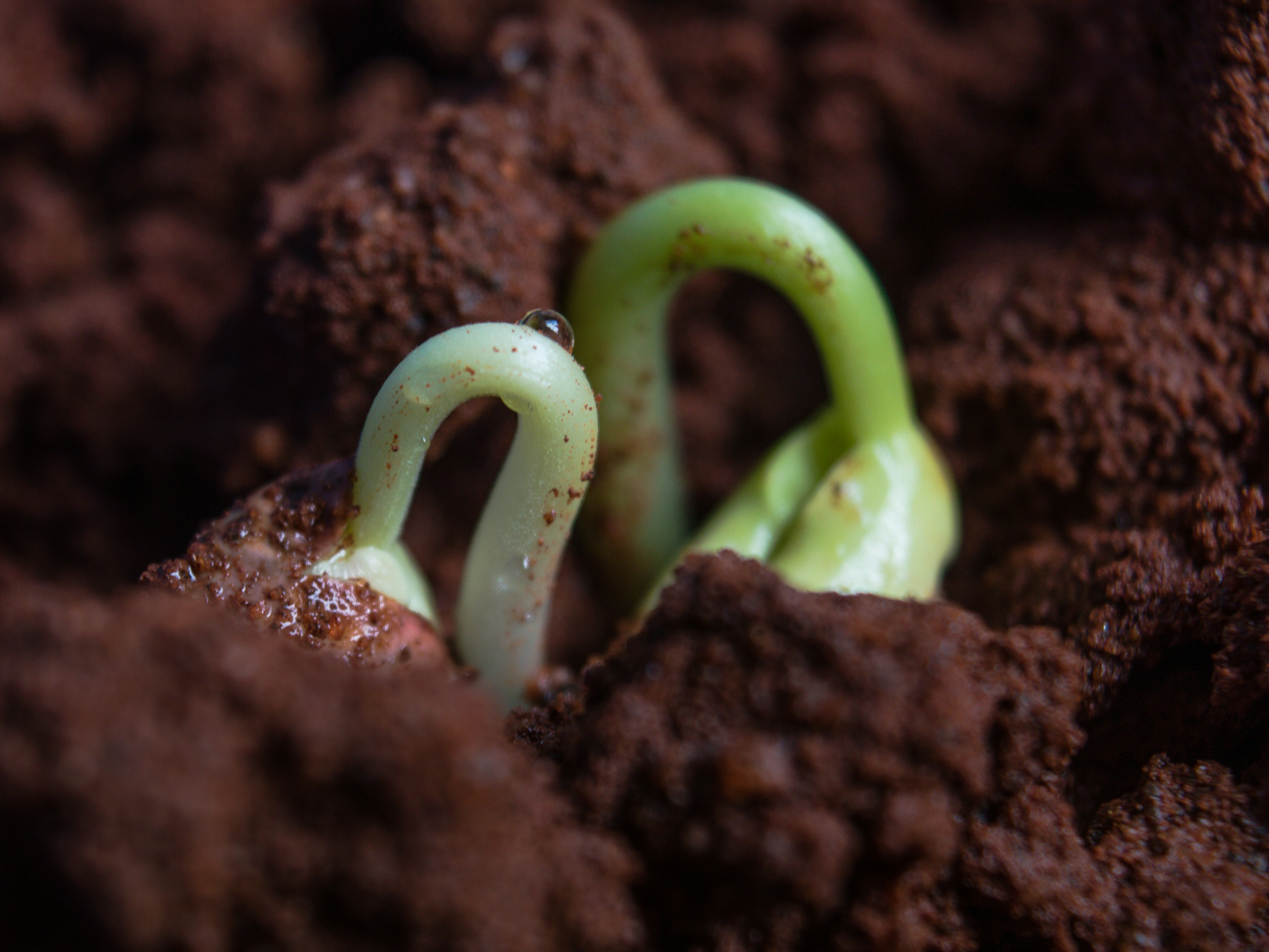
And low and behold, tiny and tender triangles of  green, had started pushing through the dark, rich compost. 

PEAS!

Were they way later than I expected? Yes. 

Were they way later than the packet had told me they’d be? Yes. 

But they needed their own timeline – not mine. 

So much of life is like those pea seeds. 

We want things to happen faster. 

We want results on our timeline.

Why? Because we want to be in control. 

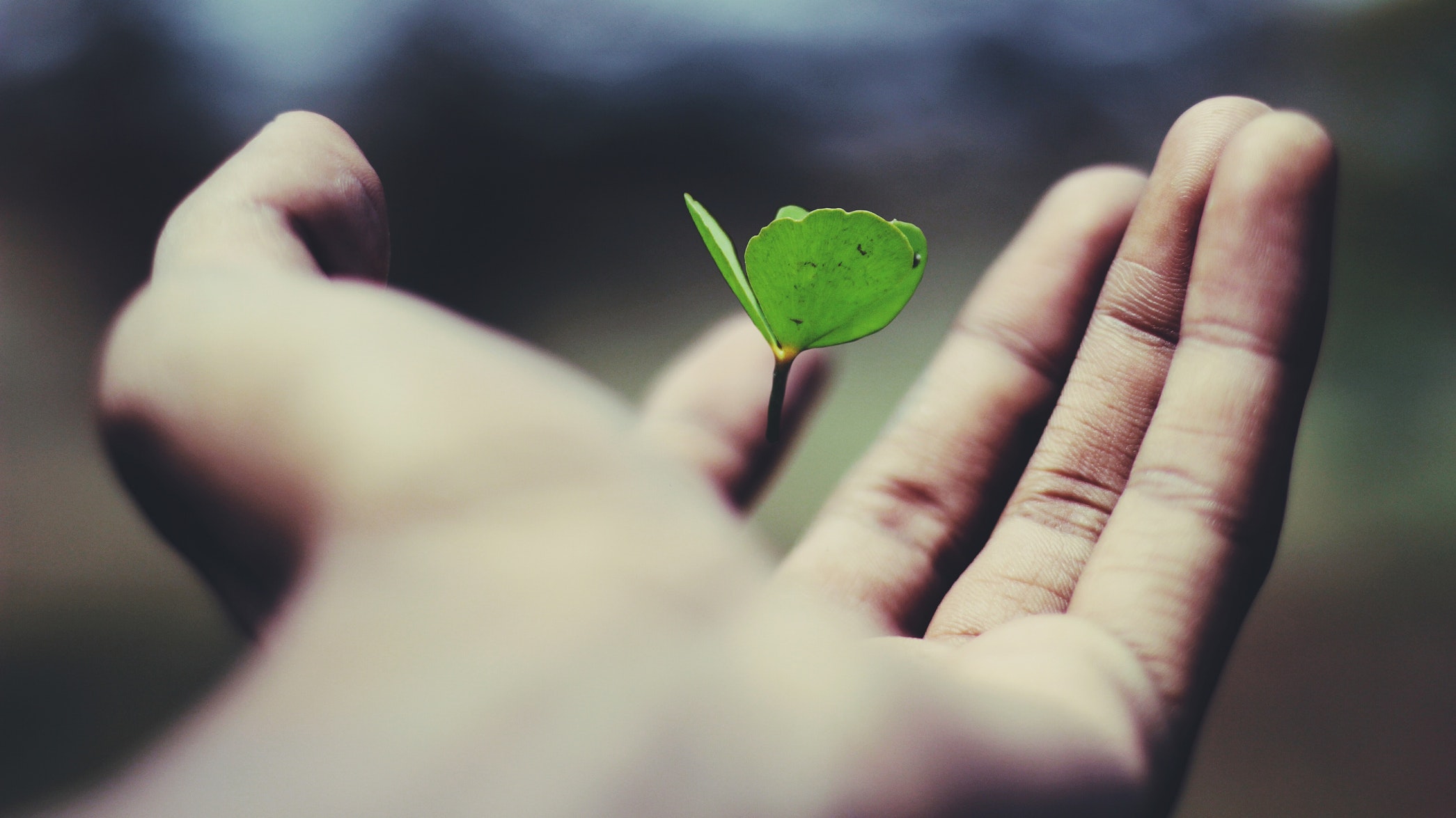
To me the peas (finally) popping up are a reminder that if I just wait, beauty will emerge. Growth will come.  

Of course, this isn’t true for every single circumstance in life. There is an element of action to our time on earth, but I think more often than not, we could stand to wait a little longer.

Next time I’m worrying about something taking too long, or rushing to get things done, I’m praying I’ll be able to take a deep breath and just wait for God to work. 
JANUARY MAGIC

I told myself I wasn’t going to do it again. I’d learned my lesson. I was going to wait for just the right timing. 

I looked at the books. 

I started making a chart. 

I had a plan. 

And then, the sun came out. 

And people on YouTube told me I could do it. They said now was the time. 

So, a few Saturdays ago, with frost making the blades of grass sparkle and crunch under my feet, I went out to the shed and pulled out my seed starter trays. 

I picked up some seed starting mix, and while Erik went to take care of some ministry stuff, I got to work planting my vegetable seeds.

In January. 

Probably way too early. 

It’s possible nothing will survive. But I can’t help it. 

I get so excited about gardening that I just can’t wait any longer. Especially on a sunny day. 

This year I am doing things a little different – hopefully that increases my odds of success. 

In addition to starting a number of plant babies inside, on a heating mat, under grow lights, I decided to try “winter sowing.” 

Apparently, when you plant in a mostly enclosed plastic container and put it in a sunny location, in effect, a miniature greenhouse is created. Because the containers are mostly sealed (They do need a little airflow, and of course, drainage holes), they stay moist and don’t need constant watering. Plus, the ebb and flow of daily temperatures is supposed to “wake up” the dormant seeds in their own timing. You leave them mostly alone, making sure they stay moisturized, until the garden soil warms up enough to transplant them.

They don’t need any hardening off because they have already been exposed to a variety of temperatures and direct sunlight. 

Sounds pretty amazing, right? 

I thought so, too. Especially the promise of getting to start this year’s garden earlier than my garden book said I could. 

Because the truth is, I’m impatient. 

Really impatient. 

And my garden is just one of the places it’s most evident. 

To hedge my bets and try to get the most out of my spring and summer garden this year, as I mentioned, I also started seeds inside. 

Nestled in my dining room, under my 20-year-old black console table, is my “incubation station.” 

I started the same seeds there that I did outside, I hope doubling my chances of success. 

And inside, in the room I walk through dozens of times each day, is where the January magic started happening. 

I planted and labeled the seeds. 

I tucked in cool weather crops like broccoli, lettuce and spinach alongside heat-loving tomato seeds. I watered everything and covered it with a plastic dome. Two days later, I decided to take the dome off to make sure the soil was still moist enough for germination to happen. 

And that’s when I saw it. 

Not one, or two, but at least half a dozen little leaves popping out of the soil and straining for the light. 

I left the dome off. 

I watered again and walked away. 

That night, more cotyledons – this time lettuce – had been born. 

For the last week, I’ve checked those seedlings and stared at the soil of the “empty” trays multiple times a day. 

I almost can’t get enough. 

It happens so fast. One morning it looks like nothing is happening, then two hours later, you see a white bent-over stem starting to stretch from the depths of the dirt. A few more hours, and yellowish leaves have emerged. The next day, the yellow has turned to green and the sprouts stand taller. They are reaching, straining, yearning for the life ahead of them. 

Magic is the best word I can think of to describe it. 

And this January, I needed that magic. Badly. Almost desperately. 

Will all these little guys survive? I don’t know. Probably not. Even if they do, I probably won’t have room for all of them. Picking who will get transplanted – who will be given the best chance of survival – is an emotional battle I’ll fight another day. 

But today, I’m just going to enjoy the magic of it. 

How out of nothing, comes something.

How in the tiniest of seeds – some as small as a grain of sand – can become something that will one day fill the entire corner of my raised bed. One day, God-willing, it will produce leaves that will fill the bottom of my salad bowl as I pile on other miracles – plants of different sizes and colors that will strengthen me, nourish me, delight me and lead me to give thanks to the Creator for His amazing bounty. 

So, yeah. I did it again. 

I planted my garden early. Probably too early.

 But even if it all dies and I have to hit up garden stores to fill my beds come April and May, I think it’s worth it. 

Because January – especially this year – needed some magic. 

A CHANCE

photo-1505816014357-96b5ff457e9a

There are people you meet who change the direction of your life. Today I found out one of those people passed away. And while there is sadness, it’s almost entirely eclipsed by gratitude.

I met Rob at an interview for a non-existent job. I had recently decided to try to make a go of it as a freelance writer (which I never would have done without the support of my husband, Erik). I spent hours on craigslist and job sites looking for writing gigs to build my resume. But Erik is more strategic than I am. He didn’t get distracted by one-off paychecks but has the gift of looking a bit further ahead. He’s the one who saw the posting.

A company was looking for a writer, a graphic designer and a proofreader – all in-house positions. Because I matched up with some of the criteria, Erik encouraged me to put together a proposal for them. I did, and sent it to the Creative Director, Rob. He graciously met with me and told me that he believed I had talent. (Those words were the first gift he gave me.) Then, he told me because I wasn’t interested in full-time work they didn’t need me at the moment, but would keep my information on file.

I left thinking I wouldn’t hear from him again. But a few weeks later, I did.

He said if I agreed to come in and train in-house for two weeks, they would try me freelance. I accepted, and the chance he gave me changed my career path.

Rob didn’t make me a writer, but in that moment he affirmed that I already was one. By taking a chance on me he told me that maybe my crazy dream wasn’t so crazy after all.

I worked with him for a just a few years before moving on to another organization doing similar work. I learned so much from him. His willingness to take a chance on me helped make me the person I am today.

He didn’t have to take a meeting with me.

He didn’t have to look at my clips.

He didn’t have to hire me.

But he did.

Because he was willing to take a chance on me, my life changed.

I don’t know who the “Robs” in your life are. But I know you have them. I hope as you picture them you smile and are inspired to keep an eye out for the people in your life who need what you can give them: a chance.

THE THIRD SPOON

Spoon mira-bozhko-237954-unsplash

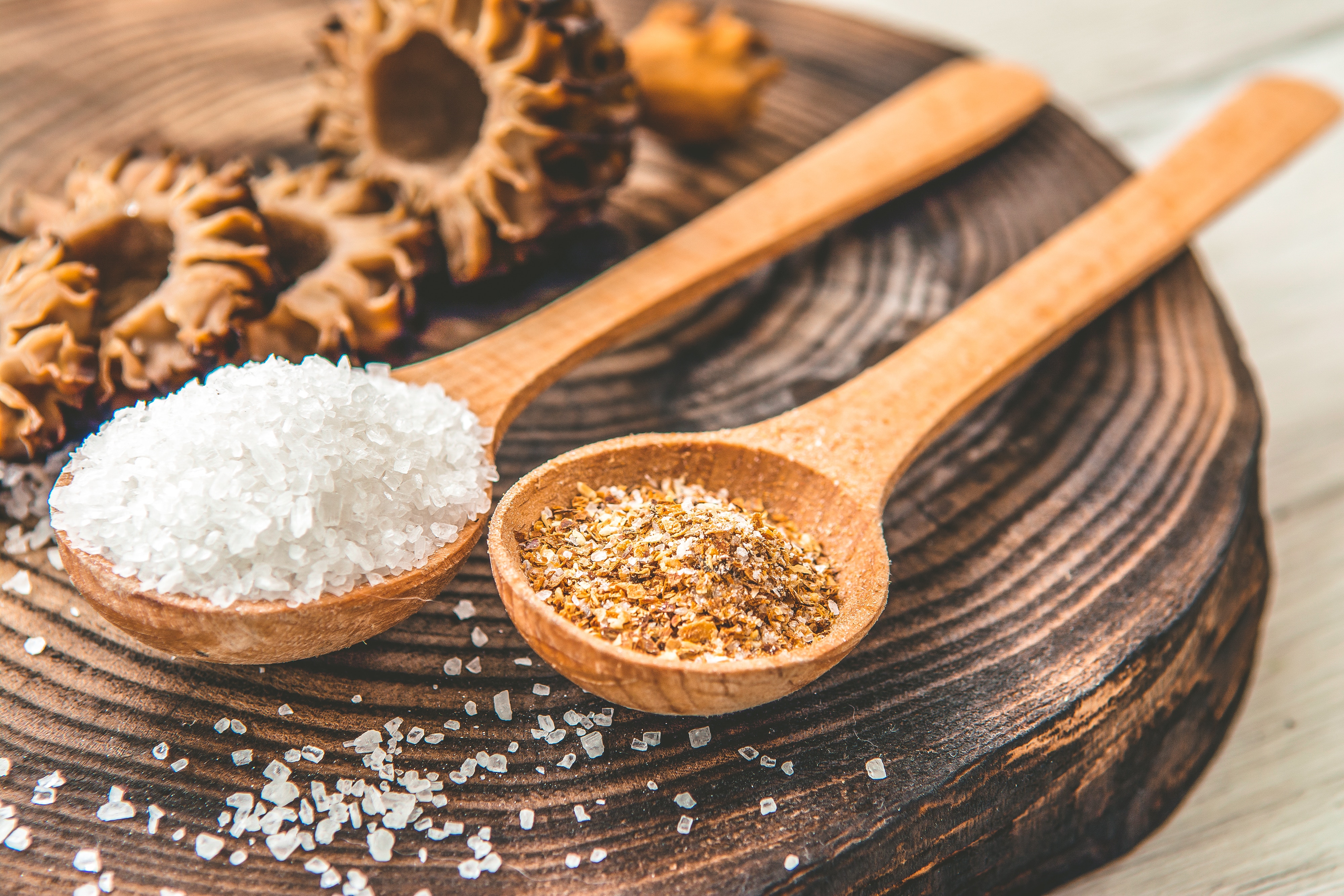
We have three wood spoons.

One we got as a wedding gift. It’s a good brand. It’s strong. It has a few scaly patches that may splinter your tongue, but it’s still in good shape. It’s the biggest of the bunch.

Another I’ve had for years. It’s rough and flaky. Not because it ended up in the dishwasher a few too many times, but because I probably bought it at the dollar store when I had just graduated from college.

And then there’s the third spoon. Its bowl is closer to a circle than an oval. Its handle not much bigger than a pencil. But when my fingers fall on this one, I smile.

The third spoon is smooth from decades of stirring. There’s no telling how many circles it has made around the pots and pans in my family. In spite of its age, there are no splinters, rough patches, or flakes. It looks like it could outlive us all.

It might.

I got this spoon as a hand-me-down. It was my grandmother’s. I don’t know how long she had it, but when I pick it up, I see her arthritic knuckles and neatly trimmed fingernails, her cream-softened hands and the love she had for making food for her family.

In the mornings, when I pick up the spoon to stir my steel cut oatmeal, I imagine her stirring her own version of the breakfast classic, which she called “mush.” I wonder how many times she made it? I wonder how many pounds of cracked oats she went through over the years? How many times did my grandfather sat down to a steaming bowl? My mother? Her siblings?

Those questions and the memories that flood back when I use the third spoon are what make it special.

It isn’t just a spoon. It’s an artifact.

The third spoon is teaching me how important it is to listen. It’s teaching me that new and flashy isn’t always best. It’s teaching me the importance of long lasting-quality, family, history and shared meals.

If anyone else picks up that spoon, they won’t hear the stories and lessons I do. They won’t picture my grandma’s grey, short, permed hair. They won’t taste her “Posner’s” chicken or spaghetti sauce with grated carrots.

But I will.

The third spoon connects me to her, even though she left this earth years ago.

For that I’m grateful. It makes me want to listen more carefully. It makes me want to sit down with my family. It makes me want to buy quality products that might last for generations.

But most of all, it makes me want to smile. And so, I do.

EIGHT

todd-diemer-220621-unsplash

Eight years ago I did something I didn’t know I could do.

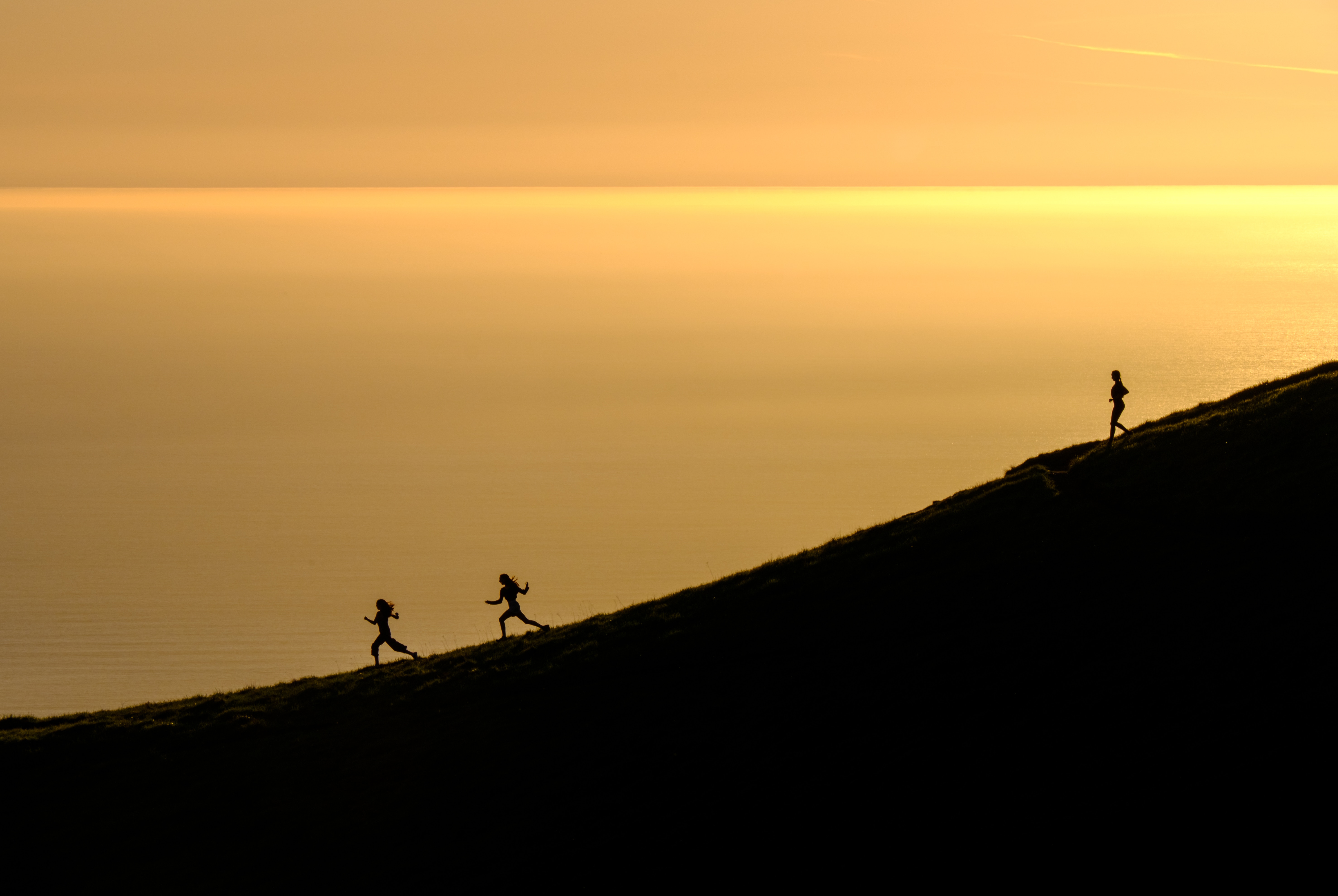
I ran. A half marathon.

I had looked up to distance runners for a long time, admiring them for their strength and perseverance. But I didn’t ever think I’d be in that category.

Then, with two of my best friends by my side, I signed up. I had only ever done two road races:

  1. I had walked (yes, walked) a half marathon. (I’ve never been so sore!)
  2. I’d run a 5k

The half marathon had been in November. Four months earlier. And now I was setting out to run that same distance. I was nervous.

We got there early, not wanting to miss anything. The extra time added to our nerves, but it also gave us time to bow our heads and pray, reminding us of the bigger picture of racing and life in general.

And so, the gun went off, and so did I. As the wet miles of Mercer Island passed by, I realized I could do it. I was going to make it.

At the finish line I was flooded by mix of emotions. Pride, gratitude, excitement, accomplishment.

Then something else set in. The bug.

I knew I wanted to do it again.

Eight months later, with one of those same friends by my side, I ran the full Seattle Marathon.

I never would have guessed that I’d keep running all these years. I never would have guessed that that one race was the start of something big in my life. And that’s the thing, you never quite know when you’re at a turning point.

By God’s grace it just happens — sometimes when you least expect it.

I’m not fast, nor will I ever be, because in running — like in life — it’s not how fast you get to the end that matters. It’s what you learn along the way.

Running has given me a lot over the years: time with God, time with friends, time in creation. It’s helped me push myself, it’s broken me, it’s shown me how incredible the human body is. And so as hard as it is, I keep at it.

Today I had planned to go out for a four-mile run, but a friend wanted to go further, so we did.

Over eight miles. Today, in celebration, that feels like just the right distance.

CURTAINS

eduard-militaru-133851

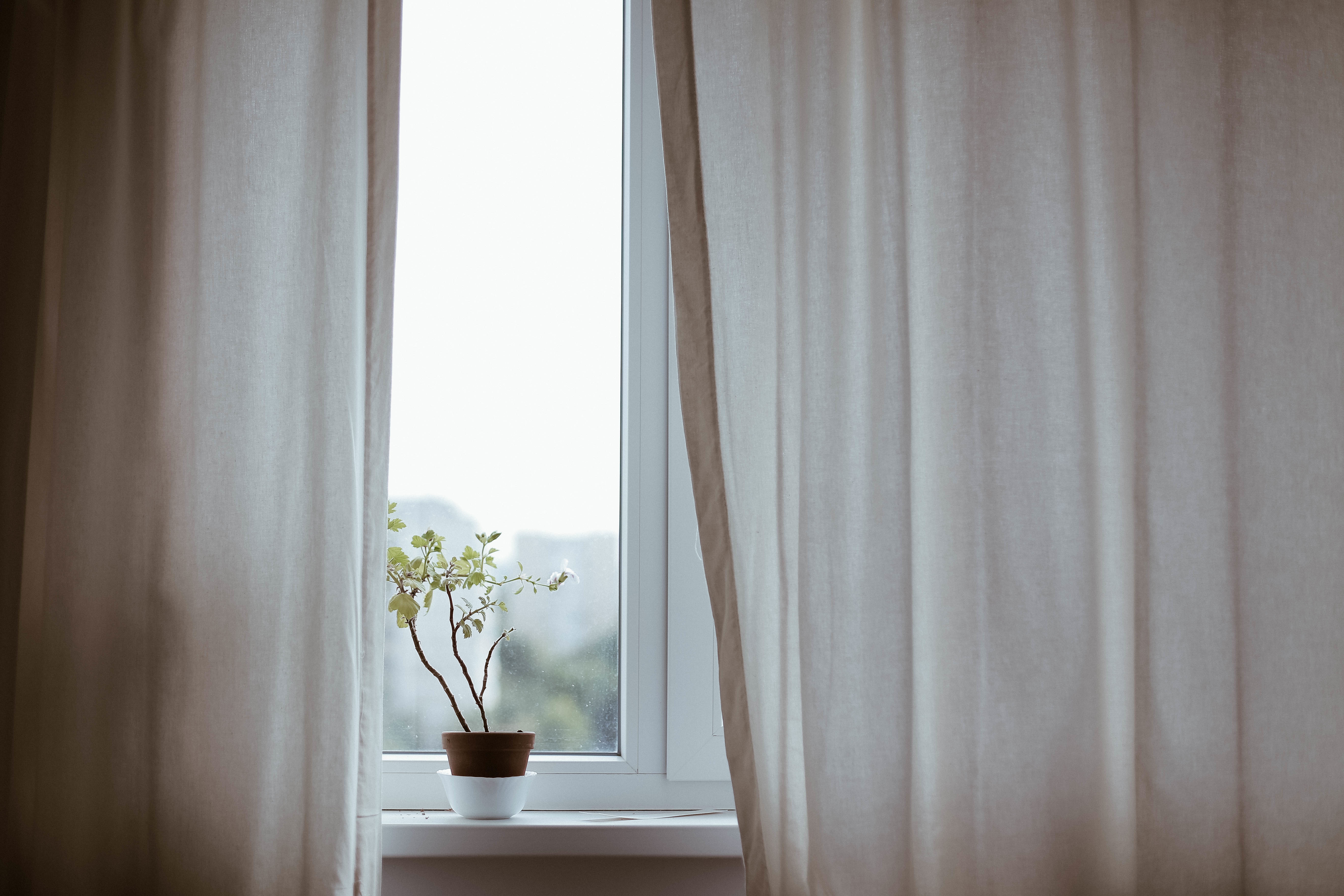
Pulling the curtains open was hard this morning. Not because they are awkwardly behind our aging sectional, but because I didn’t really want to open them.

There are days when I leave them closed, and the light never pours and puddles on the scratched coffee table.

But today, I made myself.

I made myself because I knew that I needed to let the light in. I’ve been feeling down lately. And when life feels heavy, it’s easier to stay in a cocoon. To take longer lying in bed, to leave the curtains closed, to wear stretchy pants and put your hair in a messy bun.

Part of the reason I’ve been feeing out of sorts is I’m a gal who craves connection. Not the surface, small-talk kind, but the deep kind. That kind that makes you feel like you matter because the conversation matters.

The other side of that coin is that I’m private. I want that connection, I long for it, but I’m not the best judge of when it’s appropriate to go there, and who it’s safe to go there with. So, in this house on a busy street with a bus stop on the corner, I often keep my curtains closed. It’s a way to protect myself. To stay private, safe, contained.

Except – why is there always an “except?” – then I stay stuck in darkness (or worse, artificial light).

So today, I did it. I opened the curtains. I let the light in. Yes, there will be people passing by my gate peering in all day. I don’t like it. But to let the light, in I realize I have to let those people in, too. We were created to be in community. Even if that community is just a nod to the neighbor or a kind smile, it matters. It’s the light. The light that we all need, whether we realize it or not.

I don’t know that tomorrow will be any different. I don’t know that I’ll feel more connected or more at peace. It doesn’t matter. What matters is that today I opened the curtains. Did you?

I WAS WRONG

photo-1433785567155-bf5530cab72c

Our little rascally dog Jude is going to be 13 years old next month. Jude is pretty happy sleeping on the couch for hours on end, but of course, like any other creature, he needs potty breaks.

One day, he and I were checking out a new route in our neighborhood when I heard what I thought was intense moaning. Looking around our tightly packed neighborhood, I noticed an elderly man lying in his carport.

“Oh no!” I thought. “He’s dying, or sick, or injured. What do I do?”

I of course frantically looked around hoping someone else had heard the noise and silently wished that this man hadn’t been left alone. Knowing I couldn’t just leave him there, I took a deep breath and called out to him.

“Hello? Are you ok? Do you need help?”

Instantly, and I mean with the speed of a bullet train, this guy shot up and just stared at me. It was obvious I had startled him and that he didn’t speak English. It was also obvious by the way he jumped up that he was in no way incapacitated.

“Oh my gosh,” I thought to myself, as my face grew warm with embarrassment. “He’s not in pain. He was chanting and meditating.”

Because it was something out of the ordinary for me, I assumed that something was wrong. But in my assumption, I was wrong.

There are people all around us living different lives — especially here in Hawaii, where cultures meld together in a way that you can’t understand unless you’ve lived here — and I think we can probably all learn from each other.

None of is Jesus. None of us sees and knows all. None of us is right all the time.

It’s amazing when you listen to that still, quiet voice of the Spirit how much you can learn about yourself — and how flawed you are.

So I’ve learned a few things from this little encounter:

1. If someone is chanting, it doesn’t mean that they are dying.
2. It’s ok to be different. Maybe, instead of letting our differences push us apart, they could bring us together. Jesus wasn’t a prostitute, but he hung out with them. He wasn’t a sinner, but he talked to people about their sin.
3. I need to do a better job of meeting people where they are at and getting to know them and what they think.
4. Don’t always assume what you think is happening, is in fact happening.

And one parting thought I can’t sign off without sharing:

If someone sounds like they are in trouble, by all means find out if they are. But then, don’t just shyly run away in embarrassment. Start a conversation if you can and see what you can learn.