MY LIFE IN ORCHIDS

There are three orchids sitting on the windowsill in my office. Each one was a gift. 

One given as a housewarming welcome. 

One given as an encouragement for surgery. 

One given by a friend moving away who wanted her plant to continue to live. 

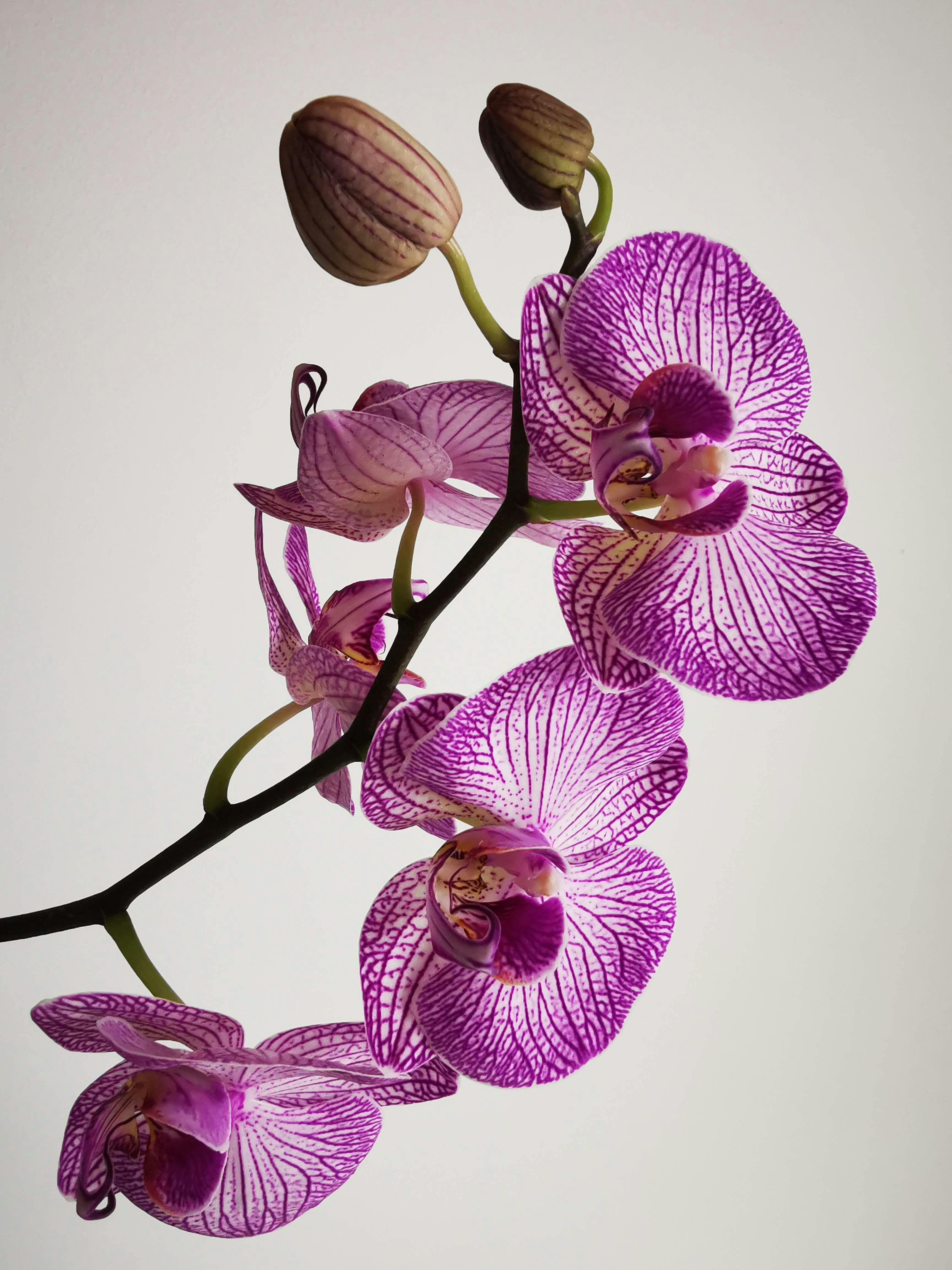
Right now, all three are blooming. Bursting forth in various shades of dark violet, magenta, and white. Their flowers a splash of hope against the rain that’s falling from a grey sky outside. 

But as I look at those orchids I see more than flowers, or even hope. I see my life. 

I went to Hawaii for the first time when I was in middle school. The warm air, balmy breezes, swaying palm trees and turquoise waters captured my soul. Orchid leis were everywhere; their monkey-face flowers strung through to make necklaces. I don’t remember if I got one on that trip or if it was years later when one was lifted over my head, given with a kiss on the cheek. 

For years we returned and the orchids were always there to greet us, no matter what island we landed on. 

The ocean called to me more than the vibrant blossoms, but they were always a part of the experience. A part of all the trips I took to the place I loved. 

The day of my college graduation, my dad surprised me with an orchid lei. Its flowers were the same bright magenta that now adorns my windowsill. Leis are a big deal in Hawaii. They mark special occasions. Moments of note. Celebrations to remember. And even though we weren’t Hawaiian, or anywhere near Hawaii, my dad wanted me to have a touch of the place we all loved, a reminder of all the beauty and color that exists in the world. 

Fast forward a few years and I’m in my mid-twenties, walking home from the bus stop on a drizzly Seattle day. Just as I get to the hill, I look up and see Erik walking towards me. In his hands he held two things. A bottle of 7-up and a bouquet of orchids. 

“You always feel queasy when it’s a rainy day and you can’t see out the bus window,” he said, handing me the soda. 

How did he know that? I hadn’t even realized it. We hadn’t even been dating that long! 

Next, he handed me the orchids. 

“These are for you,” he said. 

As I remember it, there was no reason. No anniversary or birthday to celebrate. Those “just because” orchids were the first flowers he ever gave me. Even though we hadn’t said  “I love you,” yet, they made me feel special and, well, loved. 

A little less than a year later, “I love yous” already said countless times, I got on a plane to Maui with my parents and sister, but without him. We scheduled a phone date for the same time every day, and each day I pestered him with the same question, “Are you coming?” 

His response was always Socratic: “Did you buy me a plane ticket?” “Did you want me to come?” “Did you talk to my boss and get the time off for me?”

Little did I know that he and my parents had planned to surprise me so he could propose on the beach. A few days later, he arrived, fresh off the plane. Shocked and delighted to see him, it took me a while to understand his mission for being there. Finally, he talked me into going for a walk on the beach, where he proposed. 

I didn’t say yes once. I said yes three, maybe four times. 

Overjoyed, we celebrated at a nearby restaurant – the Sea House – each plate and cocktail glass garnished with, you guessed it, orchids. 

When I designed our wedding invitations, I made sure there were orchids on them. After all, they were part of our story, even if only a small part. The bouquet I carried down the isle also had orchids. Orchids that Erik scoured the Seattle-area for after our original order was lost. 

At the time, neither of us knew that years later, we’d move to Oahu and be greeted by people who would become some of our best friends with more orchid leis. 

Birthdays. Anniversaries. Special occasions, the orchids would show up. We’d find wild ones on hikes and nearly every grocery store sold different versions of the potted flowers. I tried growing them several of the places we lived. Orchids are supposed to thrive in Hawaii, right? Mine always died. But even though I wasn’t growing them myself, orchids were a part of our life in Hawaii. 

Then we moved back to Washington and in with my parents. Somehow my mom has mastered the art of growing orchids and almost always seemed to have some in bloom. Yellow. White. Purple. We had left Hawaii, but the orchids still surrounded me, surrounded us. 

The day we moved into the house we live in now, some friends brought over the first orchid I mentioned. The housewarming one. How fitting, I thought, but was leery that I wouldn’t be able to keep it alive. Over three year later, it’s still happily growing alongside the other two. 

All three have been blooming for months. And that’s the thing about orchids. When still connected to the stem, each flower can last for weeks, if not months. Their blooms on display far longer than any other flower I know of. 

I don’t know how these three plants are thriving in my office in Washington, far from their native lands, but I’m glad they are. I’m thankful for their blessing that reminds me that you never know what will be around the corner. But God-willing, there will always be beauty … and maybe an orchid…to remind you that life is good, beauty is worth celebrating, and things can thrive in unexpected places. 

LOVE AND A LAPTOP

Erik bought me a new laptop. It’s still in the box, sitting on top of the armoire in my office. 

I haven’t even taken it out of the cardboard yet.

Part of that is practical. Erik will help me set it up and he’s been busy with work all week. I’m telling myself I want to keep it pristine until I actually start using it. But that’s not the whole story. 

Hiding behind that practicality is the fact that I don’t think I deserve a new computer. If I keep it in the box, I don’t have to face some of the realities of life right now. One of the biggest ones is the loss of my job. 

I loved the writing job I had, but it ended a little over six months ago. My computer has been a reminder of the 15 years I did that work, and now, the new laptop is sitting here, ready to be opened, reminding me that the season is over. 

I want to open it. 

I want to use it. 

I want this computer to mark a new season of my life. 

But I don’t know what that will look like yet, and because I don’t know, I don’t feel ready to step into it. Especially because right now, I can’t “pay back” the cost of the laptop with my next paycheck because I don’t know when my next paycheck will come. 

Never mind the money was already in the account. 

Never mind that I’m the one who earned it at my last job. 

Never mind that my current laptop is six years old — ancient in technology terms. 

I still feel the pressure to make the cost worthwhile. To somehow prove that I’m worth it. 

And that gets to the heart of it, doesn’t it? The reality is, I’m afraid I’m not worth it. Not only of the new laptop, but of the love Erik has for me. So I keep trying to do things that prove my worth. 

See? I can earn the money back. 

See? I can grow a garden so we have food. 

See? I can cook a good meal.

See? You made a good choice marrying me. 

It’s not that I don’t like gifts. I do. But I accept them much more easily when they are small and don’t cost too much. 

A surprise matcha late? Sure!

Extra vegetable seedings? Absolutely! 

Clothes you don’t want anymore? Yes, please! 

But a laptop? That wasn’t cheap. That was a sacrifice. I’m not sure I’m worth it. 

As I thought about it, I began to wonder, how often do I say the same thing to God? 

How often do I try to pay back the gift of salvation? 

How often do I attempt to earn the love I’m already given? 

Why do I feel like when I’m given a gift I need to figure out a payment plan? 

I think it comes down to a quote from the late author and spiritual director, Judy Cannato, that I’ve been pondering for weeks. Here it is:

“Everywhere the Holy One is shouting and whispering, ‘Let me love you.’ And all that is asked of us is to receive. In reality, that is our life’s work. Nothing more, and certainly nothing less.”

I could have easily missed those four sentences. They were in a forward from my uncle, sandwiched between morning spam emails all wanting something from me. 

Money. 

Time. 

Attention. 

But my uncle’s email didn’t want anything from me — it was offering me something. So, I read it. Then I read it again. And again. Now, this idea of simply accepting love has lodged itself in my brain, like a worm in an apple. I can’t get it out, and even if I do, there will be a trail left that can never be erased. 

I have spent so much of my life trying to be worthy of the gifts other people give me. Of their time. Attention. Love. 

But what if, instead of trying to make myself worthy, I let myself be loved? What if I open the new laptop, ask Erik to set it up, and focus on being grateful that God loves me enough to have given me a man who encourages me at every turn? 

Oh what grace! Make no mistake, it is grace. I’ve attended churches that have talked about grace my entire life, but it’s still a struggle for me. Not only when it comes to things like laptops, but ultimately, to the love of God. 

Just like letting yourself be loved, at its core, grace sounds simple. The most common definition I’ve heard is that grace is unmerited favor. It’s goodness and generosity given to you even though you didn’t “earn” it and can’t pay it back, and that gets to the heart of it. Erik doesn’t expect me to pay back the cost of my new computer. He’d laugh at me if I even tried. He knows that it will be a blessing for me and he wants me to have it. He wants me to delight in it. He knows it’s a tool that will help me to do whatever job I get next. 

Grace. 

Grace. 

Grace. 

The grace of God isn’t something He expects us to pay back. There’s no way we ever can. He knows that, but He gives it to us anyway. In His mercy, kindness, and love He wants to bless us. He delights in it. And He wants to equip us to do the work He is calling us to do. 

 But how often do I — do you — leave the grace of God in a box on the shelf thinking that if I work hard enough, then I can enjoy it? 

What would it look like to live in the fullness of the gifts I’ve already received? 

To live in the love that has already been poured out? 

To live as a chosen, ransomed daughter of the God of the universe?

To live in freedom from the chains of death?  

To live fully forgiven, fully loved, fully redeemed? 

Maybe this new laptop is just the start. Not of a new “work” life, but of my life’s work. Letting myself be loved. 

If Judy Cannato was right, and I think she was, it’s your work, too. 

THE CAR WASH

In my family, washing the car isn’t just about getting dirt off. It’s not only about making chrome sparkle and the glass shine. 

It goes much deeper. 

Growing up, every time my parents got a new car (almost always used), the first thing we would do is wash and wax it. 

That first wash and wax was a way of claiming the car, saying, “This is mine, and I’m going to take care of it from now on.” 

When I got my first car, the first thing we did was, of course, wash and wax it. 

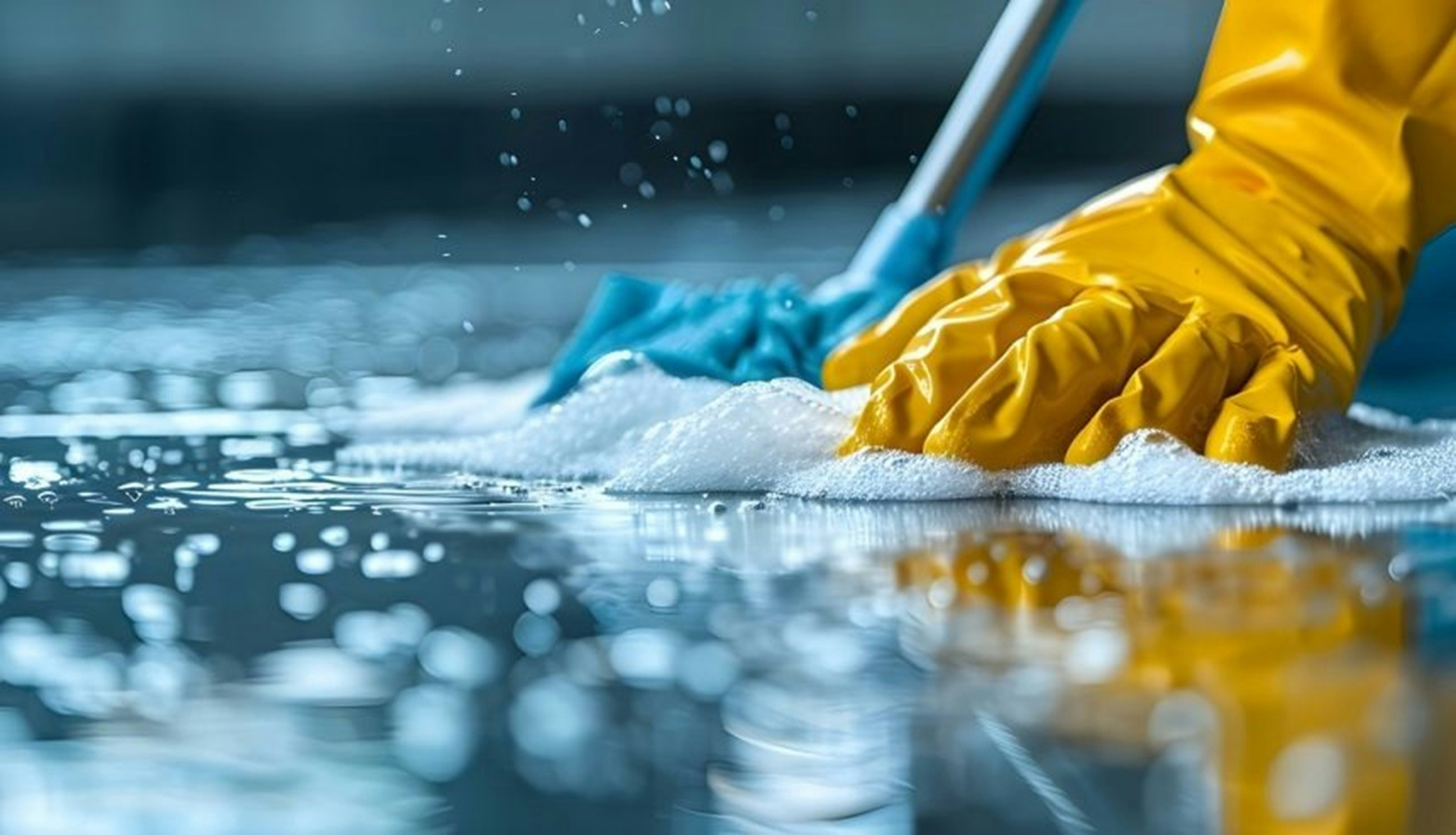
We did it in my parent’s driveway, the plastic five-gallon bucket filled with soapy water and decades old sponges. As the sun shone down, we had to work fast for fear of the soap drying before being rinsed away to seep into the nearby lawn. 

When everything was good and dry – maybe even a day or two later – we’d wax it. I can still smell the scent of the orange bottle “Nu-Finish” wax we poured onto old rags and rubbed Karate Kid-style in small circles on every painted surface. 

It was a liquid wax, so you had to wait for it to dry before you could go back with a clean rag – often cut up bath and hand towels that had outlived their usefulness.

You knew it was ready when the wax turned foggy and frosty, with no shine left. You could test it with your finger. If it wiped away completely, it was ready to be removed. 

I have no idea how long it all took. Probably an hour or two. But it was usually a family affair, all of us putting in the elbow grease to welcome a new vehicle into the family. 

It’s a lot of effort, and the wet days in Washington don’t always leave a window for that act of claiming to occur. But even as he’s gotten older, my dad has found a way to still make sure it happens. 

He takes us to his favorite carwash, pulls out his credit card, and pays for a wash and wax. 

Every time. For every one of us. 

Me. 

My sister. 

My nephews and niece. 

We don’t buy cars too often, so it’s not a major expense. But in many ways it’s a rite of passage. 

It’s dad’s way of taking care of us. Of honoring the car and maybe asking it to keep us safe. Plus, it’s his way of reminding us that stewardship matters. 

Wash and wax your car. 

Get oil changes. 

Pay for regular tune ups. 

Fix things when they go wrong. 

Do all that and your car will last – and serve you – for a long time. 

He’s right.

Just this last spring, we retired a car that had been in our family for well over 20 years. 

A 1996 Toyota Camry. My parents bought it for my mom, used, when she was still teaching. After she retired, she kept driving it for years, toting grandkids to soccer or going to Bible study. 

But as the years went by, my dad encouraged her to get a new car. So she did. A Subaru Outback with safety features that weren’t even a dream back in the 90s.  

And that’s when we got the good ole Camry.

We were living in Hawaii, and one of our two cars was no longer drivable anymore. Mom and dad paid the shipping, and the Camry took a voyage on the high seas to get to us. 

A week of waves meant that when we picked up it, the car definitely needed a wash and wax. It got one. And honestly, it probably should have gotten one more often than it did while in our care. 

Without a garage, the salt air and Hawaiian sun did a number on its beige paint. But that thing kept running and running. When we moved back to Washington, it came with us. And we drove it a few more years until it was obvious it had earned its final rest. 

As a flatbed trailer took it away, I got a bit choked up. 

Sure, it’s just a car, but it had been a fixture in our family for so long that it was weird to see it hauled away by someone I wasn’t related to. 

Was it that very first family wash and wax that made the Camry last for so long? Of course not. But I can’t help but believe that its initiation, which started with soapy hands and waxy rags, made a difference. 

My husband and I have had our current car for almost three years. We bought it used. And of course, the first thing my dad wanted to do when we showed it to him was treat us to a wash and wax. 

We let him. 

Today, the sun is shining – a rare treat in Washington in winter. I texted my parents to see if they wanted to go for a walk. They did. So I drove over, my car dusty from weeks of rain and the lack of a garage at our rental house. 

When my dad walked outside, he took one look at my car and said, “We should wash that and get the ceramic wax on it today.” 

“Sure dad,” I said. 

So after our walk, we did. And even though I’m 45 and have been married for over 18 years, I let my dad pay.

I know for him it’s a small way of taking care of me. Of showing me that he loves me and reminding me that how you take care of things matters. 

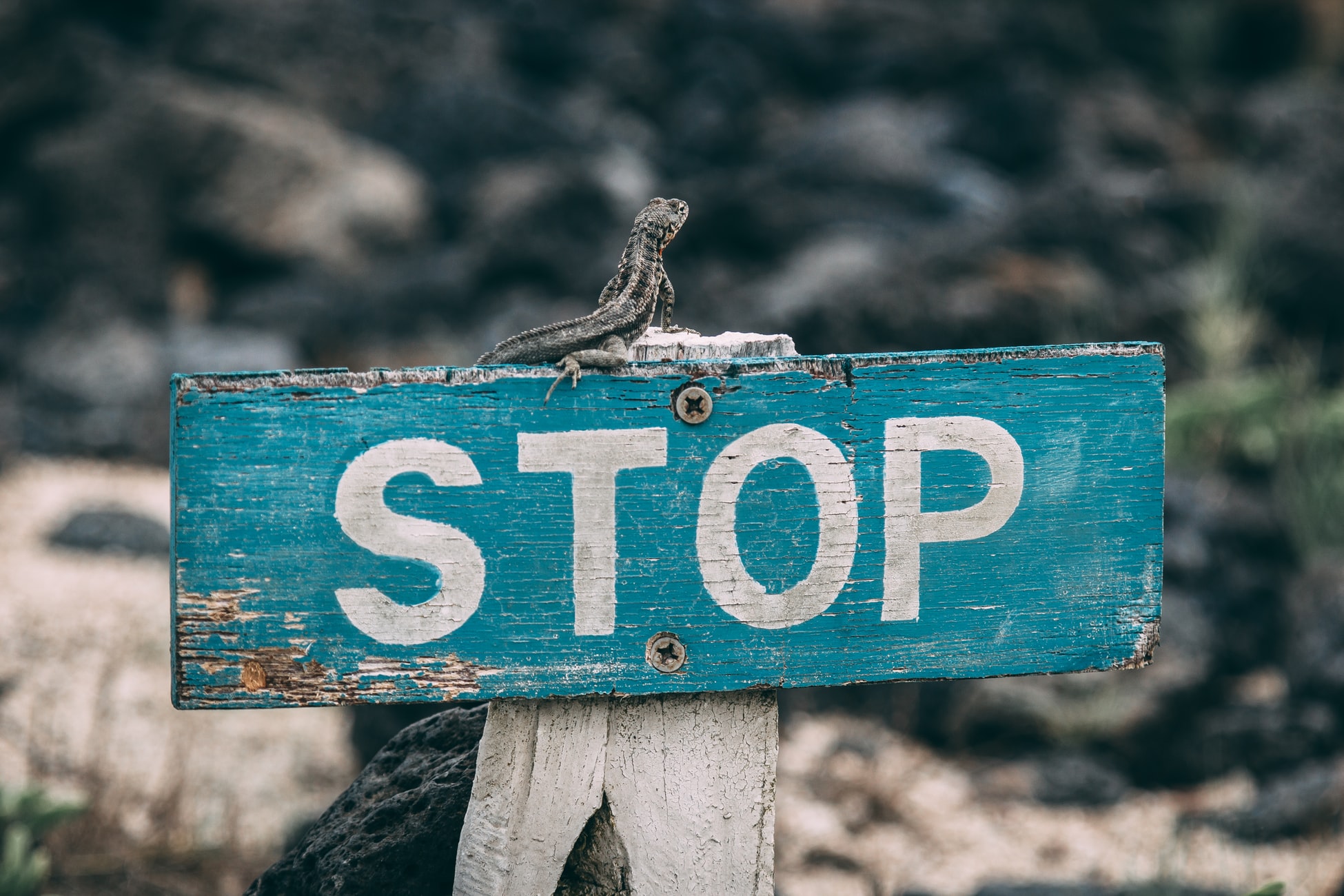
STOP

STOP

2019 was the year I lost my best friend, my dog Jude.
I lost my father-in-law to complications of heart disease and cancer.
And I had a heart attack.

Those three things have been devastating. They’ve been heavy. They’ve been lingering. But those three things have also taught me. They’ve taught me that it’s ok to stop.

It’s ok to stop and cry.
It’s ok to stop and let go.
It’s ok to stop and grieve.
It’s ok to stop and ask for help.
It’s ok to stop and slow down.
It’s ok to stop doing it on your own and seek professional help.

And it’s ok to stop running.

That last one has some extra weight to it because running for me means a lot of different things. I run from my emotions. I run from my pain. I run from chaos. And I run, literally. Or at least, I have.

For the past 10 years, I’d say at least four days a week I’d lace up my running shoes and crank out miles. There were times I enjoyed it. There were times I used it to connect with God. There were times it was life-giving. But there were also times I did it just because I felt like I had to.

But then, on a run one day I started having crazy symptoms and ended up having a heart attack later that day. I literally had to stop running because I couldn’t continue. Then, after surgery, I had to give my body time to rest.

As of today, I haven’t run for three and a half months. While my emotions are mixed about it, the most important thing I’ve learned is that it’s ok. For years I was afraid to stop running. I was afraid I would lose the strength I had gained. I was afraid I’d gain weight. I was afraid I’d slide backwards.

So I kept pushing and pushing and pushing, until I couldn’t anymore. I was forced to stop and when I did I realized that, sometimes, stopping can be a good thing. In fact, it can be a great thing.

I needed to stop running to reconnect with my enjoyment of slowing down and just being outside.
I needed to stop running from my emotions and grief and cry as often and as long as necessary.
I needed to stop trying to fix the pain my husband and I were feeling and just accept it.
I needed to stop and reasses my life and what I wanted (and want) it to look like.
And so that’s what I’m doing. I’ve decided that I want 2020 to be a year marked by rest. Not sitting on the couch, scrolling through Instagram kind of rest, but true, deep rest.

I don’t know exactly what it will look like, but I think it will include more walks, more reading, more journaling, more praying, more slowing down, more yoga, more quiet time with God, more acceptance, and more discovering joy.

After last year, that sounds pretty darned amazing.

83

photo-1516967124798-10656f7dca28

Eighty-three days ago, I had a heart attack.

It’s hard to write about because it’s hard to believe, and even harder to process.

But facts are facts.

The sun rises every morning. It sets every evening. When it rains, things get wet. And almost three months ago I had a heart attack.

I didn’t realize what has happening at the time. It was nothing like they show in movies. I didn’t fall over clutching my chest. It hurt, but I could handle it. Afterall, it was the middle of the night. So I took some Tylenol and tried to sleep.

I didn’t even tell Erik until the next morning. Concern swept over his face. He wondered if I needed to go to the doctor. I waved off his question. The pain was better. I’d just wait and see.

But then I got to thinking.

I still didn’t feel right. Something had happened that morning while I was running. I almost blacked out. I got crazy nauseas. That’s not normal, but because I’ve run five marathons, I know that some runs are hard.

Plus, it was hot — in the 90s, with a humidity factor like a sauna. I told myself that I must have gotten over-heated. The chest pain later that night must have been from that. Yep. Heat exhaustion. Or maybe I was just anemic. The symptoms matched.

I had some routine blood work scheduled for a few weeks out, but I decided to do it early. I sent my doctor a message saying what had happened and asked him to check for anemia when the tests came back. The nurse called the next day.

No anemia. Everything looked great.

Then the Holy Spirit must have nudged me, because before she could hang up I told her what had happened. I said that I still had pain when I exerted myself, but that it was better. I figured I just needed more rest.

If she could have forced me to come in, she would have. But instead she pressed as hard as she could and then made me an appointment for a few hours later.

Fast forward through some more tests and that night I end up at the ER, being told I was going to be staying the night.

And then the next morning, the cardiologist walks in.

“You shouldn’t be here,” he said with a straight face. “You’re too young, too healthy. It doesn’t make sense.”

Great. Then, I’ll just go home.

“You had a heart attack.” Those words came out of his mouth and I would have lost any poker game I’d been trying to play.

“No one told you yet?” he asked.

Nope.

Rushed into more tests and then surgery to have a stent placed to open a blockage, another night in the hospital and the next evening I finally got to go home.

Two nights may not sound like much, but I felt those hours. I know Erik did, too, as he sat next to me in one of those squeaky, vinyl reclining chairs you only find in hospital rooms.

So there it is. I had a heart attack. A mild one, as the doctor told me, but still a heart attack.

What do you do with this type of news?

If you’re like me, you try to figure out whyit happened. But sometimes, there just aren’t answers.

Sometimes you can run 15-20 miles a week, eat healthy, not smoke, not drink much, never set foot in a fast food restaurant, be in your 30s and have a heart attack. And sometimes you just won’t be able to make sense of it except for genetics being at play.

But the thing is, as true as it is, the moving on is hard. My desire to want to control everything leaps to the surface as I figure out how to change my diet, dig into books about how to recover, think about stress management and try to start exercising again.

83 days in, I still don’t feel great. I still have some pain. I’m still tired. I had another test today, I was sure the news would be bad. But the doctor called to say the damage that had been done from the heart attack has reversed itself. My heart is healing.

It’s a strange thing when you brush against your mortality and I’m still not sure what to do with it.

But I’m learning to lean. I’m learning to lean on Jesus. I’m trying to trust that He’s in control. I’m choosing (ok, trying) to believe that He is good. I’m choosing to see my lack of control as something I can grow into, something that God-willing can be a good thing, can give me freedom. What that freedom looks like I don’t know. But I hope to taste it soon.

CLEAN SHEETS

sheets

I washed sheets and blankets today. And don’t worry, it’s not the first time I’ve ever done my own laundry. But still, today was different.

As I pulled the blankets off of Jude’s favorite snoozing spot I cried. Hard.

I cried because I knew that once those blankets and sheets were fresh and clean, Jude would never again be able to make them dirty. That’s because after 16 years by my side, Jude is gone.

Even writing those words is hard. There’s a part of me that knows how true it is because I was with him when he died. And yet, there are large pockets of my mind and heart that keep expecting him to lick my feet when I come back from a run. I expect him to put his face at the edge of the couch and wag his tail as his puppy dog eyes look in mine.

I expect to hear his collar jingle when I open the front door. I expect to have to step carefully when I get up to go to the bathroom in the middle of the night. I expect him to be here.

But he’s not. And while I know that death is a part of life, and a part of owning pets, it doesn’t make it any easier. I’m thankful he lived over 16 years – 121 in dog years – but I still wish he had had more in him.

A good long life is never long enough. At least that’s how it seems to me. Pets, people. When they are gone we always want more.

I’m trying to hope in the day that God sets all things right in this world. I’m trying to believe the truth that He will, because in every molecule of my being I know that death is not right. It’s not how we were created. It’s evidence of how broken this world is.

And yet, it’s hard to hope when you are grieving. It’s hard to wipe the tears as you put blankets into the washer. It’s hard to know what life will look like next. Of course, not everything has changed, but a lot has. It’s a blank slate – a clean sheet – because in some big ways my days will look different now. The friend I’ve had by my side for most of my adult life isn’t here. That hurts. So if that means I cry while I do laundry, I’m going to cry. If that means I have to take a deep breath when I realize I won’t see him sleeping on my couch again, I will.

So as the sheets and blankets spin in the dryer, I’m not entirely sure what’s next. All I know is that the next time I wash them they won’t have dog hair on them. And while I prefer them clean, that reality still makes me sad.

TRUE BLUE

bluechair

The newest thing at my house is blue. Midnight blue. It’s hard but smooth, and has angles I’d never want to try to measure without a protractor.

And it’s glorious.

So what is this thing? It’s my birthday present. And in fact, there’s not just one, but two.

Two midnight blue, sleek, wooden (that part is key) Adirondack chairs. They sit outside as you walk up to our house, and seeing them makes me smile. And it also makes me wonder why it took us so long to get them.

I’m a person who loves being outside. I always have. I love the mountains, the ocean, parks, sunshine, and sitting outside at coffee shops. The green and blues of nature remind me that God is there and that He is good.

So when we moved to a place with a patio, you’d think the first thing I’d do would be to set up an outdoor space. But it wasn’t. Why? Because I was afraid of spending the money. So, instead we bought some used plastic chairs. Within two weeks they had cracked. Within a month they had scratched. Still, they were what we had, so I didn’t think much of it.

Until my husband told me that for my birthday he was getting me real, wooden Adirondack chairs.

We picked them out, came home and put them together and we spent the next two hours siting outside, talking, sipping on a cocktail and then eating dinner.

In the last two weeks I’ve spent more time sitting outside my little house than I have the three years combined. Why? Because I have something real and solid to sit in.

Yes, they cost more than the generic plastic chairs. Yes, they might chip or fade over time. But every penny was worth it. It was worth it for the quality. It was worth it for the joy it brings to me when I walk out in the morning with my Bible and a steaming mug of jasmine tea.

And it was worth it for what they say.

Those chairs speak loudly. They remind me that my husband he sees me. He knows me and knows what makes me smile. He knows what feeds my soul and he’s willing to spend the money to give it to me, even when I won’t spend it on myself.

And that is love. Real, true blue, stable, won’t crack when you sit on it love. And it’s pretty magnificent.

A CHANCE

photo-1505816014357-96b5ff457e9a

There are people you meet who change the direction of your life. Today I found out one of those people passed away. And while there is sadness, it’s almost entirely eclipsed by gratitude.

I met Rob at an interview for a non-existent job. I had recently decided to try to make a go of it as a freelance writer (which I never would have done without the support of my husband, Erik). I spent hours on craigslist and job sites looking for writing gigs to build my resume. But Erik is more strategic than I am. He didn’t get distracted by one-off paychecks but has the gift of looking a bit further ahead. He’s the one who saw the posting.

A company was looking for a writer, a graphic designer and a proofreader – all in-house positions. Because I matched up with some of the criteria, Erik encouraged me to put together a proposal for them. I did, and sent it to the Creative Director, Rob. He graciously met with me and told me that he believed I had talent. (Those words were the first gift he gave me.) Then, he told me because I wasn’t interested in full-time work they didn’t need me at the moment, but would keep my information on file.

I left thinking I wouldn’t hear from him again. But a few weeks later, I did.

He said if I agreed to come in and train in-house for two weeks, they would try me freelance. I accepted, and the chance he gave me changed my career path.

Rob didn’t make me a writer, but in that moment he affirmed that I already was one. By taking a chance on me he told me that maybe my crazy dream wasn’t so crazy after all.

I worked with him for a just a few years before moving on to another organization doing similar work. I learned so much from him. His willingness to take a chance on me helped make me the person I am today.

He didn’t have to take a meeting with me.

He didn’t have to look at my clips.

He didn’t have to hire me.

But he did.

Because he was willing to take a chance on me, my life changed.

I don’t know who the “Robs” in your life are. But I know you have them. I hope as you picture them you smile and are inspired to keep an eye out for the people in your life who need what you can give them: a chance.

THE THIRD SPOON

Spoon mira-bozhko-237954-unsplash

We have three wood spoons.

One we got as a wedding gift. It’s a good brand. It’s strong. It has a few scaly patches that may splinter your tongue, but it’s still in good shape. It’s the biggest of the bunch.

Another I’ve had for years. It’s rough and flaky. Not because it ended up in the dishwasher a few too many times, but because I probably bought it at the dollar store when I had just graduated from college.

And then there’s the third spoon. Its bowl is closer to a circle than an oval. Its handle not much bigger than a pencil. But when my fingers fall on this one, I smile.

The third spoon is smooth from decades of stirring. There’s no telling how many circles it has made around the pots and pans in my family. In spite of its age, there are no splinters, rough patches, or flakes. It looks like it could outlive us all.

It might.

I got this spoon as a hand-me-down. It was my grandmother’s. I don’t know how long she had it, but when I pick it up, I see her arthritic knuckles and neatly trimmed fingernails, her cream-softened hands and the love she had for making food for her family.

In the mornings, when I pick up the spoon to stir my steel cut oatmeal, I imagine her stirring her own version of the breakfast classic, which she called “mush.” I wonder how many times she made it? I wonder how many pounds of cracked oats she went through over the years? How many times did my grandfather sat down to a steaming bowl? My mother? Her siblings?

Those questions and the memories that flood back when I use the third spoon are what make it special.

It isn’t just a spoon. It’s an artifact.

The third spoon is teaching me how important it is to listen. It’s teaching me that new and flashy isn’t always best. It’s teaching me the importance of long lasting-quality, family, history and shared meals.

If anyone else picks up that spoon, they won’t hear the stories and lessons I do. They won’t picture my grandma’s grey, short, permed hair. They won’t taste her “Posner’s” chicken or spaghetti sauce with grated carrots.

But I will.

The third spoon connects me to her, even though she left this earth years ago.

For that I’m grateful. It makes me want to listen more carefully. It makes me want to sit down with my family. It makes me want to buy quality products that might last for generations.

But most of all, it makes me want to smile. And so, I do.

EIGHT

todd-diemer-220621-unsplash

Eight years ago I did something I didn’t know I could do.

I ran. A half marathon.

I had looked up to distance runners for a long time, admiring them for their strength and perseverance. But I didn’t ever think I’d be in that category.

Then, with two of my best friends by my side, I signed up. I had only ever done two road races:

  1. I had walked (yes, walked) a half marathon. (I’ve never been so sore!)
  2. I’d run a 5k

The half marathon had been in November. Four months earlier. And now I was setting out to run that same distance. I was nervous.

We got there early, not wanting to miss anything. The extra time added to our nerves, but it also gave us time to bow our heads and pray, reminding us of the bigger picture of racing and life in general.

And so, the gun went off, and so did I. As the wet miles of Mercer Island passed by, I realized I could do it. I was going to make it.

At the finish line I was flooded by mix of emotions. Pride, gratitude, excitement, accomplishment.

Then something else set in. The bug.

I knew I wanted to do it again.

Eight months later, with one of those same friends by my side, I ran the full Seattle Marathon.

I never would have guessed that I’d keep running all these years. I never would have guessed that that one race was the start of something big in my life. And that’s the thing, you never quite know when you’re at a turning point.

By God’s grace it just happens — sometimes when you least expect it.

I’m not fast, nor will I ever be, because in running — like in life — it’s not how fast you get to the end that matters. It’s what you learn along the way.

Running has given me a lot over the years: time with God, time with friends, time in creation. It’s helped me push myself, it’s broken me, it’s shown me how incredible the human body is. And so as hard as it is, I keep at it.

Today I had planned to go out for a four-mile run, but a friend wanted to go further, so we did.

Over eight miles. Today, in celebration, that feels like just the right distance.