FEAST DAY

The tree in the front yard is shivering. 

It’s just one. The other dozen trees I can see from my front window are still. It’s just the mountain ash that’s dancing.  

I pull up the blinds to get a better look. 

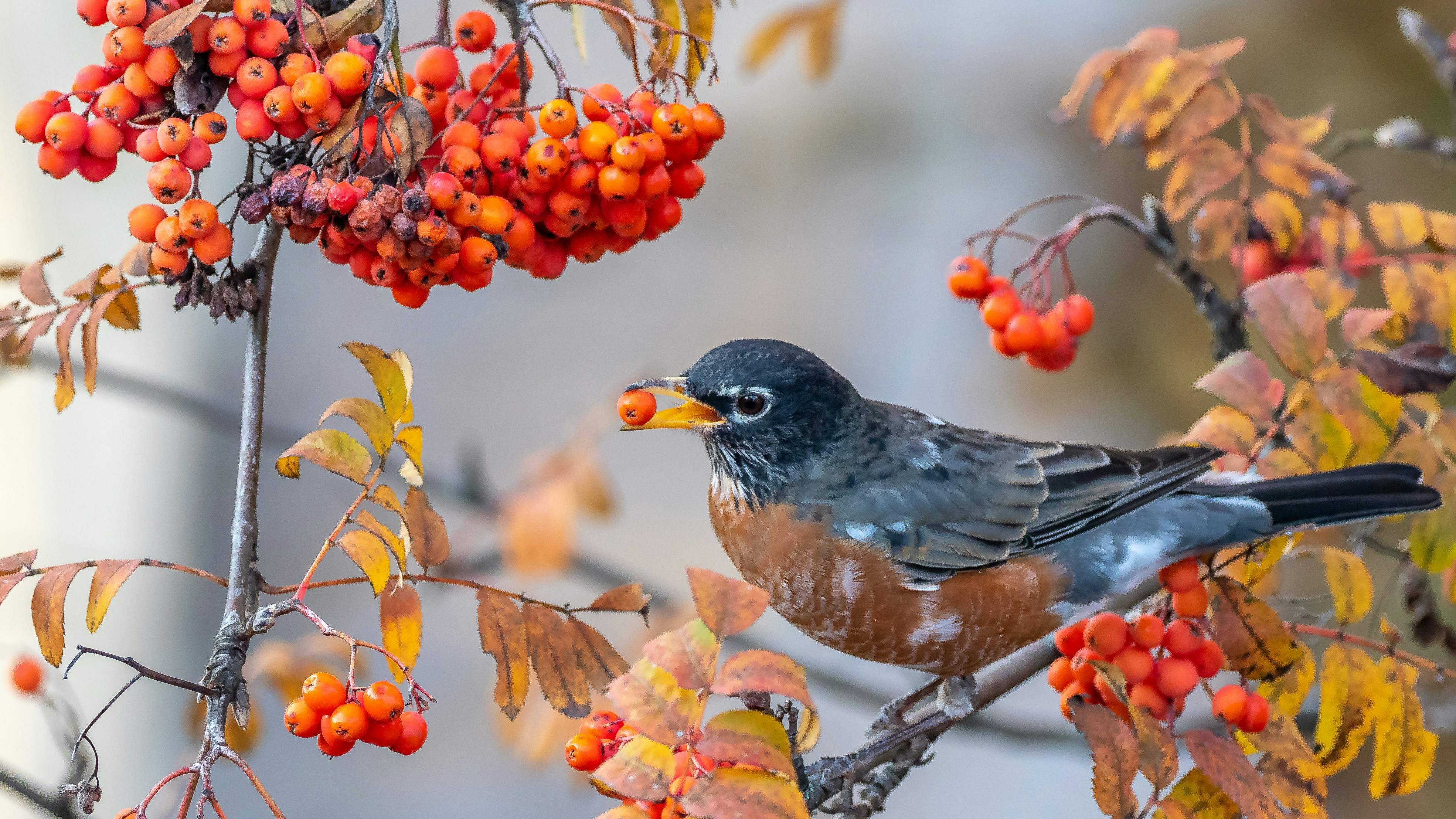
It’s happening! It’s robin feast day.

Robin feast day? Yes, and it’s a delight to watch. 

I had no idea this was a phenomenon until we moved into this house. That first fall, sitting in my morning chair, I noticed the same thing I see today – one singular tree is shivering. As I watched, I discovered the reason. Robins. They swoop in, land on the branches, and pick the bright orange berries off one by one. 

There surely is some scientific word for this event, but Erik and I have named it robin feast day at our house. I call out to him with excitement when it starts happening, wanting to share in annual wonder of the spectacle. And quite a spectacle it can be. This morning, there are only a few birds landing in the tree at once. But the first year I saw it, I noticed at least a dozen, wings flapping, seeming to come in a waves, eating until every berry is gone. 

By the end of the week, maybe next, the tree will be bare. All the berries will have been devoured, and the robins will be off enjoying some other treat. 

According to the Washington Department of Fish and Wildlife, this is a common sight this time of year.

“In late summer and continuing on up until the breeding season begins in spring, robins form nomadic flocks that roost together at night and feed together by day.”

Together. What a beautiful word. It erases the competitive spirit that seems to drive so much of humanity these days. While so many of us are just trying to save and stockpile for ourselves, not one of the robins seems concerned they won’t get enough. 

None of them hoards a cluster or tries to startle away the others. 

Instead, they seem to call to one another, their delighted chirps filling the air. 

“The berries are ready!” I imagine the first forager calling out. “Come one and all! It’s time to feast!” 

As I watch them, I think of Jesus’ words in Matthew.

“Therefore I tell you, do not worry about your life, what you will eat or drink; or about your body, what you will wear. Is not life more than food, and the body more than clothes?  Look at the birds of the air; they do not sow or reap or store away in barns, and yet your heavenly Father feeds them. Are you not much more valuable than they? Can any one of you by worrying add a single hour to your life?” (6:25-27)

How often do I forget these words? How often do I worry not just about what I will eat today, and tomorrow, but about the well of good food drying up? 

This time of year, it’s especially on my mind as the garden has slowed and the home-picked produce, while still coming into my kitchen, is noticeably less than it was just a month or two ago.

Fall is here. Winter is coming. 

The days are shorter. The mornings darker. The temperatures cooler. 

My soul whimpers, longing for endless days of summer, wanting to cling on to what I have enjoyed rather than risk finding joy in something new. But as I watch the robins, I realize they have more lessons for me than about trusting God’s provision. Instead of worrying about the coming cold, when berries will be gone and worms will be hidden in the colder ground, they are delighting on what they have right now. Today. 

Not only that, but they are sharing it with each other, knowing the bounty is too good — too perfect — not to shout about.

Tomorrow, or next week, they will be eating something else, praising God for His provision in some other tree, on some other bush, or hopping along the ground after a rainstorm. 

They live in freedom. 

They live in trust. 

They live together.

That is how I want to continue learning to live. 
BAD APPLES AND BUILDING COMMUNITY

I fully admit I’m a bit of a wanna-be hippie. I like doing things the “natural” way, I eat vegetarian, I think plants are amazing, and I love the idea of growing all the food Erik and I eat. (It’s never going to happen, but I still think it would be pretty awesome.) So, when we moved into our current rental house, I was thrilled that there were two raised garden boxes just waiting to be filled.
 
It was April, and I had seeds and vegetable starts in the ground before I even had a photo hanging on the wall. That’s how excited I was.
 
Spring turned to early summer and one day, while I was wandering around the side of the house, I looked up and caught my breath.
 
What?
Could it be?
 
I rushed to the front door, threw it open and yelled, “Erik!”
 
Hurrying out of his office he looked at me and said, “What’s wrong?”
 
“We have an apple tree!” I exclaimed. “On the side of the house! Come see!”
 
I admit if I lived up to my hippie ideals and was better at plant identification, I would have recognized the tree for what it was months before. But I didn’t. Neither did Erik. But, seeing how excited I was, he dutifully slipped on his shoes and followed me outside.
 
“Look!” I said, pointing up at the small, light-green balls that had formed.
 
“Yep. That’s an apple tree,” Erik said and then went back inside.
 
The tree was loaded and I started dreaming about all the amazing things I’d make when they were ripe.
 
Pie.
Crisp.
Apple sauce.
Breads.
Muffins.
I could dehydrate them like my mom had when I was a little girl.
 
I watched and waited for them to grow to full size and be ready to be picked.
 
A few months later, I went outside one day and saw that apples were strewn across the grass under the tree.
 
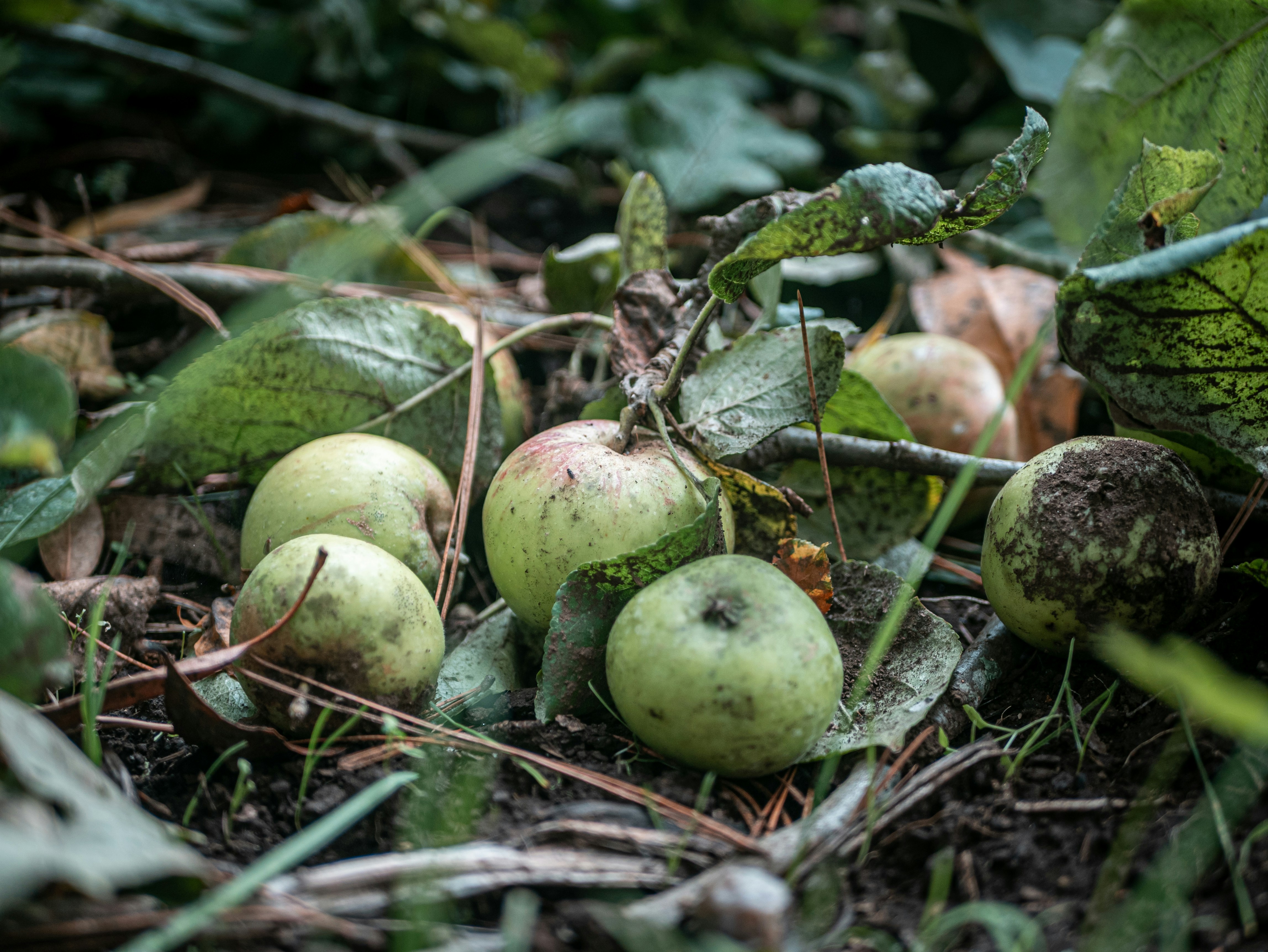
I walked over to pick one up and saw that it had bruised from the fall.
 
All of them had. Well, bummer, but they did take a good tumble. I picked up the best ones and took them inside to try to salvage the unbruised halves.
 
I cut one open and saw streaks of rotting inside.
 
I tossed it into the yard-waste and grabbed another one. It was the same. There were also holes formed by some worm or bug already having had a feast. I kept cutting until I find one section that looked edible and took a bite.
 
Mealy. Mushy. Miserable.
 
These apples were terrible.
 
“Of course they are bad,” I told myself. “They fell. The ones I pick will be better.”
 
Determined, I went out to pick some a few days later and repeated the same process of discovery.
 
My dreams, along with thousands of bad apples, ended up in our yard waste bin that year.

Even picking them all up was tedious. Every day, it seemed like hundreds more fell, littering the ground and rolling onto our street where they were inevitably smushed to oblivion by  passing cars.
 
I tried to keep up with them, but it was no use.
 
Eventually, they all fell and we were able to properly dispose of them, occasionally taking a slice just to make sure they were all bad.
 
They were.
 
Not to be deterred, when the next summer rolled around, I told myself I was going to find a use for these apples. There had to be something I could make with them. (On a sidenote: apple season is usually in the fall, but these are an early variety and start falling in July.)  
 
Then it hit me, applesauce! They can be mushy if you’re making applesauce. I just needed to peel them, and cut out any critter-eaten bits.
 
That year I toted a bowl of the best-looking ones into the kitchen and got out my peeler.

The minuscule amounts that were salvageable weren’t worth the effort.
 
Defeated again, I admitted to myself I’d spend the next two months carrying buckets of apples to the bin.
 
Thankfully, I did have a friend who has alpacas who love apples. She often buys them boxes at a time, and I figured it wouldn’t hurt to ask if she wanted any. She did! We loaded up a box and took them to church to hand them off.
 
The moment we opened our trunk you could smell slightly rotting apples. Apparently, this particularly variety doesn’t store at all. If you’re going to dare to eat them, they are a day-of kind of thing. But the alpacas didn’t seem to mind, so they got some apples and my friend didn’t have to buy apples that week.  
 
But still, there was no way two alpacas could eat all of our apples. The rest ended up filling our yard-waste bin to the brim. Erik could barely roll it out it was so heavy.
 
The next summer, I didn’t even try to eat them. I just let them fall and picked them up as I could, once again giving Erik an arm and back workout with the overflowing yard waste bin.
 
But then, one day when I was out in the garden, a large, gray pick-up truck pulled up.

The introvert in me got nervous.
 
Did I know them? What did they want? Did I have to talk to them?
 
I tried smiling as they rolled down the passenger window.
 
“Are you guys using those apples?” The driver asked from under a camouflage hat.
 
“No, because they are terrible,” I said, suddenly feeling ashamed that I had neglected my apple clearing duties to the extent that passing neighbors had taken notice.
 
“We have chickens. They’ll tear them up. Can we have some?”
 
“You can have them all!” I said back. “But they really aren’t good.”
 
“I’ll send my sons over later to pick up some of the ones that have fallen. They’ll bring you some fresh eggs, too.”
 
“They can come as many times as they want. They can even pick them off the tree,” I said thrilled that these apples would at least feed some more of God’s creatures.
 
“Nah. They’ll just get the fallen ones,” the driver said. “Thanks.”
 
“Thank you!” I replied as he rolled up his window and pulled away.
 
And that brings us to this year. The apples started falling a few weeks ago. Hoping to at least share some, we went over to the neighbors and asked if they wanted them. Turns out they are moving and had already sold their chickens.
 
Not to be deterred, I texted another friend who has chickens and offered her apples.
 
She replied within minutes.
 
“We already get plenty of apples for the chickens from our neighbors. But thank you.”
 
Ok. Yard-waste bin, I hope you’re ready for this year’s bountiful harvest.
 
A few days later, after already tossing at least three buckets of apples, we ran into another neighbor while on a walk.
 
“Do you guys want eggs?” she asked. “I was just giving out eggs.”
 
“Jess doesn’t really eat them, and I can’t go through them fast enough on my own,” Erik said. “But thank you for offering.”
 
“Wait. Do you have chickens?” I asked. We’d never heard a peep in the dozens of times we’d walked by their house.
 
“Yep,” she said.
 
“Do you want apples for them?”
 
“They’d love them.”
 
“Great, I’ll drop a bag off later.”
 
Redemption! I have found a purpose for at least some more of the apples.
 
Later that day, I walked a grocery sack of apples over, a note with my phone number tucked inside.
 
She texted me a few hours later saying thank you, the chickens would love them and that they’d eat that many in about a day.
 
I had tried to be conservative, not wanting to give her too many, but she explained she had 10 birds and they ate a lot.
 
“You can drop some off every other day, if that works for you,” she messaged.
 
So this year, not only two alpacas, but 10 neighborhood chickens are enjoying the fallen fruit from our apple tree. And my neighbor and I have been talking more and building a deeper relationship.
 
At one time, I thought all that fruit was a waste. But it turns out it’s helping me build community, right here in my little neighborhood. And that’s sweeter than any apple could ever be.
 
By the way, we still have more apples than friends with livestock, so if you want some bad apples, grab a bucket and come on over. I’ll even help you pick them.

CURTAINS

eduard-militaru-133851

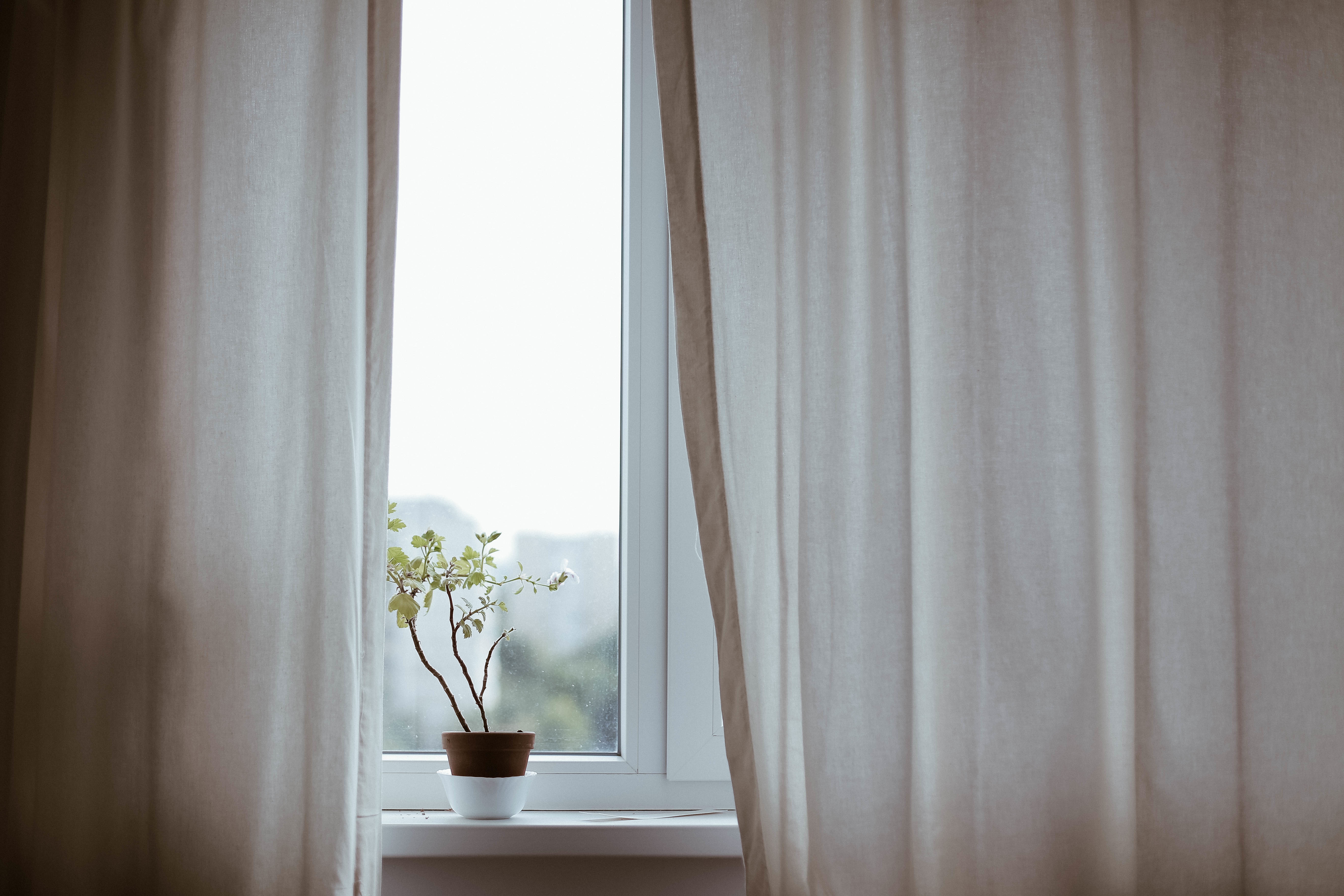
Pulling the curtains open was hard this morning. Not because they are awkwardly behind our aging sectional, but because I didn’t really want to open them.

There are days when I leave them closed, and the light never pours and puddles on the scratched coffee table.

But today, I made myself.

I made myself because I knew that I needed to let the light in. I’ve been feeling down lately. And when life feels heavy, it’s easier to stay in a cocoon. To take longer lying in bed, to leave the curtains closed, to wear stretchy pants and put your hair in a messy bun.

Part of the reason I’ve been feeing out of sorts is I’m a gal who craves connection. Not the surface, small-talk kind, but the deep kind. That kind that makes you feel like you matter because the conversation matters.

The other side of that coin is that I’m private. I want that connection, I long for it, but I’m not the best judge of when it’s appropriate to go there, and who it’s safe to go there with. So, in this house on a busy street with a bus stop on the corner, I often keep my curtains closed. It’s a way to protect myself. To stay private, safe, contained.

Except – why is there always an “except?” – then I stay stuck in darkness (or worse, artificial light).

So today, I did it. I opened the curtains. I let the light in. Yes, there will be people passing by my gate peering in all day. I don’t like it. But to let the light, in I realize I have to let those people in, too. We were created to be in community. Even if that community is just a nod to the neighbor or a kind smile, it matters. It’s the light. The light that we all need, whether we realize it or not.

I don’t know that tomorrow will be any different. I don’t know that I’ll feel more connected or more at peace. It doesn’t matter. What matters is that today I opened the curtains. Did you?