GRANDMA’S HOMEGOING

Fourteen years ago, last Sunday, my grandma died.
 
I have the date on my calendar – along with the dates of several other loved ones who have passed away – so that I take some time to remember them each year, on that day.
 
Usually my remembrance feels solemn, and part of me always thought that was a good thing. After all, death is serious business. It’s sorrowful and grief-worthy because it’s not how things were created to be.
 
Every time someone or something we love dies we feel it from our toes to our souls because every part of us knows it’s wrong. Death is a part of this broken world. It’s a reminder that all things haven’t been made right, yet.
 
So, on Sunday, when my phone popped up, “Anniversary of Grandma Millie’s passing,” I took a deep breath, bracing for the wave of sadness to hit. But this time, it didn’t. Instead, I smiled.
 
This year, my heart didn’t see the anniversary as the day my grandma left the earth, but as the day she finally went home to Jesus.  In my mind I started calling it her “Going home birthday,” even rushing to my office before church to scribble the words down on a piece of scrap paper. I didn’t want to forget how I felt in the moment. How this tickle of joy in the back of my eyes made my lips curve into a smile.
 
Those of us still on earth mourn, and rightfully so, when someone we love passes away. But as I think about my grandma on that day 14 years ago, I know she wasn’t sad to leave. In fact, she spent the better part of the last 10 years of her life telling God to hurry up and come get her already.
 
“I don’t know what’s taking Him so long,” she’d say at family gatherings. “I don’t know why I’m still here.”
 
Occasionally, she’d also add, “I just want to be with Ralphie.”
 
Ralph, or Ralphie, as my grandma called him, was her husband. He passed away decades earlier, when I was just 10 years old.
 
Grandma missed him every day after, but instead of his death making her faith shaky, it seemed to make it stronger, at least in my childhood eyes. She went to church weekly, and her Bible, nestled into it blue embroidered cover, was never too far away. When she moved from California up to Washington, it was always on the coffee table in front of the blue and white striped couch in her combination sewing/guest room. The couch was a pull-out, and I slept on it several times, always careful to move the table (and Bible) aside before attempting to unearth the iron legs from underneath the cushions.
 
I don’t remember if she told me, or if I just assumed, that she sat on the couch every morning, doing her quiet time, talking to God. We found several journals of her prayers after she passed away.
 
So grandma, she wasn’t scared of death. On the contrary, she was ready for it long before she tasted it.
 
Several years before she passed, she unknowingly had an infection which had weakened her body. She fell getting out of bed early in the morning, and my mom found her a few hours later, when she had stopped in for a visit. Grandma was unconscious and my mom did the only thing she could think of. She called 9-1-1. The ambulance came and the paramedics revived grandma before loading her in the back and taking her to the hospital.
 
My mom was relieved. It looked like grandma was going to be ok!
 
Grandma, on the other hand, was furious.
 
“Why didn’t you let me go?” she grumbled to my mother. “I was almost there.”
 
According to my mom, she stayed mad about it for months, maybe longer.
 
Grandma knew where she was going and nothing was going to stop her from getting there as soon as she could. Except God’s timing, and He had several more years before He finally took her home.
 
When I got the call, 14 years ago, that she was gone, I wept. She was 90, but it was still not what I expected that July day. And it’s taken me this long to turn the corner from honoring the day she died to wanting to celebrate.
 
My grandma is where she always wanted to be.
 
She’s home.
She’s with Jesus.
She’s not in pain.
She’s not lonely.
She isn’t wondering what her purpose is.
 
She knows.
 
As I think about her homegoing now, I’m confident she wasn’t the only one rejoicing. She had something like 9 or 10 brothers and sisters, all of whom passed on before her. Her parents, her own grandparents, and of course, my grandpa, had all left this earth decades earlier. It’s fun to imagine them welcoming her home with hugs, kisses, and embraces that never have to end. But I think their celebration was nothing compared to the celebration of the angels and God, knowing that their beloved Millie was finally home with them and would be for all eternity.
 
Psalm 116:15 says, “Precious in the sight of the LORD is the death of his faithful servants,” and from what I saw, my grandmother was a faithful servant.
THE SUDS OF GRACE

Our kitchen sink has a built-in soap dispenser. While I’m sure you could fill it with hand soap, we use dish soap. That way we have easy access for all the things we handwash, like sharp knives, pots, pans, and our favorite mugs. 

The dispenser works great, except when it comes time to refill it, which I did today. I often ask Erik to do this little task — having studied biology and chemistry in college, he knows how to pour slowly, with steady hands. But he was busy and I figured if I was careful, I’d be fine. 

Within seconds of starting to squeeze the soap out of the bottle and into the dispenser I decided it was taking too long. So, to speed things along I unscrewed the flip-top cap and set it aside. Now we were talking! Soap steadily streamed from the bottle into the neck of the dispenser. Not one drip escaped. Feeling smug, I tipped the bottle a little more, ignoring the fact that because the sink was solid chrome, I couldn’t see how full the reservoir was getting. 

Convincing myself that there would be some sort of miraculous sign from heaven when it was time for me to stop pouring, I gently squeezed the side of the bottle and kept watching. 

But there was no sign. 
Not even a tiny bubble telling me the dispenser was almost full.
Then it was too late. 

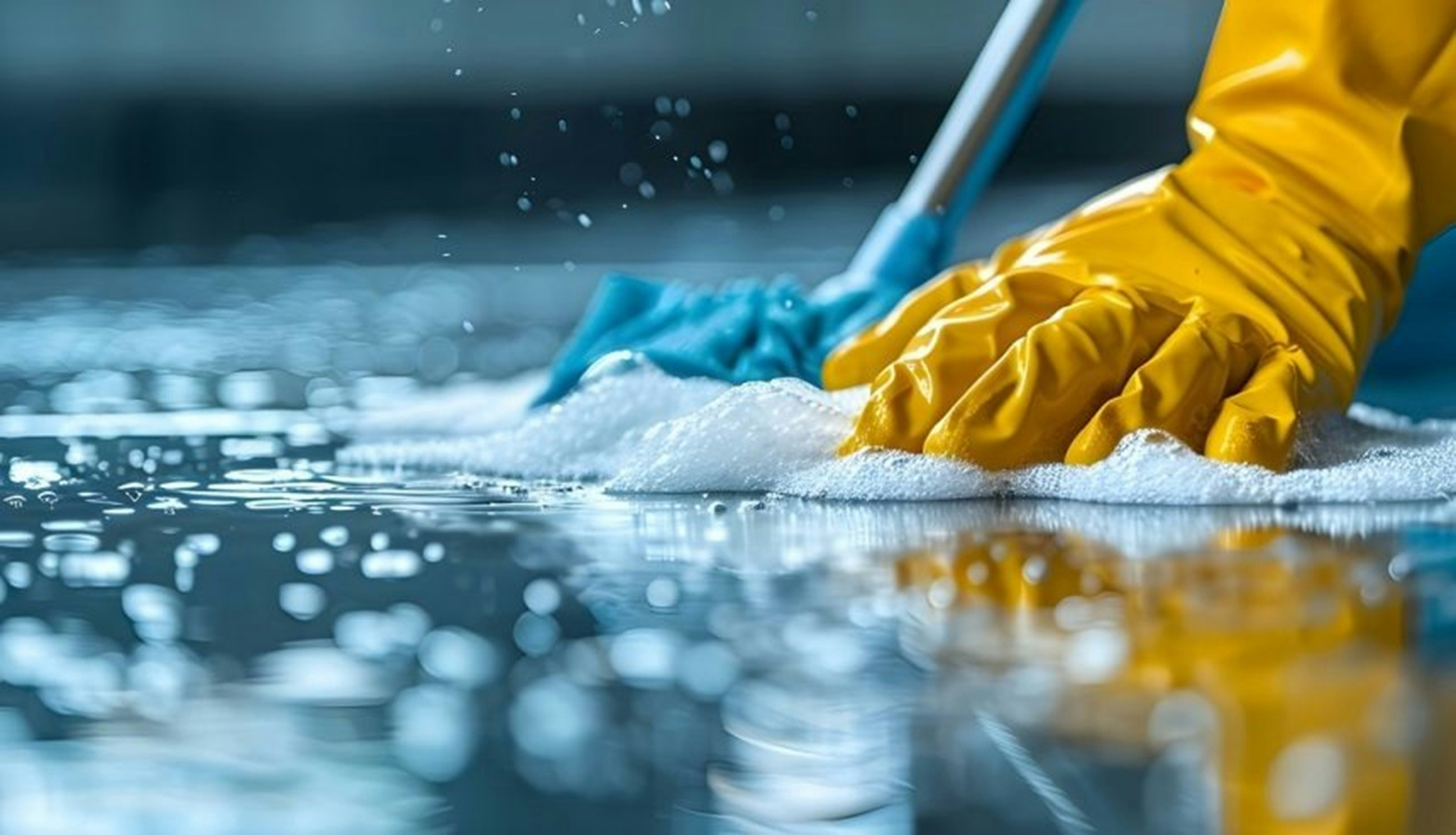
The blue soap started oozing over the neck of the dispenser and within seconds had puddled on the top of the sink and started running down the sides. 

Dang it. And here I thought I was doing such a great job. Oh well, it’s just dish soap. It should be easy to clean up, right? 

Do you see where this is going? 

Water + liquid soap = suds. And because we buy the concentrated soap, a little goes a long way. Within a few seconds of turning on the faucet, my soap volcano erupted into a mass of suds. The more I rinsed, the more it grew. 

Looking down at the mountain of tiny bubbles, I was transported back to middle school on a night when it was my turn to do the dishes. I was alone in the kitchen. My parents had gone out for a few hours. My older sister was probably watching TV or hiding in her room. 

As I slid the last plate the dishwasher, I thought of a commercial I’d seen recently. It was for a brand-new (at the time) product: gel dishwasher detergent. The commercial made this new innovation seem cleaner and simpler to use than the powdered stuff in the green box my family always bought. So, thinking I was being clever, I reached under the kitchen sink, grabbed the liquid dish soap, filled the triangle dispenser, closed the door, hit start, and left the kitchen. 

About five minutes later I wanted something to drink, so went back in and found a river of tiny bubbles pouring out of the dishwasher. I hollered for my sister, who came in and said something equivalent to, “You’re gonna be in big trouble.” 
I grabbed the nearest dish towel and started to frantically wipe at the explosion of bubbles escaping through the sides of the dishwasher door. It was no use. A waterfall of suds kept pouring out. 

My pulse pounded in my ears. 
What had I done? 
Could I get it cleaned up in time?

Nope. Mid-clean up, my parents came back home. 

“I’m so sorry,” I said and explained that I thought I could use liquid soap in the dishwasher because of the commercials.
My mom grabbed some rags and larger towels, got onto her knees, and started mopping up the mess. She was silent as she cleaned. My heart pounded as I braced for my punishment.

Then my mom spoke. 

“This is a lesson everyone has to learn once. Now you know and you won’t make the same mistake again.” 

Today, as I looked at the mound of suds in my sink, I smiled remembering the sweet relief I felt in that moment. Even though it was totally my fault, even though I had deviated from what I’d been taught, and even though I had made a huge mess, my mom didn’t scold me, yell at me, or punish me.

Instead, she got on her knees and cleaned up my mess. 

I haven’t thought about that day for years. But today, the suds lining the bottom of my sink led me right back to that moment. I think this is the first time I’m seeing my mom’s response for what it really was. 

A lesson in the grace of God.

When we’ve made a mistake, He doesn’t yell at us and storm away. 
He doesn’t dole out a list of punishments — even if we deserve them. 
He doesn’t abandon us to our consequences. 

Instead, He gets on His knees and cleans up our mess. 

That is grace. 
That is love. 
That is Jesus. 

THE CAR WASH

In my family, washing the car isn’t just about getting dirt off. It’s not only about making chrome sparkle and the glass shine. 

It goes much deeper. 

Growing up, every time my parents got a new car (almost always used), the first thing we would do is wash and wax it. 

That first wash and wax was a way of claiming the car, saying, “This is mine, and I’m going to take care of it from now on.” 

When I got my first car, the first thing we did was, of course, wash and wax it. 

We did it in my parent’s driveway, the plastic five-gallon bucket filled with soapy water and decades old sponges. As the sun shone down, we had to work fast for fear of the soap drying before being rinsed away to seep into the nearby lawn. 

When everything was good and dry – maybe even a day or two later – we’d wax it. I can still smell the scent of the orange bottle “Nu-Finish” wax we poured onto old rags and rubbed Karate Kid-style in small circles on every painted surface. 

It was a liquid wax, so you had to wait for it to dry before you could go back with a clean rag – often cut up bath and hand towels that had outlived their usefulness.

You knew it was ready when the wax turned foggy and frosty, with no shine left. You could test it with your finger. If it wiped away completely, it was ready to be removed. 

I have no idea how long it all took. Probably an hour or two. But it was usually a family affair, all of us putting in the elbow grease to welcome a new vehicle into the family. 

It’s a lot of effort, and the wet days in Washington don’t always leave a window for that act of claiming to occur. But even as he’s gotten older, my dad has found a way to still make sure it happens. 

He takes us to his favorite carwash, pulls out his credit card, and pays for a wash and wax. 

Every time. For every one of us. 

Me. 

My sister. 

My nephews and niece. 

We don’t buy cars too often, so it’s not a major expense. But in many ways it’s a rite of passage. 

It’s dad’s way of taking care of us. Of honoring the car and maybe asking it to keep us safe. Plus, it’s his way of reminding us that stewardship matters. 

Wash and wax your car. 

Get oil changes. 

Pay for regular tune ups. 

Fix things when they go wrong. 

Do all that and your car will last – and serve you – for a long time. 

He’s right.

Just this last spring, we retired a car that had been in our family for well over 20 years. 

A 1996 Toyota Camry. My parents bought it for my mom, used, when she was still teaching. After she retired, she kept driving it for years, toting grandkids to soccer or going to Bible study. 

But as the years went by, my dad encouraged her to get a new car. So she did. A Subaru Outback with safety features that weren’t even a dream back in the 90s.  

And that’s when we got the good ole Camry.

We were living in Hawaii, and one of our two cars was no longer drivable anymore. Mom and dad paid the shipping, and the Camry took a voyage on the high seas to get to us. 

A week of waves meant that when we picked up it, the car definitely needed a wash and wax. It got one. And honestly, it probably should have gotten one more often than it did while in our care. 

Without a garage, the salt air and Hawaiian sun did a number on its beige paint. But that thing kept running and running. When we moved back to Washington, it came with us. And we drove it a few more years until it was obvious it had earned its final rest. 

As a flatbed trailer took it away, I got a bit choked up. 

Sure, it’s just a car, but it had been a fixture in our family for so long that it was weird to see it hauled away by someone I wasn’t related to. 

Was it that very first family wash and wax that made the Camry last for so long? Of course not. But I can’t help but believe that its initiation, which started with soapy hands and waxy rags, made a difference. 

My husband and I have had our current car for almost three years. We bought it used. And of course, the first thing my dad wanted to do when we showed it to him was treat us to a wash and wax. 

We let him. 

Today, the sun is shining – a rare treat in Washington in winter. I texted my parents to see if they wanted to go for a walk. They did. So I drove over, my car dusty from weeks of rain and the lack of a garage at our rental house. 

When my dad walked outside, he took one look at my car and said, “We should wash that and get the ceramic wax on it today.” 

“Sure dad,” I said. 

So after our walk, we did. And even though I’m 45 and have been married for over 18 years, I let my dad pay.

I know for him it’s a small way of taking care of me. Of showing me that he loves me and reminding me that how you take care of things matters. 

THE THIRD SPOON

Spoon mira-bozhko-237954-unsplash

We have three wood spoons.

One we got as a wedding gift. It’s a good brand. It’s strong. It has a few scaly patches that may splinter your tongue, but it’s still in good shape. It’s the biggest of the bunch.

Another I’ve had for years. It’s rough and flaky. Not because it ended up in the dishwasher a few too many times, but because I probably bought it at the dollar store when I had just graduated from college.

And then there’s the third spoon. Its bowl is closer to a circle than an oval. Its handle not much bigger than a pencil. But when my fingers fall on this one, I smile.

The third spoon is smooth from decades of stirring. There’s no telling how many circles it has made around the pots and pans in my family. In spite of its age, there are no splinters, rough patches, or flakes. It looks like it could outlive us all.

It might.

I got this spoon as a hand-me-down. It was my grandmother’s. I don’t know how long she had it, but when I pick it up, I see her arthritic knuckles and neatly trimmed fingernails, her cream-softened hands and the love she had for making food for her family.

In the mornings, when I pick up the spoon to stir my steel cut oatmeal, I imagine her stirring her own version of the breakfast classic, which she called “mush.” I wonder how many times she made it? I wonder how many pounds of cracked oats she went through over the years? How many times did my grandfather sat down to a steaming bowl? My mother? Her siblings?

Those questions and the memories that flood back when I use the third spoon are what make it special.

It isn’t just a spoon. It’s an artifact.

The third spoon is teaching me how important it is to listen. It’s teaching me that new and flashy isn’t always best. It’s teaching me the importance of long lasting-quality, family, history and shared meals.

If anyone else picks up that spoon, they won’t hear the stories and lessons I do. They won’t picture my grandma’s grey, short, permed hair. They won’t taste her “Posner’s” chicken or spaghetti sauce with grated carrots.

But I will.

The third spoon connects me to her, even though she left this earth years ago.

For that I’m grateful. It makes me want to listen more carefully. It makes me want to sit down with my family. It makes me want to buy quality products that might last for generations.

But most of all, it makes me want to smile. And so, I do.

DREAM HOME

katy-belcher-43836

I’ve always been a dreamer. Imagining perfect scenarios, setting my sights high — often unattainably high. One could say I’ve long had champagne taste and a beer budget. And yet, it doesn’t stop me from dreaming — even when I know that the snapshots I create behind my eyes will likely never happen.

Some people could look at my life and say that I am already living the dream. I live in Honolulu, for goodness sake. The place people save their whole lives to visit once. Paradise. But living here as taught me that we all don’t dream the same dreams and that reality (no matter how close to our dreams it is) seems to leave us wanting.

Which puts me in good company with the (I assume) millions of other people dreaming of winning the 2018 HGTV Dream Home.

But I’m pretty sure my dreams are rooted in something different than anyone else’s.

The house is stunning. It’s the kind of place I’ve always wanted to live but knew I’d never be able to afford. The details are incredible. The renovation spot on. The décor, gorgeous. And those views. . .oh those views.

Those are the views of my childhood.

And that’s why I really, really, REALLY want to win.

As incredible as the Dream House is (and it’s incredible, see for yourself here), I want to live there not just because of what it is, but where it is. Specifically.

My parent’s home has a view of the beach that the house sits on. I remember walking that beach as a five-year-old, gathering oysters that my mother would bread and bake so we could sit on our deck eating their briney goodness.

My sister had one of her birthday parties out there, her friends and I balancing on the rocks, trying to avoiding slipping on barnacles. One of her friends found an actual pearl in the oyster she picked.

Then there were the summers where I’d jump in off the boat ramp, sometimes neglecting to close my mouth and swallowing a big gulp of seawater. No adult would dare get into that freezing Puget Sound water, but I relished it.

I’m not sure how many shoes I lost out there during low tide. My feet sinking into the mud as clams bubbled nearby.

Thinking back now, I realize how magical it all was.

Erik and I have lived in Hawaii for over six years, making annual trips back to Seattle for work and to see family. We love Hawaii for so many reasons. That’s why we’ve stayed.

But the chance to live so close to family, to get to attend my nephews’ football games and cross country meets, and to get to go to my nieces’ basketball games and ballet recitals, that’s what makes the 2018 HGTV Dream Home a true dream to me.

I know my odds are feather slim.

I know that it’s probably more likely it snows in Hawaii next week than it is that Erik and I would win that house. But I’m still going to dream about it. Because what’s the harm in dreaming? After all, I’m a northwest girl, and like the Seahawks said when they last went to the Super Bowl, “Why not us?”

LOOSE ENDS

eDLHCtzRR0yfFtU0BQar_sylwiabartyzel_themap

One of my aunts is a tapestry artist. Another aunt is a seamstress. My mom sews, quilts, knits and crochets.

These women have all influenced my life in deep and lasting ways. One of the things I learned about from them has to do with loose ends.

If you’ve ever looked at the back of a weaving, you know there are no loose ends. Every thread—every piece of yarn—is neatly tucked into another. It looks like chaos, but it’s controlled. Those loose ends are necessary to create the perfect image on the other side.

But there’s more to it.

In knitting and crocheting one loose end undoes the entire project.

A hanging string downgrades an elegant dress.

During this season of uncertainty, I’ve been thinking about loose ends. I’m finding comfort in the idea that God doesn’t leave loose ends. He has a plan. He won’t let one loose string, one lost job, one overseas move unravel a whole life. That’s not who He is.

I was reminded of that this last week while I was on vacation on another island with my parents. You see, as a little girl we came to Hawaii regularly. It was our sun-filled escape and vitamin D fix to get us through the grey Seattle winter and tide us over until summer.

I’ve always loved Hawaii. Loved. Loved. LOVED. It felt like my home away from home. I loved the beaches, the water, the fish.

So when Erik surprised me on a family vacation and proposed in Hawaii, it was fitting. The place I had come to love collided with the man that God had given me. It all tied up so beautifully.

And then, years later, when Erik found a job here, even though I never imagined living here, I was ok with him applying. The seed God has planted in my heart as a little girl was growing.

So we moved. We plugged our sun-deprived selves into the sands of this little island and have loved it. But now that we feel unplugged, I’m trying to cling to the truth that this is not a loose end. God doesn’t do those. This will lead somewhere. It’s all part of His plan. I’ve seen it over and over again in my life.

When you are dangling, it’s hard to remember. It’s hard to believe. But I’m going to chose to.

I’m going to choose to believe this is part of the tapestry of our lives. This will get woven back in and it will be beautiful. It has to be. Doesn’t it?