BAD APPLES AND BUILDING COMMUNITY

I fully admit I’m a bit of a wanna-be hippie. I like doing things the “natural” way, I eat vegetarian, I think plants are amazing, and I love the idea of growing all the food Erik and I eat. (It’s never going to happen, but I still think it would be pretty awesome.) So, when we moved into our current rental house, I was thrilled that there were two raised garden boxes just waiting to be filled.
 
It was April, and I had seeds and vegetable starts in the ground before I even had a photo hanging on the wall. That’s how excited I was.
 
Spring turned to early summer and one day, while I was wandering around the side of the house, I looked up and caught my breath.
 
What?
Could it be?
 
I rushed to the front door, threw it open and yelled, “Erik!”
 
Hurrying out of his office he looked at me and said, “What’s wrong?”
 
“We have an apple tree!” I exclaimed. “On the side of the house! Come see!”
 
I admit if I lived up to my hippie ideals and was better at plant identification, I would have recognized the tree for what it was months before. But I didn’t. Neither did Erik. But, seeing how excited I was, he dutifully slipped on his shoes and followed me outside.
 
“Look!” I said, pointing up at the small, light-green balls that had formed.
 
“Yep. That’s an apple tree,” Erik said and then went back inside.
 
The tree was loaded and I started dreaming about all the amazing things I’d make when they were ripe.
 
Pie.
Crisp.
Apple sauce.
Breads.
Muffins.
I could dehydrate them like my mom had when I was a little girl.
 
I watched and waited for them to grow to full size and be ready to be picked.
 
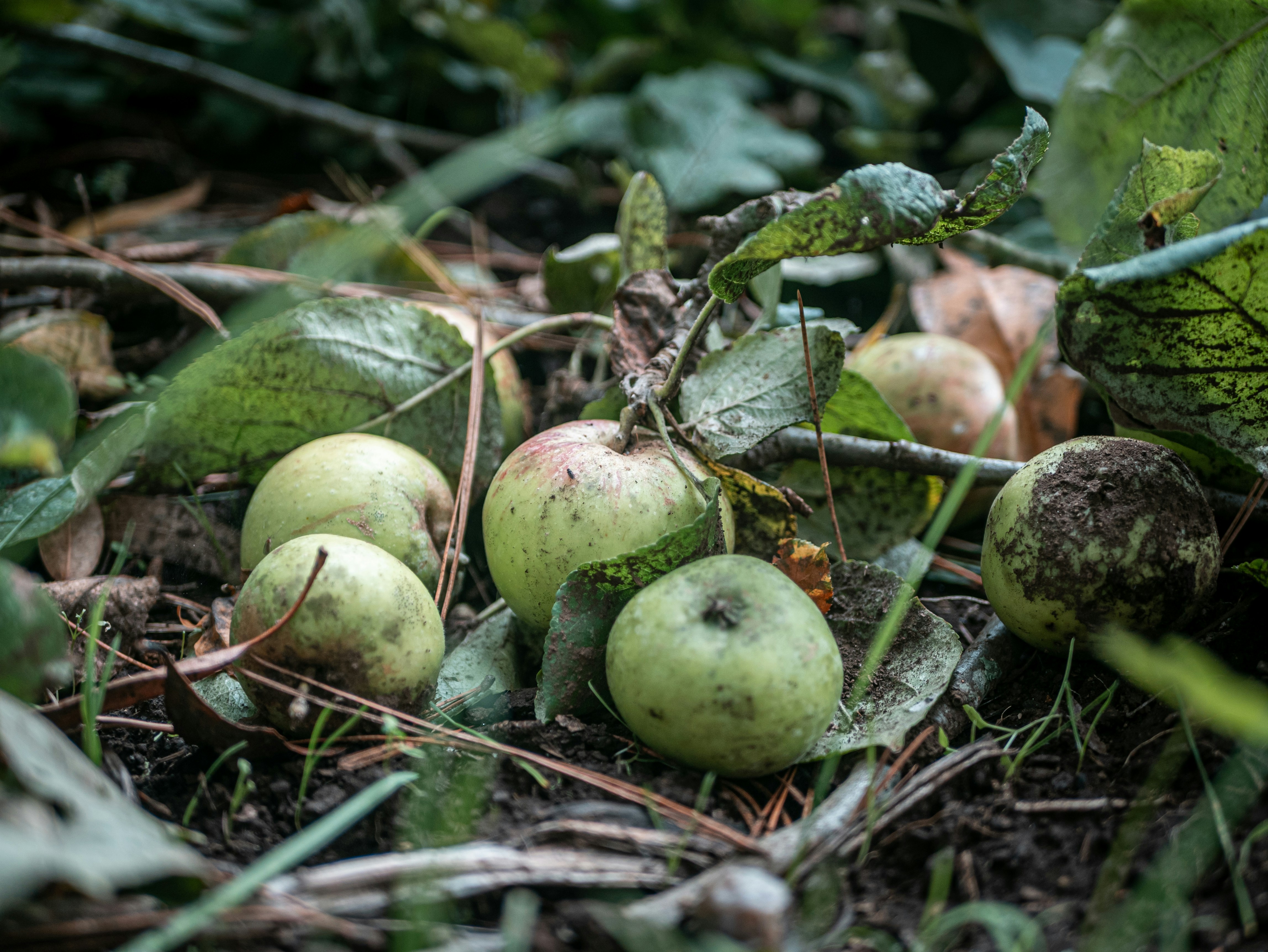
A few months later, I went outside one day and saw that apples were strewn across the grass under the tree.
 
I walked over to pick one up and saw that it had bruised from the fall.
 
All of them had. Well, bummer, but they did take a good tumble. I picked up the best ones and took them inside to try to salvage the unbruised halves.
 
I cut one open and saw streaks of rotting inside.
 
I tossed it into the yard-waste and grabbed another one. It was the same. There were also holes formed by some worm or bug already having had a feast. I kept cutting until I find one section that looked edible and took a bite.
 
Mealy. Mushy. Miserable.
 
These apples were terrible.
 
“Of course they are bad,” I told myself. “They fell. The ones I pick will be better.”
 
Determined, I went out to pick some a few days later and repeated the same process of discovery.
 
My dreams, along with thousands of bad apples, ended up in our yard waste bin that year.

Even picking them all up was tedious. Every day, it seemed like hundreds more fell, littering the ground and rolling onto our street where they were inevitably smushed to oblivion by  passing cars.
 
I tried to keep up with them, but it was no use.
 
Eventually, they all fell and we were able to properly dispose of them, occasionally taking a slice just to make sure they were all bad.
 
They were.
 
Not to be deterred, when the next summer rolled around, I told myself I was going to find a use for these apples. There had to be something I could make with them. (On a sidenote: apple season is usually in the fall, but these are an early variety and start falling in July.)  
 
Then it hit me, applesauce! They can be mushy if you’re making applesauce. I just needed to peel them, and cut out any critter-eaten bits.
 
That year I toted a bowl of the best-looking ones into the kitchen and got out my peeler.

The minuscule amounts that were salvageable weren’t worth the effort.
 
Defeated again, I admitted to myself I’d spend the next two months carrying buckets of apples to the bin.
 
Thankfully, I did have a friend who has alpacas who love apples. She often buys them boxes at a time, and I figured it wouldn’t hurt to ask if she wanted any. She did! We loaded up a box and took them to church to hand them off.
 
The moment we opened our trunk you could smell slightly rotting apples. Apparently, this particularly variety doesn’t store at all. If you’re going to dare to eat them, they are a day-of kind of thing. But the alpacas didn’t seem to mind, so they got some apples and my friend didn’t have to buy apples that week.  
 
But still, there was no way two alpacas could eat all of our apples. The rest ended up filling our yard-waste bin to the brim. Erik could barely roll it out it was so heavy.
 
The next summer, I didn’t even try to eat them. I just let them fall and picked them up as I could, once again giving Erik an arm and back workout with the overflowing yard waste bin.
 
But then, one day when I was out in the garden, a large, gray pick-up truck pulled up.

The introvert in me got nervous.
 
Did I know them? What did they want? Did I have to talk to them?
 
I tried smiling as they rolled down the passenger window.
 
“Are you guys using those apples?” The driver asked from under a camouflage hat.
 
“No, because they are terrible,” I said, suddenly feeling ashamed that I had neglected my apple clearing duties to the extent that passing neighbors had taken notice.
 
“We have chickens. They’ll tear them up. Can we have some?”
 
“You can have them all!” I said back. “But they really aren’t good.”
 
“I’ll send my sons over later to pick up some of the ones that have fallen. They’ll bring you some fresh eggs, too.”
 
“They can come as many times as they want. They can even pick them off the tree,” I said thrilled that these apples would at least feed some more of God’s creatures.
 
“Nah. They’ll just get the fallen ones,” the driver said. “Thanks.”
 
“Thank you!” I replied as he rolled up his window and pulled away.
 
And that brings us to this year. The apples started falling a few weeks ago. Hoping to at least share some, we went over to the neighbors and asked if they wanted them. Turns out they are moving and had already sold their chickens.
 
Not to be deterred, I texted another friend who has chickens and offered her apples.
 
She replied within minutes.
 
“We already get plenty of apples for the chickens from our neighbors. But thank you.”
 
Ok. Yard-waste bin, I hope you’re ready for this year’s bountiful harvest.
 
A few days later, after already tossing at least three buckets of apples, we ran into another neighbor while on a walk.
 
“Do you guys want eggs?” she asked. “I was just giving out eggs.”
 
“Jess doesn’t really eat them, and I can’t go through them fast enough on my own,” Erik said. “But thank you for offering.”
 
“Wait. Do you have chickens?” I asked. We’d never heard a peep in the dozens of times we’d walked by their house.
 
“Yep,” she said.
 
“Do you want apples for them?”
 
“They’d love them.”
 
“Great, I’ll drop a bag off later.”
 
Redemption! I have found a purpose for at least some more of the apples.
 
Later that day, I walked a grocery sack of apples over, a note with my phone number tucked inside.
 
She texted me a few hours later saying thank you, the chickens would love them and that they’d eat that many in about a day.
 
I had tried to be conservative, not wanting to give her too many, but she explained she had 10 birds and they ate a lot.
 
“You can drop some off every other day, if that works for you,” she messaged.
 
So this year, not only two alpacas, but 10 neighborhood chickens are enjoying the fallen fruit from our apple tree. And my neighbor and I have been talking more and building a deeper relationship.
 
At one time, I thought all that fruit was a waste. But it turns out it’s helping me build community, right here in my little neighborhood. And that’s sweeter than any apple could ever be.
 
By the way, we still have more apples than friends with livestock, so if you want some bad apples, grab a bucket and come on over. I’ll even help you pick them.
LIFE CYCLE LESSONS

The garden is in. 

The  tomato plants I started tenderly in January are in their permanent homes. 

The kale, broccoli, and lettuce have been transplanted, too. 

Much to my surprise, almost everything I started from seed has survived. 

But that doesn’t mean it’s producing yet. For that, I’ve got to wait longer. As I wait, I can’t help but tuck a few more seeds into the open spaces. And because Erik and I would love to grow even more of our own food, I’ve started another round of carrots. 

And those carrots take their sweet, sweet time. For me, that means it takes about 2 weeks of consistent watering before the first hint of growth even begins to pop through the starter mix. The glimpse of green is so small I do a double take. I get onto my hands and knees, my face inches away from the soil. 

Did they? Did they? 

Yes!

A sprout, thin as a blade of grass, has started stretching towards the light. A few days later, the sprout is taller and no longer alone. It’s brothers and sisters joined it. Now there are 11 sprouts . . . no . . .13!

As I’m counting, I notice something. 

A few of the starts are wearing a hat. 

What is that? I peer closer. 

Oh, of course! 

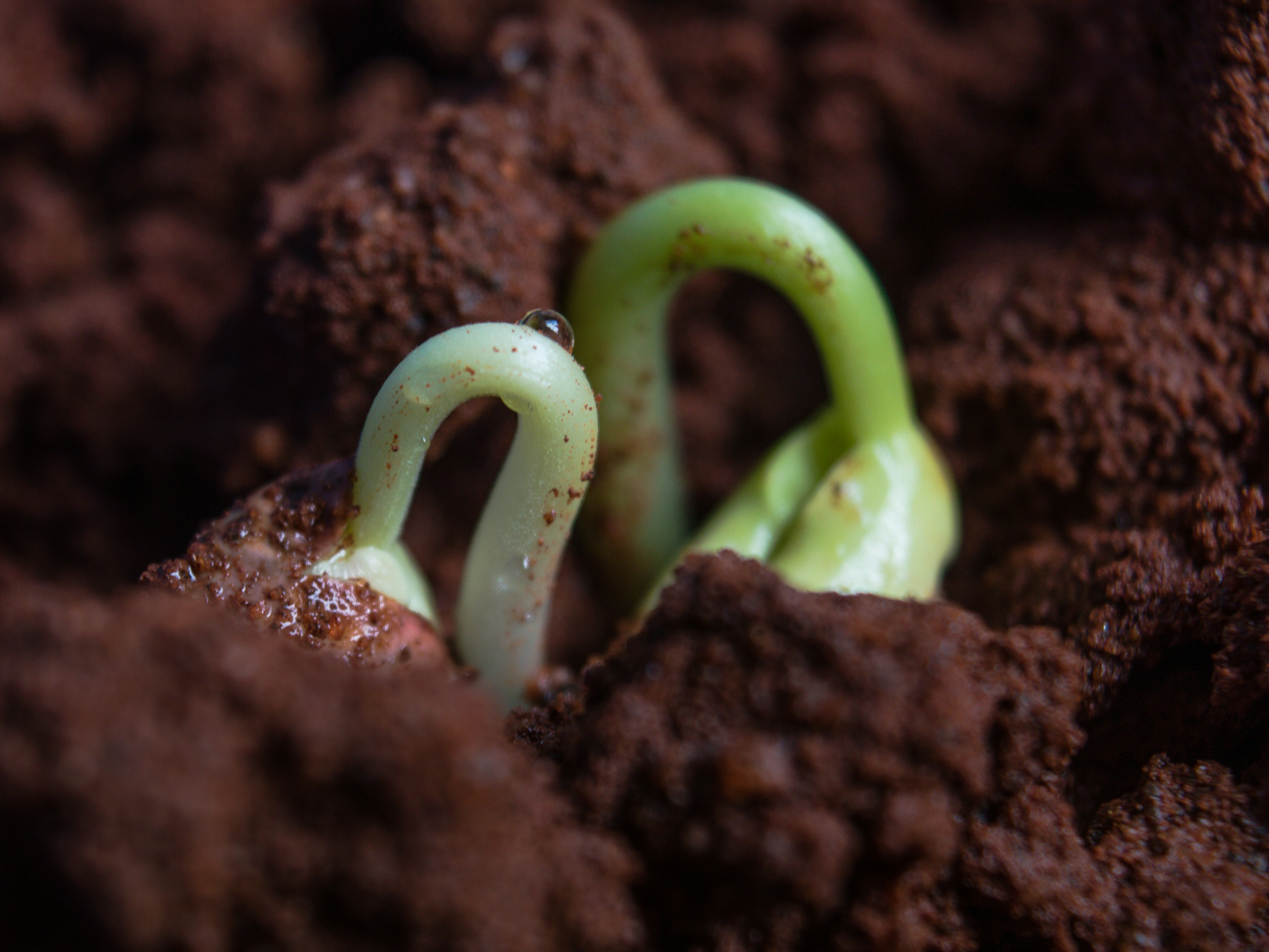
Some of the seed casings are still hanging on. The stems are stretching taller, but the cotyledons are trapped in the husk. Its job is done, but it can’t seem to let go. 

I start to reach forward, then stop. I want to help. If I ever so carefully remove the “hat,” I’ll free the leaves from their straight jacket. They’ll have full access to the light. That’s what they need to grow! 

But because I’ve been trying to slow down more, I sit back and take a few breaths and think. A half-second later I remember a conversation I had with a friend on Sunday. Her family home schools, and this spring they’ve been learning about life cycles. They’ve watched butterflies emerge from silk cocoons and baby chickens break though the shell of eggs. 

“When we saw the first crack in the shell, we cancelled the whole day,” she says. “We all just sat there, watching this tiny beak break its way through. We wanted to help it. Just pull back a tiny piece of the shell, but we didn’t. We had just learned that butterflies need the entire process of breaking out of the cocoon to strengthen their wings. If you slice the cocoon open, or tug it off, attempting to help, the butterfly will always have weaker wings. It might never fly.  . . It’s like God had a plan or something,” she finishes with a glorious flare of sarcasm. 

As I stare at my burdened carrots, I think through the implication of her story. 

If God has purpose in the struggle for butterflies and chickens, He probably has purpose in it for plants, too. 

The next thing you know, I’m picturing an anemic zucchini plant from last year. I’d started it from seed and thought I was helping when I gently pulled the expired seed casing off its brand-new leaves. It never really recovered. The left leaf – the one where the casing had been stuck, stayed misshapen and weirdly yellow, even though it had been freed! The plant eventually grew, but it didn’t flourish the way it should have. At the time, I chalked it up to not being good at growing zucchini. Now I’m realizing it suffered because it didn’t go through its intended struggle. 

It needs the struggle to survive. 

Resistance makes it stronger. 

The right amount of pressure allows it to fully grow into what it was meant to be. 

If it’s true for plants, butterflies, and chickens, it’s probably true for me, too. I guess I need to wrestle through things to become stronger and to be who God intends for me to be. 

Right now, I feel a little like my carrot seedling. Something is weighing me down and I just can’t shake it. 

I want someone to reach down and pull me out of the sadness I feel. 

I want to know that it will all be ok. 

I want to rush to the other side. 

But today, I’m reminded that there is purpose in the process. So, once again, I pull my hands away from my seedling tray. My carrots will undoubtably be stronger from wrestling. I hope I will, too. 

JUST WAIT

All my gardening books said it was fine to plant spring peas in February. In fact, most of them said you need to. Seeing as I am beyond ready for summer and all the fresh vegetables it will bring, the chance to get something in the ground so early excited me. 

Peas are frost tolerant. The back of most pea seed packets say that you can plant them as soon as the soil is workable. By early February we hadn’t seen a lick of snow, so I went for it. 

Not inside, in the safety of starter pots, nestled under a grow light but out in the raised garden beds. 

The stuff I had started inside had all sprouted rather quickly. I ridiculously thought the peas would be the same. 

Every few days, after coming home from the store, I’d walk across the damp grass and peer down into the dirt, sure I’d see the signs of a pea shoot. 

After all, I had planted 50 seeds. Three different varieties. 

Surely, at least one would be vigorous and reach for the  grey northwest sky. 

A week went by.

Two. 

Three.

I started to get worried. 

Four.

I decided it was probably a loss and I’d have to replant them all.

Erik told me to wait. I thought he was a little crazy. The seed producers said germination should be in 7-21 days or thereabouts. We were well past that. 

I went over all the things I could have done wrong.

I’d planted before a big rain thinking that would help the seeds settle in. Maybe it had been too wet and they had rotted. I’d added some poultry manure to the beds. Maybe, somehow, I’d overfertilized and it had hampered germination. What would that mean for the rest of my season, I wondered. Or the compost I’d added. It had looked different this year. Maybe the peas didn’t like it. 

Surely there was a reason they hadn’t come up by the time they should have. And likley it was my fault. 

Right? 

RIGHT!

So of course, I made plans to re-seed the peas. 

Erik told me to wait. 

“Just give it some time,” he said. 

At almost 5 or more weeks past sowing, I figured these suckers were never coming up. A lost cause. What good would waiting do?  

I thought about getting my trowel and digging around to see if there were any signs of life. 

Anything to keep things on track! 

But we were heading out a town for a few days, so Erik encouraged me to leave them be until we got back. If they hadn’t sprouted by then, I could reseed. 

I wish I could say that I saw the wisdom in his encouragement to wait, but patience is one of the fruits of the spirit in my life that could use a gallon of fertilizer. 

I hate waiting.

I want to get things done. 

Move on.

Check it off the list. 

But I’m learning yet again (because apparently the lesson didn’t stick the first million and a half times it was presented to me), that there are a lot of things in life you just have to wait for.

You can’t force them, and if you do, you’ll either fall flat on your face, fail miserably, or push yourself so hard you’ll end up exhausted (and maybe in a hospital bed). 

So, reluctantly (and honestly because I ran out of time before our flight), I left the old peas in the ground, without digging them up to check. 

I was sure they had all rotted and died. Dissolved and disappeared like a mirage. 

You see where this is going, don’t you? 

When we got home from our trip, it was late. It had been dark for a few hours. Plus, I was tired and not in the mood to try to find a flashlight and go out to the garden. 

The next morning, I decided to peek. I figured I could replant later that day and hopefully be ok. Maybe I’d even buy a few pea starter plants to help me catch up. 

And low and behold, tiny and tender triangles of  green, had started pushing through the dark, rich compost. 

PEAS!

Were they way later than I expected? Yes. 

Were they way later than the packet had told me they’d be? Yes. 

But they needed their own timeline – not mine. 

So much of life is like those pea seeds. 

We want things to happen faster. 

We want results on our timeline.

Why? Because we want to be in control. 

To me the peas (finally) popping up are a reminder that if I just wait, beauty will emerge. Growth will come.  

Of course, this isn’t true for every single circumstance in life. There is an element of action to our time on earth, but I think more often than not, we could stand to wait a little longer.

Next time I’m worrying about something taking too long, or rushing to get things done, I’m praying I’ll be able to take a deep breath and just wait for God to work. 

OUT OF CONTROL 

I checked the weather forecast. Multiple times. 

It looked like we were done with freezing temperatures – not that we had many this year. I spent a week hardening off the seedlings I’d planted in January. That means I put them outside for longer stretches each day to get them used to the elements before bringing them back in and letting them cozy up again. 

None of them wilted or withered during their lengthening exposures. 

Things were looking good. So I checked again. And again, just to be safe. 

I even looked at the long-range forecast. Nothing below 32 was expected and we were expecting a lot of rain in the coming week. Perfect! I figured the rain could water in the seedlings if I got them in the ground quickly enough. 

Afterall, they were cold-hardy varieties.

Broccoli, cabbage and lettuce. The tomatoes will have to wait a few more months, but these, I told myself, would be fine. 

A grabbed the seed trays, my garden gloves and a trowel. 

As I dug into the freshly fertilized soil with a layer of rich compost on top, I imagined the salads I’d make from the greens. I pictured myself picking tender broccoli and sauteing it for dinner. Perhaps with fresh garlic and a squeeze of lemon. 

My favorite time of year – the time of harvest – was just around the corner. I was sure of it. 

The first few days went well. The forecasted rain watered the seedlings – a kiss from God to help them settle into their new homes. 

I checked them each day and everyone was surviving.

Then, today, I woke up to snow. At least an inch by 7am. 

I could be fretting. I could rush out in my flannel pajamas with plastic sheeting to try to cover my plants. But I’m choosing not to. 

Instead, I’m tucked under a blanket inside, raptured by the beauty of the unexpected snowfall. 

The coating of white on the driveway, lawn, and trees – up to about 2 inches now – is idyllic. The frosting on my world, covering up the debris from a windstorm two nights ago, brings calm. Unexpected  – but often longed for –  peace.  

In that peace is the reminder that I am not in control. God is. 

I could have waited to plant my first seedlings. 

I could have not trusted the weather report.

But the truth is, it doesn’t matter. 

I can do my best – give my garden everything I can to help it flourish – but the growth isn’t up to me. I have no control over the elements. No control over how cold it gets, how much snow will fall, or conversely, how hot and dry the summer might get. 

And while lack of control often infuriates me (I’m guessing I’m not alone in that), today all I’m seeing is beauty. 

I think that’s the lesson I needed today, in this season of my life. 

No matter how much I plan, I’m not in control. The unexpected will happen and as hard as I try, there’s nothing I can do about it. 

This lack of control is both beautiful – because we are in the hands of a loving and gracious God – and terrifying. 

I often try to control things to avoid pain and suffering. I tell myself if I do everything just right, things will go well…or at least not terribly. And while I bear responsibly for my actions and decisions, I have to remember that I am not in control of the outcome. 

Will all the seedlings I planted die? 

Maybe. But even if they do, I still got the January Magic of watching them pop out of the soil for the first time. 

I still got to watch them grow and stretch towards the light. 

I still got to dig into the rich soil and settle the small tangles of roots into the earth.

I still got to dream about their future.

So today, as I watch the flakes continue to fall, I’m choosing to be grateful for those experiences. While I don’t have control over what happens next, I am choosing to rest in the almighty power of the God who holds all things in His nail scarred hands.

I am choosing delight and wonder.

I am choosing to celebrate the beauty of the unexpected. 

I am choosing to be out of control in the best possible way. 

Will you choose that, too? 

JANUARY MAGIC

I told myself I wasn’t going to do it again. I’d learned my lesson. I was going to wait for just the right timing. 

I looked at the books. 

I started making a chart. 

I had a plan. 

And then, the sun came out. 

And people on YouTube told me I could do it. They said now was the time. 

So, a few Saturdays ago, with frost making the blades of grass sparkle and crunch under my feet, I went out to the shed and pulled out my seed starter trays. 

I picked up some seed starting mix, and while Erik went to take care of some ministry stuff, I got to work planting my vegetable seeds.

In January. 

Probably way too early. 

It’s possible nothing will survive. But I can’t help it. 

I get so excited about gardening that I just can’t wait any longer. Especially on a sunny day. 

This year I am doing things a little different – hopefully that increases my odds of success. 

In addition to starting a number of plant babies inside, on a heating mat, under grow lights, I decided to try “winter sowing.” 

Apparently, when you plant in a mostly enclosed plastic container and put it in a sunny location, in effect, a miniature greenhouse is created. Because the containers are mostly sealed (They do need a little airflow, and of course, drainage holes), they stay moist and don’t need constant watering. Plus, the ebb and flow of daily temperatures is supposed to “wake up” the dormant seeds in their own timing. You leave them mostly alone, making sure they stay moisturized, until the garden soil warms up enough to transplant them.

They don’t need any hardening off because they have already been exposed to a variety of temperatures and direct sunlight. 

Sounds pretty amazing, right? 

I thought so, too. Especially the promise of getting to start this year’s garden earlier than my garden book said I could. 

Because the truth is, I’m impatient. 

Really impatient. 

And my garden is just one of the places it’s most evident. 

To hedge my bets and try to get the most out of my spring and summer garden this year, as I mentioned, I also started seeds inside. 

Nestled in my dining room, under my 20-year-old black console table, is my “incubation station.” 

I started the same seeds there that I did outside, I hope doubling my chances of success. 

And inside, in the room I walk through dozens of times each day, is where the January magic started happening. 

I planted and labeled the seeds. 

I tucked in cool weather crops like broccoli, lettuce and spinach alongside heat-loving tomato seeds. I watered everything and covered it with a plastic dome. Two days later, I decided to take the dome off to make sure the soil was still moist enough for germination to happen. 

And that’s when I saw it. 

Not one, or two, but at least half a dozen little leaves popping out of the soil and straining for the light. 

I left the dome off. 

I watered again and walked away. 

That night, more cotyledons – this time lettuce – had been born. 

For the last week, I’ve checked those seedlings and stared at the soil of the “empty” trays multiple times a day. 

I almost can’t get enough. 

It happens so fast. One morning it looks like nothing is happening, then two hours later, you see a white bent-over stem starting to stretch from the depths of the dirt. A few more hours, and yellowish leaves have emerged. The next day, the yellow has turned to green and the sprouts stand taller. They are reaching, straining, yearning for the life ahead of them. 

Magic is the best word I can think of to describe it. 

And this January, I needed that magic. Badly. Almost desperately. 

Will all these little guys survive? I don’t know. Probably not. Even if they do, I probably won’t have room for all of them. Picking who will get transplanted – who will be given the best chance of survival – is an emotional battle I’ll fight another day. 

But today, I’m just going to enjoy the magic of it. 

How out of nothing, comes something.

How in the tiniest of seeds – some as small as a grain of sand – can become something that will one day fill the entire corner of my raised bed. One day, God-willing, it will produce leaves that will fill the bottom of my salad bowl as I pile on other miracles – plants of different sizes and colors that will strengthen me, nourish me, delight me and lead me to give thanks to the Creator for His amazing bounty. 

So, yeah. I did it again. 

I planted my garden early. Probably too early.

 But even if it all dies and I have to hit up garden stores to fill my beds come April and May, I think it’s worth it. 

Because January – especially this year – needed some magic.