THE BLUE FEATHER

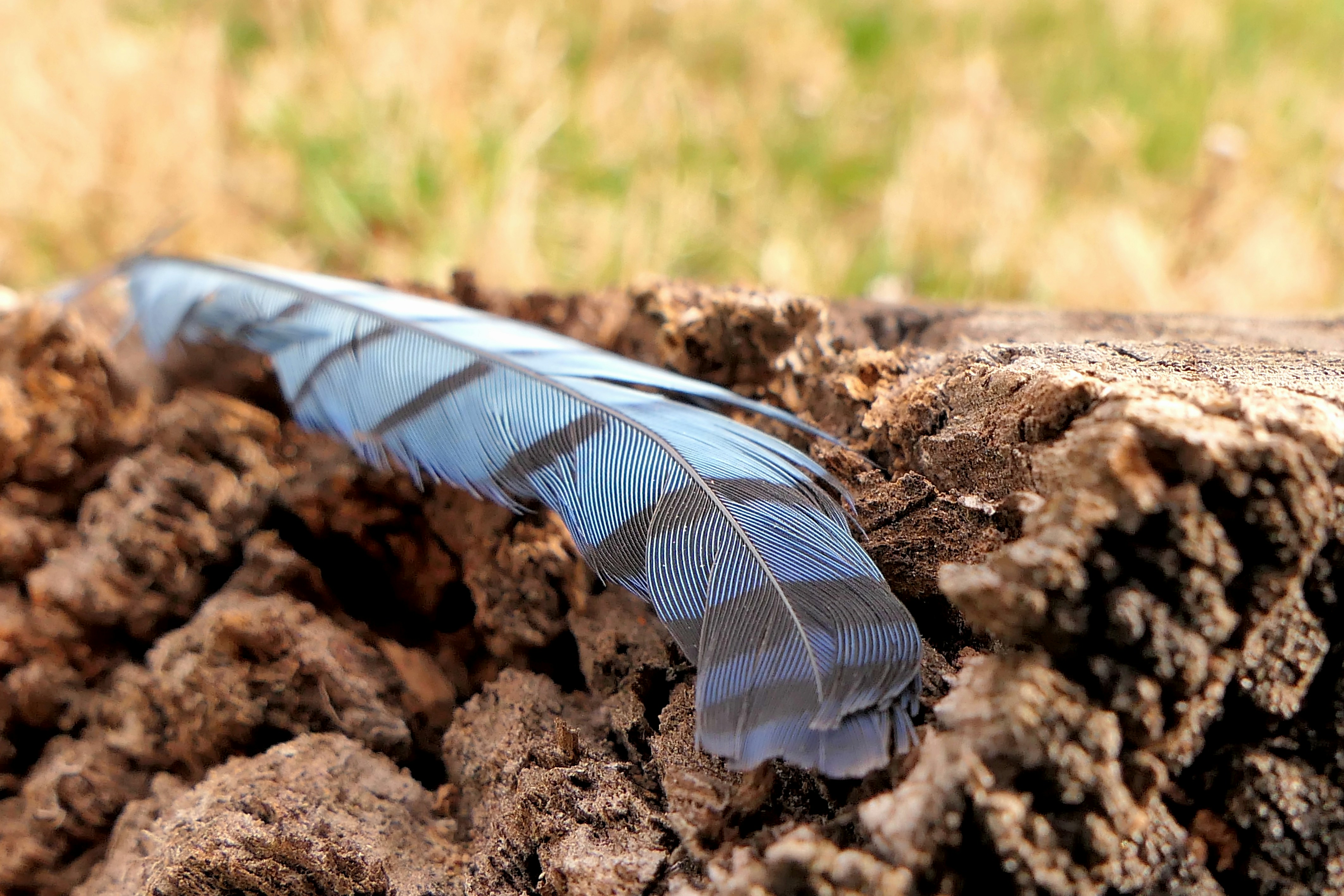
A close-up of a blue feather resting on a textured piece of wood, with a blurred green background.

I was picking up dead tree branches in the front yard this morning. Not all of them — I’m too lazy for that — but the larger ones, the ones you can see from the road, I picked those up. To get to them I had to crawl under the canopy of trees in our front yard. Nestled on the dirt amongst the branches was four-year old bark that was in the process of returning to the earth, green vining vinca, and a clump of lamb’s ear that flowers pink in the summer. 

There were also pine cones, pine needles, disintegrating leaves, moss, and about a million maple “helicopter seeds.” I know come next spring I’ll spend at least three hours uprooting their tiny volunteer maples. But that isn’t what I’m thinking about today. 

Today, I’m thinking about something else that was tucked into the array of dirty things. 

A small blue feather. 

Brilliant navy blue with a small section of black. Just one glimpse told me it was from a Steller’s Jay. Instantly, I thought back to my childhood and Lys. 

Lys lived two houses down. She was older and widowed. A retired school teacher, it seemed like she was almost always home, or at the very least out in her expansive yard. Her garden was a delight — flowers, vegetables, fruiting trees, and a wall of blackberries. She was generous and shared frequently. I remember summer days spent with buckets by those blackberry bushes, eating every other berry as my mom, sister, and I collected the ripest fruit to turn into jam, pie, and fruit leather. 

As a teacher by trade and in her heart, Lys was constantly teaching me. She saw in my childhood soul a love for animals and nature, and she fostered it. 

She often invited me into her two-bedroom cinderblock home where she kept collections of things she’d found out in the world. A shed snakeskin, interesting rocks and agates, small pieces of beached driftwood, and feathers. Oh the feathers. To my childhood eyes her collection was massive. She remembered where she found each one and what type of bird they had all fallen from. 

When she found feathers she had in her own collection she’d grab them for me, handing them over, telling me the proper names for each bird and pointing to them if they happened to be in the yard.

She’s the one who taught be about the Steller’s Jay — and their proper name. 

I imagine it’s because I watched so many Disney movies, but when I saw those blue birds in our neighborhood, that’s what I called them — blue birds. 

Hearing me say it only once, Lys told me that they weren’t blue birds. Those didn’t actually live in our area — but instead we have Steller’s Jays. She pulled out her Audubon bird book with the red cover and helped me turn to the page where I could read all about Steller’s Jays. 

It wasn’t a harsh correction, but gentle and kind, inspiring me to want to know more about the birds in our area. I sat mesmerized, flipping through the colored pictures of birds, imagining the joy of someday seeing each one in the wild. 

That’s who Lys was — a lover of all things natural and wild. She volunteered at the zoo, which as an elementary school student I thought was the best thing ever. She also volunteered at a nature preserve with a small lake and trails. She took me there at least once. I think my sister might have been with us.

In my eyes, Lys was somewhat of a superhero. But as often happens with childhood superheroes, as I went into Middle School and High school, I became focused on more practical things. I’d still see Lys occasionally, but the years had stolen some of her memory and her aging body seemed to keep her from being in her yard as much. At least that’s what I’d like to think. The reality is, I probably just gave me attention to things I thought were more pressing and important. 

Sad, but true. 

I remember my parents telling me when Lys had been diagnosed with Alzheimer’s. I was out of the house, trying to figure out what it meant to be an adult. Later, her kids moved her into a care facility near them, and then she eventually left this earth. 

I don’t remember how long ago it was she died. Decades at this point. Her house has had two different owners, the current one is putting on an addition. The front garden is gone. The blackberries are, too. But my fond memories of Lys remain.

I’m thankful for the neighbor she was. 

I’m thankful she shared her passion with all things natural and wild with me. 

I’m thankful for all the feathers she gave me, now lost to time, which were always a reminder that she was thinking of me.

She saw me. She loved me. 

And I’m thankful for all that she taught me, not only about being a neighbor, but about the beauty of critters and creation and plants. 

I wish she was still here so I could tell her. I wish I could go over to her house and find her pulling weeds in the front yard. 

I wish I could tell her how often I think about her, all these years later. 

But even though I can’t, I can still live out what she showed me. I can care for the earth, take delight in nature, be amazed by the beauty of birds and feathers. I can feed the hummingbirds, pick blackberries, share what grows in my garden, and give thanks for a woman who knew how to love her neighbors. Even an awkward little girl with glasses and an eye patch who was happier searching for frogs than going shopping. 

I don’t know what type kind of relationship Lys had with God. But I hope I get to see her again. I imagine if she’s in heaven, like I hope she is, she and Wendell Berry are having some incredible conversations. Conversations I hope I get to listen to some day. 

Until then, whenever I see a Steller’s Jay, or one of their forgotten feathers on the ground, I’ll think of Lys and smile. 

CONSIDER THE SQUIRRELS

One of the first things we bought when we moved into our current house was a matching pair of padded chairs. We hadn’t been looking but stumbled upon them at Costco with the tell-tale “closeout” asterisks on the price tag and a price that was hard to beat. 

Erik called my brother-in-law, who had a truck, and later that afternoon, the chairs were dropped off at our new home. 

Without even unwrapping them I knew where they would go. We have a large bay window that desperately needed seats and this value-priced set was perfect. We threw away the boxes, screwed on the feet, and set them side by side in their new home with a small table settled in between. 

Very quickly, the chair on the left became my morning chair. Each morning, cup of jasmine tea in hand, I’d settle in with a blanket and stare out the window. More often than not, within ten minutes I’d be giggling. 

“You sitting in those chairs and giggling is one of my favorite things about this house,” Erik said.

What was I giggling at? 

Squirrels. 

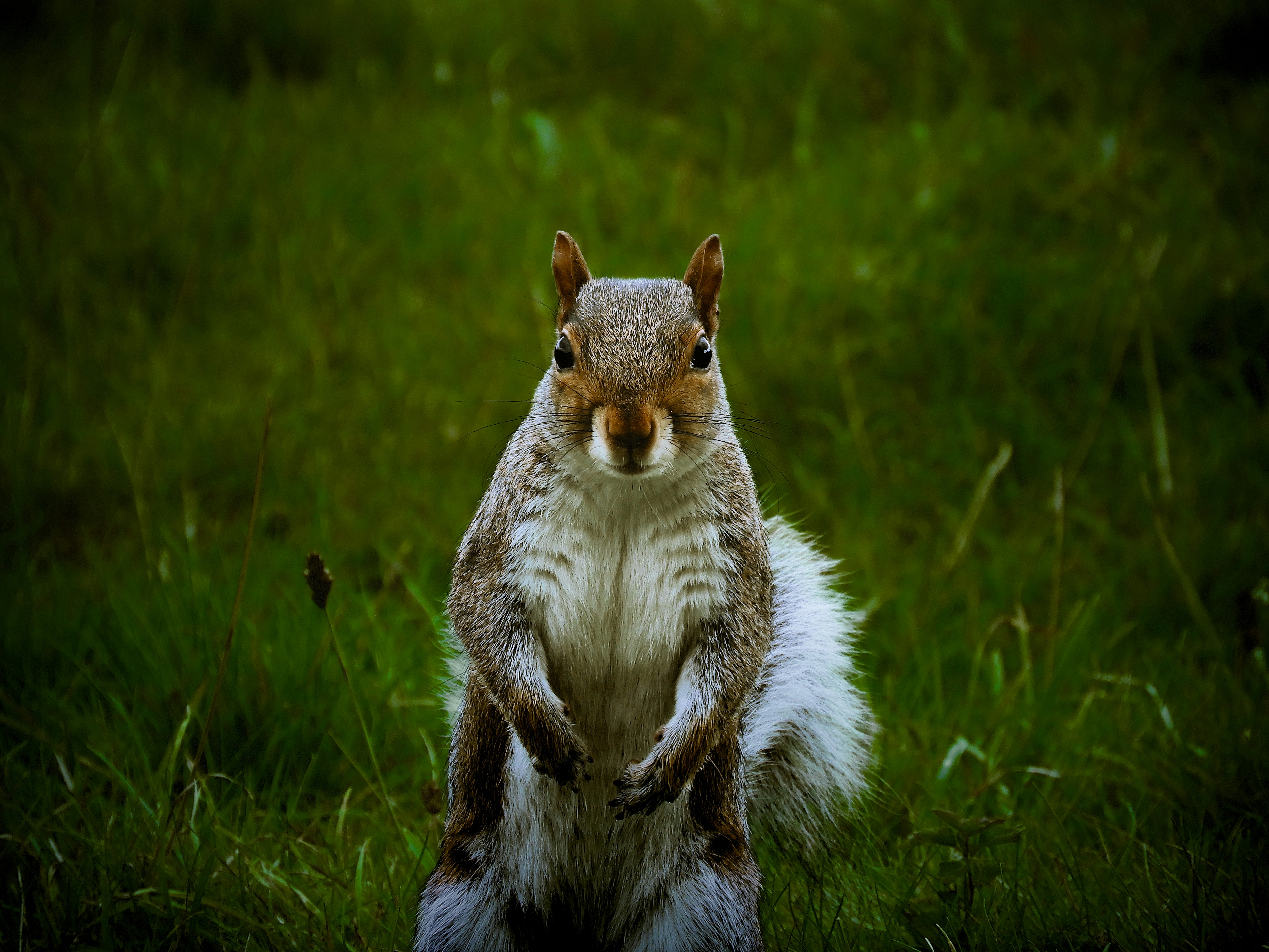
The cluster of tall trees that the bay window looks out on is  home to at least one colony of squirrels. Most mornings, they scamper their way over the branches and down the trunks to our front yard patch of lawn. What they do then is rather extraordinary, and I can’t witness it without giggling. 

The squirrels play as if nothing else in the world matters. 

Sometimes in pairs, sometimes alone, their furry grey bodies tumble in summersaults as they zoom from one tree to the other, one stick to the next, pausing only long enough to juggle a pinecone with their feet before scurrying on with their joy-filled movement. 

They have no worries. 

They have no worries. 
They aren’t trying to collect food for the day. 
They are simply being. Playing. Delighting at being alive. 

As I watch them, I think of the birds and the flowers Jesus describes in Matthew 6:25-28

“Therefore I tell you, do not worry about your life, what you will eat or drink; or about your body, what you will wear. Is not life more than food, and the body more than clothes? Look at the birds of the air; they do not sow or reap or store away in barns, and yet your heavenly Father feeds them. Are you not much more valuable than they? Can any one of you by worrying add a single hour to your life? 

“And why do you worry about clothes? See how the flowers of the field grow. They do not labor or spin. Yet I tell you that not even Solomon in all his splendor was dressed like one of these.” 

In those morning moments, it’s as if Jesus is saying, “Be like the squirrels, Jess. Live. Delight. Play. I’m taking care of everything else. Trust me. Just enjoy.” 

While I’m thankful for those moments, and the lightness those long-tailed rodents bring to my heart, I must admit I don’t carry that feeling far past my morning chair. 

All it takes is two steps into the rest of the day and I’m back to worrying, striving, trying to earn my right to live, breathe, and take up space in this world. 

But most mornings, the squirrels are there, reminding me that I have another day to try again. 

In the TV series Ted Lasso, Jason Sudeikis’ character, becomes known for telling the players on his team to be like a goldfish. Why? Because according to him, goldish have the shortest memory of any animal. They can’t remember what happened five minutes ago, and therefore they can’t be mad about it. They can’t seek revenge. All they can do is be fully in the moment, giving that brief time in history their all. 

There’s some good truth to that idea, but I think I’d rather be like a squirrel. I don’t know how long their memory is, but after watching them every morning for the last several years, they always make time to play. 

I think we could all stand to do that a little more, and I’m not the only one. David Bently Hart, in a recent essay in Plough Quarterly, titled “Running in Circles,” wraps up a compelling argument about the value of baseball by saying, “Only in play… can we really understand the true nature, the original peacefulness, and the final purpose of creation.”

We were created only to play? I don’t think so. But I do believe that play can unlock the true purpose of life, which, as the Westminster Shorter Catechism says, is “to glorify God and enjoy Him forever.” 

BLACKBERRY SEASON

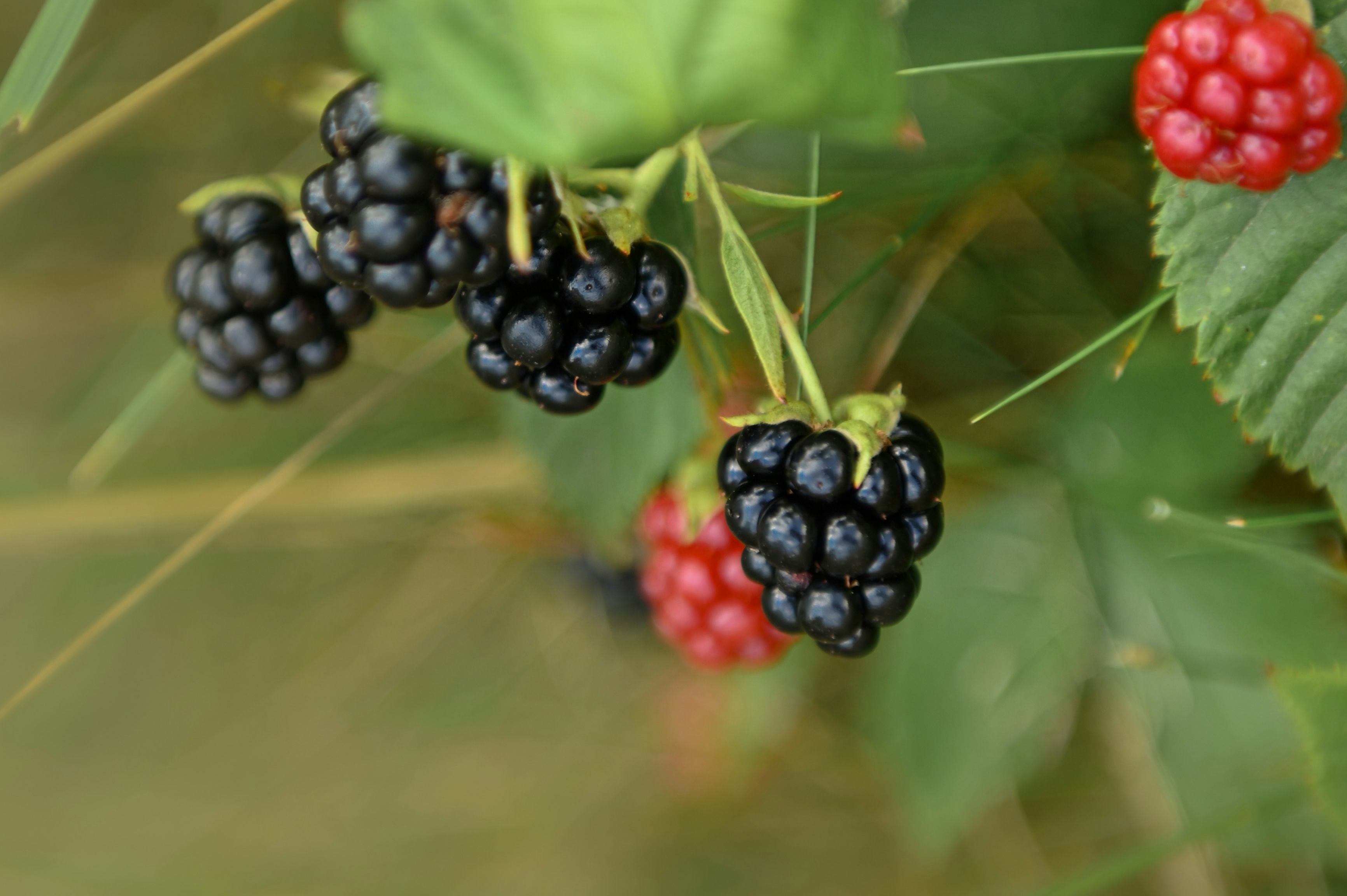
Yesterday, I did what I’ve done since I was a little girl. I opened the cupboard, pulled out a Tupperware container, slipped on my shoes and went to pick blackberries. And for the briefest moment, I was child again.
 
It was a sunny afternoon, and I might as well have had braided pigtails and jelly sandals on, for how my body remembered to squat low and look under leaves for the juiciest berries. I’ve picked blackberries from random roadsides since I could walk. They are one of the joys of summer in the Northwest, and something that I deeply missed when we lived in Hawaii.
 
Sure, we could get blackberries, but they were usually at least $8 a container and would mold practically overnight. Plus, they just never tasted as good as the roadside berries I was used to. The ones that were warm from the sun and practically melted on my tongue.  
 
Our first summer back, I delighted in picking multiple containers of them, not sure what I’d use them for, but amazed at the bounty. Since then, I haven’t been able to stop thinking about the magic of blackberry season, which starts well before the first berry can be plucked.
 
In fall and winter, the vines die back, then in the early spring the begin to climb and stretch. Early summer brings white blossoms, which gradually transform into green berries. Those green berries slowly redden and then turn to a purple so deep that it appears black.
 
Our daily walking route passes multiple berry patches, so Erik and I have been watching and waiting for them to be ready for weeks. The first few we tasted in late July made us pucker. But now, now they are perfect. And that brings me back to yesterday.
 
As I dropped berry after berry into my container and watched it fill, I was struck by two things.
 
First, the resilience of these berry plants. They are cut back, stomped on, sprayed with chemicals, and still find a way to thrive. (I do know that most of them are Himalayans, an invasive variety, but I’m not going to get into that today.)
 
What might I learn from watching these berries persist year after year, producing fruit because it’s what they were created to do? They don’t care that they are sometimes unwanted. They don’t care that they are scorned. They just go on doing what they were created to do – producing the fruit they were meant to produce.
 
The second thing these berries are teaching me is to be awed by the beauty — and bounty — of God’s provision.
 
No person works to produce these fruits, and we don’t do anything to deserve them. Yet, they are there, vines heavy with berries. The abundance is so astonishing that even after my container is full, I struggle to turn away. There are still so many good ones. So much deliciousness just waiting to be enjoyed.
 
As I slip a warm sun-warmed berry between my lips, I think back to my childhood and the countless number of buckets, jars, and containers my family and I have collected over the years. Back then, the picking was unhurried, but as soon as we got home, the action would start. Immediately, my mom would start washing the berries and then begin to transform them into  jam, fruit leather, and cobbler. Entire gallons would be tucked into the chest freezer in the garage to be made into pie, more jam, or muffins throughout the year ahead so that we would get to taste summer’s sweetness on the coldest of winter days.
 
Where I live now, there are blackberries everywhere, just like there were in the neighborhood I grew up in.
 
They are abundant and endless.
Resilient and determined.
Just like God’s love.

BAD APPLES AND BUILDING COMMUNITY

I fully admit I’m a bit of a wanna-be hippie. I like doing things the “natural” way, I eat vegetarian, I think plants are amazing, and I love the idea of growing all the food Erik and I eat. (It’s never going to happen, but I still think it would be pretty awesome.) So, when we moved into our current rental house, I was thrilled that there were two raised garden boxes just waiting to be filled.
 
It was April, and I had seeds and vegetable starts in the ground before I even had a photo hanging on the wall. That’s how excited I was.
 
Spring turned to early summer and one day, while I was wandering around the side of the house, I looked up and caught my breath.
 
What?
Could it be?
 
I rushed to the front door, threw it open and yelled, “Erik!”
 
Hurrying out of his office he looked at me and said, “What’s wrong?”
 
“We have an apple tree!” I exclaimed. “On the side of the house! Come see!”
 
I admit if I lived up to my hippie ideals and was better at plant identification, I would have recognized the tree for what it was months before. But I didn’t. Neither did Erik. But, seeing how excited I was, he dutifully slipped on his shoes and followed me outside.
 
“Look!” I said, pointing up at the small, light-green balls that had formed.
 
“Yep. That’s an apple tree,” Erik said and then went back inside.
 
The tree was loaded and I started dreaming about all the amazing things I’d make when they were ripe.
 
Pie.
Crisp.
Apple sauce.
Breads.
Muffins.
I could dehydrate them like my mom had when I was a little girl.
 
I watched and waited for them to grow to full size and be ready to be picked.
 
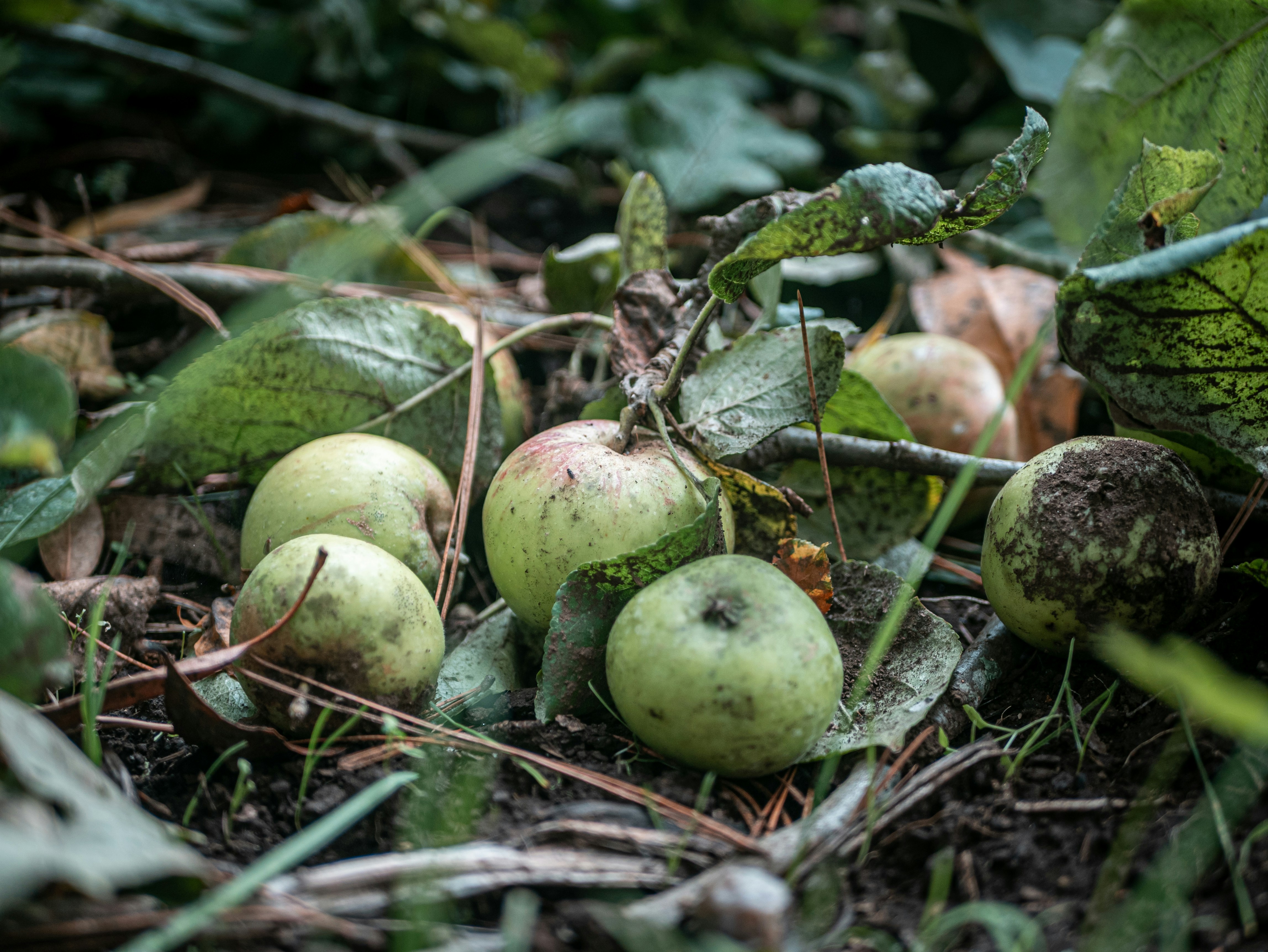
A few months later, I went outside one day and saw that apples were strewn across the grass under the tree.
 
I walked over to pick one up and saw that it had bruised from the fall.
 
All of them had. Well, bummer, but they did take a good tumble. I picked up the best ones and took them inside to try to salvage the unbruised halves.
 
I cut one open and saw streaks of rotting inside.
 
I tossed it into the yard-waste and grabbed another one. It was the same. There were also holes formed by some worm or bug already having had a feast. I kept cutting until I find one section that looked edible and took a bite.
 
Mealy. Mushy. Miserable.
 
These apples were terrible.
 
“Of course they are bad,” I told myself. “They fell. The ones I pick will be better.”
 
Determined, I went out to pick some a few days later and repeated the same process of discovery.
 
My dreams, along with thousands of bad apples, ended up in our yard waste bin that year.

Even picking them all up was tedious. Every day, it seemed like hundreds more fell, littering the ground and rolling onto our street where they were inevitably smushed to oblivion by  passing cars.
 
I tried to keep up with them, but it was no use.
 
Eventually, they all fell and we were able to properly dispose of them, occasionally taking a slice just to make sure they were all bad.
 
They were.
 
Not to be deterred, when the next summer rolled around, I told myself I was going to find a use for these apples. There had to be something I could make with them. (On a sidenote: apple season is usually in the fall, but these are an early variety and start falling in July.)  
 
Then it hit me, applesauce! They can be mushy if you’re making applesauce. I just needed to peel them, and cut out any critter-eaten bits.
 
That year I toted a bowl of the best-looking ones into the kitchen and got out my peeler.

The minuscule amounts that were salvageable weren’t worth the effort.
 
Defeated again, I admitted to myself I’d spend the next two months carrying buckets of apples to the bin.
 
Thankfully, I did have a friend who has alpacas who love apples. She often buys them boxes at a time, and I figured it wouldn’t hurt to ask if she wanted any. She did! We loaded up a box and took them to church to hand them off.
 
The moment we opened our trunk you could smell slightly rotting apples. Apparently, this particularly variety doesn’t store at all. If you’re going to dare to eat them, they are a day-of kind of thing. But the alpacas didn’t seem to mind, so they got some apples and my friend didn’t have to buy apples that week.  
 
But still, there was no way two alpacas could eat all of our apples. The rest ended up filling our yard-waste bin to the brim. Erik could barely roll it out it was so heavy.
 
The next summer, I didn’t even try to eat them. I just let them fall and picked them up as I could, once again giving Erik an arm and back workout with the overflowing yard waste bin.
 
But then, one day when I was out in the garden, a large, gray pick-up truck pulled up.

The introvert in me got nervous.
 
Did I know them? What did they want? Did I have to talk to them?
 
I tried smiling as they rolled down the passenger window.
 
“Are you guys using those apples?” The driver asked from under a camouflage hat.
 
“No, because they are terrible,” I said, suddenly feeling ashamed that I had neglected my apple clearing duties to the extent that passing neighbors had taken notice.
 
“We have chickens. They’ll tear them up. Can we have some?”
 
“You can have them all!” I said back. “But they really aren’t good.”
 
“I’ll send my sons over later to pick up some of the ones that have fallen. They’ll bring you some fresh eggs, too.”
 
“They can come as many times as they want. They can even pick them off the tree,” I said thrilled that these apples would at least feed some more of God’s creatures.
 
“Nah. They’ll just get the fallen ones,” the driver said. “Thanks.”
 
“Thank you!” I replied as he rolled up his window and pulled away.
 
And that brings us to this year. The apples started falling a few weeks ago. Hoping to at least share some, we went over to the neighbors and asked if they wanted them. Turns out they are moving and had already sold their chickens.
 
Not to be deterred, I texted another friend who has chickens and offered her apples.
 
She replied within minutes.
 
“We already get plenty of apples for the chickens from our neighbors. But thank you.”
 
Ok. Yard-waste bin, I hope you’re ready for this year’s bountiful harvest.
 
A few days later, after already tossing at least three buckets of apples, we ran into another neighbor while on a walk.
 
“Do you guys want eggs?” she asked. “I was just giving out eggs.”
 
“Jess doesn’t really eat them, and I can’t go through them fast enough on my own,” Erik said. “But thank you for offering.”
 
“Wait. Do you have chickens?” I asked. We’d never heard a peep in the dozens of times we’d walked by their house.
 
“Yep,” she said.
 
“Do you want apples for them?”
 
“They’d love them.”
 
“Great, I’ll drop a bag off later.”
 
Redemption! I have found a purpose for at least some more of the apples.
 
Later that day, I walked a grocery sack of apples over, a note with my phone number tucked inside.
 
She texted me a few hours later saying thank you, the chickens would love them and that they’d eat that many in about a day.
 
I had tried to be conservative, not wanting to give her too many, but she explained she had 10 birds and they ate a lot.
 
“You can drop some off every other day, if that works for you,” she messaged.
 
So this year, not only two alpacas, but 10 neighborhood chickens are enjoying the fallen fruit from our apple tree. And my neighbor and I have been talking more and building a deeper relationship.
 
At one time, I thought all that fruit was a waste. But it turns out it’s helping me build community, right here in my little neighborhood. And that’s sweeter than any apple could ever be.
 
By the way, we still have more apples than friends with livestock, so if you want some bad apples, grab a bucket and come on over. I’ll even help you pick them.

THE GIFT OF LOSS

 “Six years ago today…” Facebook reminded me, as an old photo of Ala Moana and Waikiki popped up. Curious, I clicked on the memory to see that I’d posted this caption: “Haven’t gotten back into running. Not sure if I will. I’m not mad about all the walks I’ve been taking with Erik.”

Six years ago would have been about five months after having had a heart attack. Running, something that I used to build my days around, was off the table. 

At the time I didn’t know it would stay off the table. But even then, God allowed me to see a glimpse of what could be. 

A peek at a life lived differently. 

Slower. 

With the love of my life by my side.

Before I had a heart attack, I had run four full marathons and several half marathons. 

I was a runner and proud to be one. 

I wasn’t fast, but I knew how to push. I knew how to keep going. Just one more mile. 

Sweat, pain, dehydration. All that could be taken care of later. I needed to finish first. 

There was a lot that I loved about running. I loved talking with God, thinking, praying, and processing as my feet hit pavement. Running gave me a place to leave my frustrations and work though my anxiety. A time to be quiet. 

But even more, I loved the feeling of accomplishment. I loved knowing I had run 3, 5, 10, 15, 26.2 miles. 

I’d build up so much distance that I was afraid to stop or even slow down. I was afraid of what a break would do. I was afraid to lose my stamina. My fitness. The identity I had created. 

And so, I kept running. On vacations, every time we moved. Running was a constant part of my life, until my arteries – and my doctor – forced me to stop. At the time, I believed it was temporary. I thought that my heart just needed some time to recovery and I’d get back to my usual routine. To build up my strength Erik and I walked together. We started slow, with short distances that grew longer as I got better. 

When I felt strong enough, I called a friend to ask her to try going on a run with me. We went and I did fine, but afterwards I had chest pain for days. 

I figured I just needed more time to get stronger, so I kept trying. I tried going even slower, taking walk breaks. Even powerwalking. But the pain kept coming back. 

It took me a few years to finally admit I had lost running. 

There was grief. Frustration. Anger. A deep feeling of weakness. 

But through all that, Erik and I kept walking. 

Slowly. 

Steadily.

Together. 

Now, six years later, we’re still walking. 

I lost running, but I gained hours with my husband. Conversations we may never have had. Experiences and discoveries in nature that we’ve gotten to share. 

A spouting whale. 

A scurrying gecko. 

A chirping chipmunk. 

The day we counted 17 rabbits. 

So today, I’m thinking about the gift of loss. The reality that if I hadn’t lost running, I wouldn’t have gained so many other gifts. 

That gives me hope.

In a season of another loss, I think I’m turning the corner from mourning what was and wondering what gift could be next.